
How to Grow Cilantro Without It Bolting
The first time I grew cilantro, I planted a tidy row in spring, blinked, and a few weeks later found a thicket of lacy stalks topped with little white flowers. My cilantro bolting problem had begun, and I had no clue what I’d done wrong.
Turns out the answer is simple once you know it: cilantro is a cool-season herb in a hurry, and heat stress sends it racing to flower long before you’re ready. The fix isn’t one magic trick but a handful of habits — choosing bolt-resistant varieties, watering steadily, and leaning on succession planting so a fresh batch is always waiting. Here’s everything that finally worked for me.
A decade and a lot of trial-and-error later, I’ve learned that cilantro isn’t a difficult herb. It’s just an honest one. It tells you exactly what it wants, and the moment you stop listening, it quits leaf-making and races off to make seed. The good news is that once you understand why it does this, keeping a steady supply of leaves on your counter stops feeling like luck and starts feeling like a routine. Let me walk you through everything I wish someone had told me that first summer. Read our Herb Gardening guide.
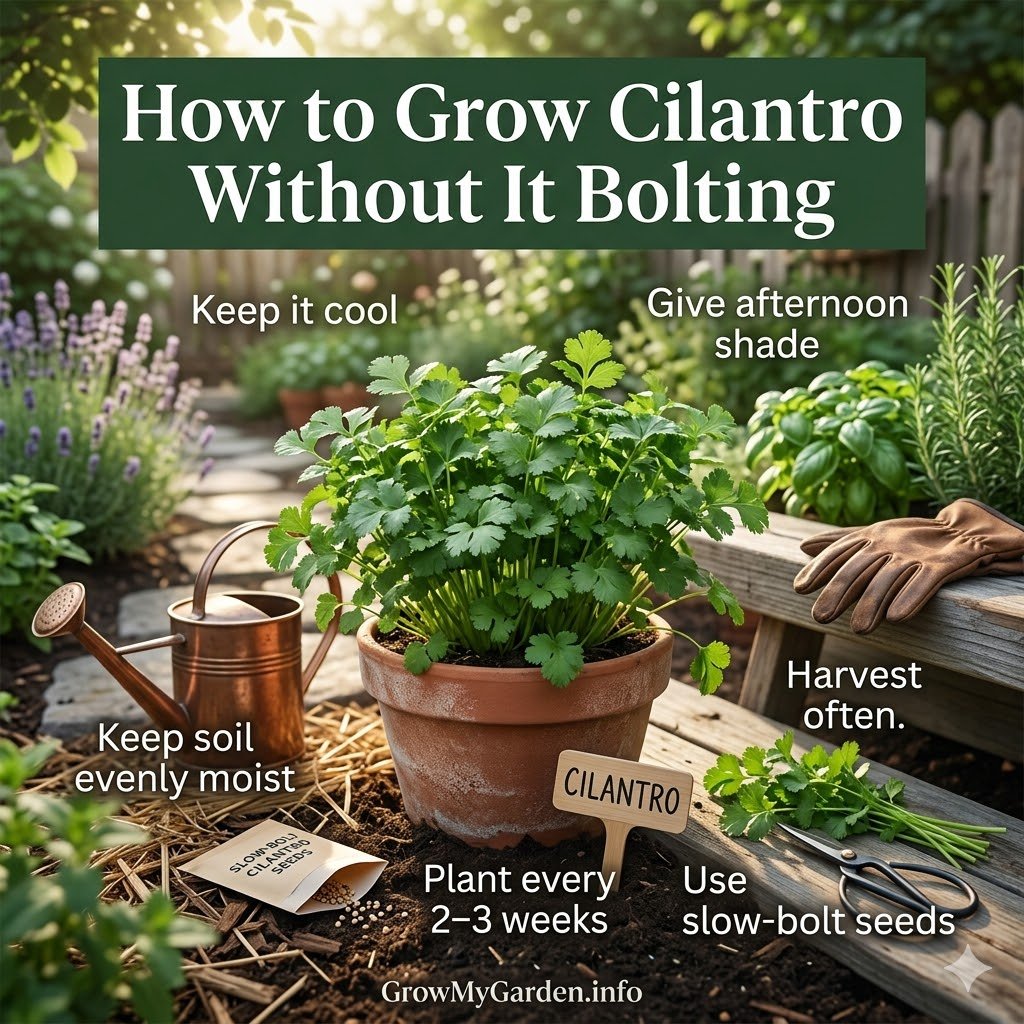
What Bolting Actually Is (And Why Cilantro Is in Such a Hurry)
Bolting is the moment a plant flips from growing leaves to making babies. In garden-speak, it’s when a plant shifts out of its vegetative growth phase and into its reproductive phase. The plant stops pouring energy into leaf production, pushes up a central flower stalk, and sets its sights on seed.
You can watch it happen in real time with cilantro, which is part of what makes it so frustrating. The first sign is a change in the leaves themselves. The flat, scalloped basal leaves you actually want to eat give way to thin, ferny, almost dill-like growth higher up the plant. Then comes flower stalk elongation: a stem rockets skyward, often gaining inches in a couple of days.
It branches into flat-topped clusters of little white umbel flowers, which is the giveaway that cilantro belongs to the Apiaceae family, the same clan as carrots, dill, and parsley. Leave those white flower clusters alone and they’ll set seed, and that seed is coriander. Same plant, two names: we call the leaves cilantro and the dried seed coriander.
Here’s the part worth tattooing on your trowel. Cilantro, properly Coriandrum sativum and sometimes sold as Chinese parsley, is an annual herb with a short fuse. It completes its whole life cycle in a single season, so it’s wired to flower and reproduce fast. Warmth speeds that clock way up, which is why heat-induced bolting is the single most common complaint I hear from new growers. The bolting trigger isn’t a disease or a pest you can spray. It’s the plant doing exactly what nature built it to do, just on a timeline that doesn’t suit your salsa schedule.
There’s a flavor cost too. As the plant moves toward seed formation, the leaves turn bitter and lose that bright, citrusy punch. The essential oil content shifts, and that signature aroma (driven largely by a compound called linalool) fades. So bolting isn’t only about losing your harvest to flowering. It’s about the leaves going downhill in taste before they’re even gone.
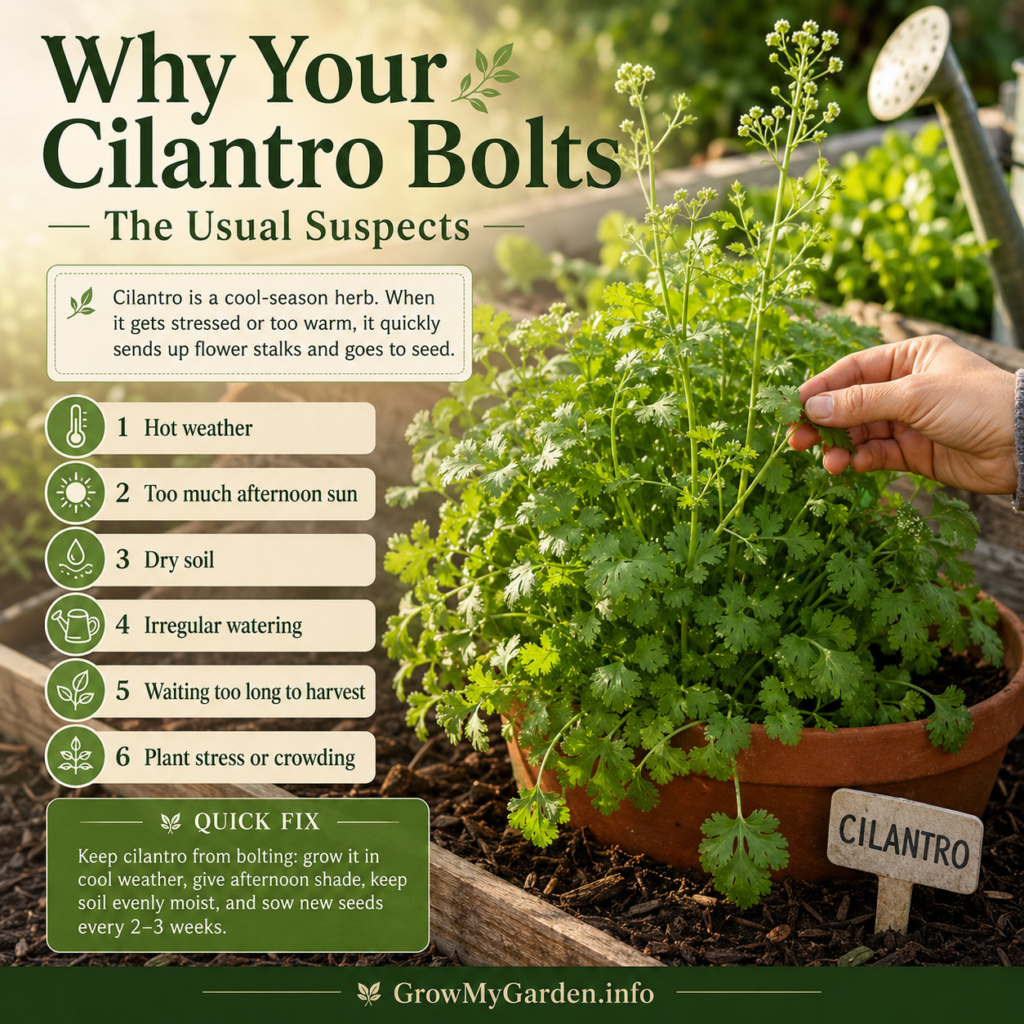
Why Your Cilantro Bolts: The Usual Suspects
Whenever someone tells me their cilantro keeps going to seed, the cause is almost always hiding in one of these five places.
Heat stress. This is the big one. Cilantro is a cool-season herb, happiest in the roughly 50–85°F range. Push it past that for more than a few days and heat-induced bolting kicks in like a reflex. A spring crop will cruise along nicely, then the first real warm spell hits and the plants shoot up almost overnight. They’re not dying; they’re panicking, trying to make seed before the summer cooks them.
Photoperiodism. Cilantro is a long-day plant, meaning lengthening daylight is itself a signal to flower. This is the sneaky one, because even if you keep things cool, those long June afternoons whisper “time to bolt” regardless of the thermometer. It’s part of why spring sowings flower so much faster than fall ones, even at similar temperatures.
Transplant shock. I learned this the hard way, buying tidy cilantro starts from the garden center every spring and watching them bolt within two weeks. Cilantro grows a long taproot and hates having its roots disturbed. Yank it from a cell pack and replant it, and the stress response can send it straight to flowering. Transplanting cilantro is a bit like moving someone mid-surgery; it rarely ends well.
Water stress. Let the soil swing between bone-dry and soaked and you’ve got a recipe for trouble. Drought stress in particular reads to the plant as “conditions are turning hostile, better reproduce now.” Water-stress bolting is real, and it’s entirely preventable once you get your watering rhythm sorted.
Temperature fluctuation. It’s not just steady heat. Wild swings, hot days followed by cold nights, can rattle the plant into flowering prematurely. (Cilantro can also respond to a cold spell through vernalization, where a stretch of cold primes it to flower once it warms back up, which is one more reason erratic spring weather is so hard on it.)
Notice the theme: bolting is a stress response. Almost everything that makes cilantro run to seed early is some version of the plant feeling threatened. Keep it comfortable, and it’ll keep making leaves.
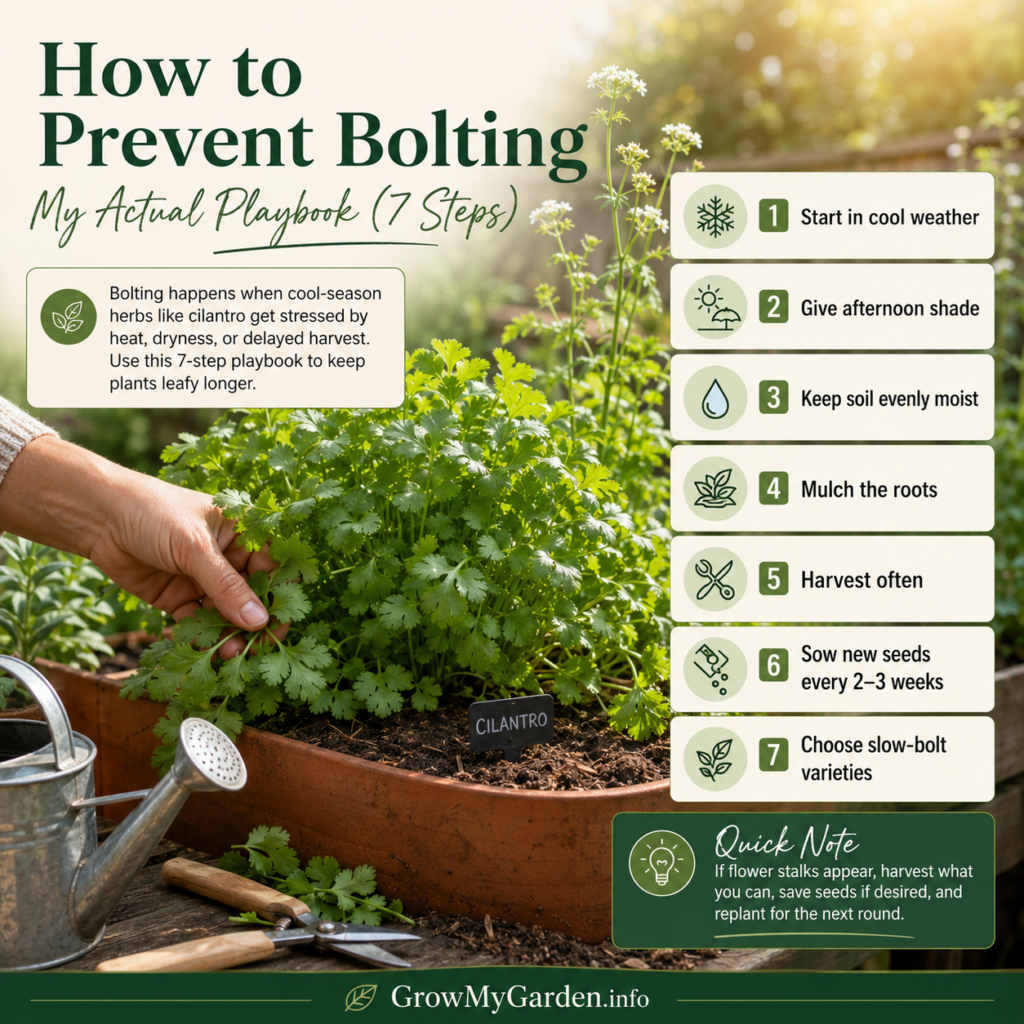
How to Prevent Bolting: My Actual Playbook
This is the section that matters, so I’m going to get specific. There’s no single magic trick to prevent bolting. It’s a handful of habits stacked together. Here’s exactly how I run my cilantro patch now.
1. Sow seed directly, and skip the transplants
Direct sowing is the foundation of the whole thing. Because of that taproot and the transplant shock problem, cilantro does far better when its seed goes straight into the ground (or its final container) rather than being started elsewhere and moved.
- Scratch shallow furrows about a quarter to half an inch deep.
- Sow seeds roughly an inch apart. Don’t be precious about spacing; you’ll thin later.
- Cover lightly, firm the soil, and keep it evenly moist until you see sprouts in one to three weeks.
- Once seedlings are a couple inches tall, thin them to about 4–6 inches apart so each plant has room without crowding. (To plan how many plants your bed will hold, run the numbers through our plant spacing calculator.)
If you absolutely must start in pots, use deep ones and move the seedlings while they’re tiny, with the rootball completely intact. Transplant shock prevention is mostly about disturbing the roots as little as humanly possible.
2. Use succession planting (this is the real secret)
Here’s the truth nobody likes to hear: you can’t actually stop a given cilantro plant from bolting forever. Sooner or later, every plant goes to seed. The trick isn’t preventing it on one plant. It’s never being without young plants in the first place.
That’s what succession planting solves. Instead of sowing one big batch in spring and mourning it in July, you sow a small patch every two to three weeks through the cool parts of the season. This staggered planting (some folks call it biweekly sowing) means that the moment one batch starts flowering prematurely, the next is already coming up behind it. I keep a phone reminder set for every other Sunday from early spring; it’s the single change that took me from “occasionally I have cilantro” to “I always have cilantro.”
3. Give it afternoon shade
Since heat is the main villain, your job is to keep the plants cooler than the surrounding garden. In spring this barely matters, but as the season warms, partial shade buys you weeks.
- Plant where something taller (tomatoes, trellised beans, even a fence) throws dappled light over the cilantro during the hottest part of the day.
- Or rig up some shade cloth on a simple frame to cut the afternoon sun.
- A soil-cooling mulch helps too. A light layer of straw or shredded leaves keeps the root zone several degrees cooler and holds moisture steady.
The goal is morning sun and afternoon shade once temperatures climb. Full sun is fine in cool climates and early in the season, but in summer heat, shade is your friend.
4. Water deeply and consistently
Remember, drought stress is a bolting trigger. Aim for consistent moisture rather than a feast-or-famine cycle.
- Water deeply two or three times a week rather than a daily splash; deep watering encourages that taproot to go down and makes the plant more resilient.
- Drip irrigation or a soaker hose is ideal because it keeps soil moisture even without soaking the foliage.
- Mulch (again) to slow evaporation.
- That said, avoid overwatering in soggy ground. Cilantro wants well-draining soil, not a swamp.
If you’re eyeballing amounts, a watering schedule calculator estimates what your bed needs each week based on its size and your climate.
5. Get the soil and feeding right
Cilantro isn’t fussy, but a few things help. It likes loose, well-draining, fertile soil with plenty of organic matter, ideally compost-amended, in a slightly acidic range around pH 6.2–6.8. A sandy loam that drains freely but holds some moisture is just about perfect, and because of that taproot, it appreciates loose, taproot-friendly ground over heavy clay.
On feeding: go easy and lean toward a gentle, nitrogen-leaning, slow-release fertilizer to support steady leaf growth. Skip the high-phosphorus “bloom booster” stuff entirely. Phosphorus encourages flowering, which is precisely what you’re fighting.
6. Pinch and snip to delay the inevitable
Once you spot the early signs of bolting, you can stall it a little. Pinching flower buds the moment they appear, and removing flower stalks as they form, tells the plant to keep working on leaves a bit longer. Deadheading any blooms that slip past you does the same. This won’t reverse bolting once it’s truly underway, but on a plant that’s just starting to think about flowering, a little pruning can squeeze out another harvest or two using the old cut-and-come-again approach.
7. Time it for the cool windows
Cilantro’s whole personality is “cool weather, please.” Lean into that.
Not sure when your window opens? A planting date calculator tuned to your zone will pin down both your spring sowing dates and that golden fall window.
- Spring planting: Start sowing a few weeks before your last frost, since young plants shrug off light cold far better than heat. This gives you a head start before the long days and warmth arrive.
- Fall planting: Honestly, fall is the secret season. A late summer sow that matures into cooler, shortening days will hold without bolting far longer than anything you plant in spring. Many growers in warm climates get their best, longest-lasting cilantro from autumn.
- Pay attention to your USDA hardiness zone and your own yard’s microclimate; a shady, north-facing bed can extend your cool-season window noticeably and is a simple way to gain some growing-season extension.
Container gardening pulls a lot of these levers at once. Growing in pots, a raised bed, or even a window box gives you moveable containers you can shuffle into the shade when a heat wave rolls through, which is a genuine advantage over plants locked into one spot in the ground.
Best Varieties to Grow (Genetics Do Half the Work)
You can do everything above and still lose the battle if you’re growing a variety bred to bolt fast. Choosing the right seed is the easiest win on this whole list, because some cultivars are simply built to hang on longer before flowering.
When you’re shopping for bolt-resistant varieties, two names belong at the top of your list: Slo-Bolt and Santo. Both are dependable slow-bolting cultivars that I come back to year after year. Slo-Bolt is exactly what it sounds like, selected specifically to stretch out that leafy window, while Santo is a workhorse that holds its leaves well and tolerates a bit more warmth than the average seed-rack cilantro. Pair either with the conditions above and you’ve stacked the deck in your favor.
A few more worth knowing:
- Calypso is, in my experience, about as slow to flower as cilantro gets, and it regrows beautifully after cutting.
- Long Standing (sometimes labeled “Long Standing Coriander”) is an old, reliable, open-pollinated choice that lives up to its name.
- Leisure and Jantar are both solid heat-tolerant cilantro picks that resist running to seed.
- Delfino and Confetti have fine, ferny, almost dill-like foliage; they’re slower to bolt and look gorgeous in the bargain, though the leaf texture is more delicate.
You’ll find a mix of heirloom varieties and hybrid seed out there, plus the occasional dwarf cilantro bred for tight container spaces. They all work; just check the packet for “slow bolt” or “slow to seed” language.
And if you garden somewhere genuinely hot, where even Slo-Bolt waves the white flag by mid-June, consider a heat-tolerant substitute that doesn’t bolt the way true cilantro does. Culantro (Eryngium foetidum), also called sawtooth herb, thrives in heat and delivers a similar flavor from long, serrated basal leaves. Vietnamese cilantro (rau ram) and papalo are two more warm-weather stand-ins that keep that fresh, herby note going all summer long when Coriandrum sativum simply won’t.
Harvesting the Right Way to Stretch Your Cilantro Season
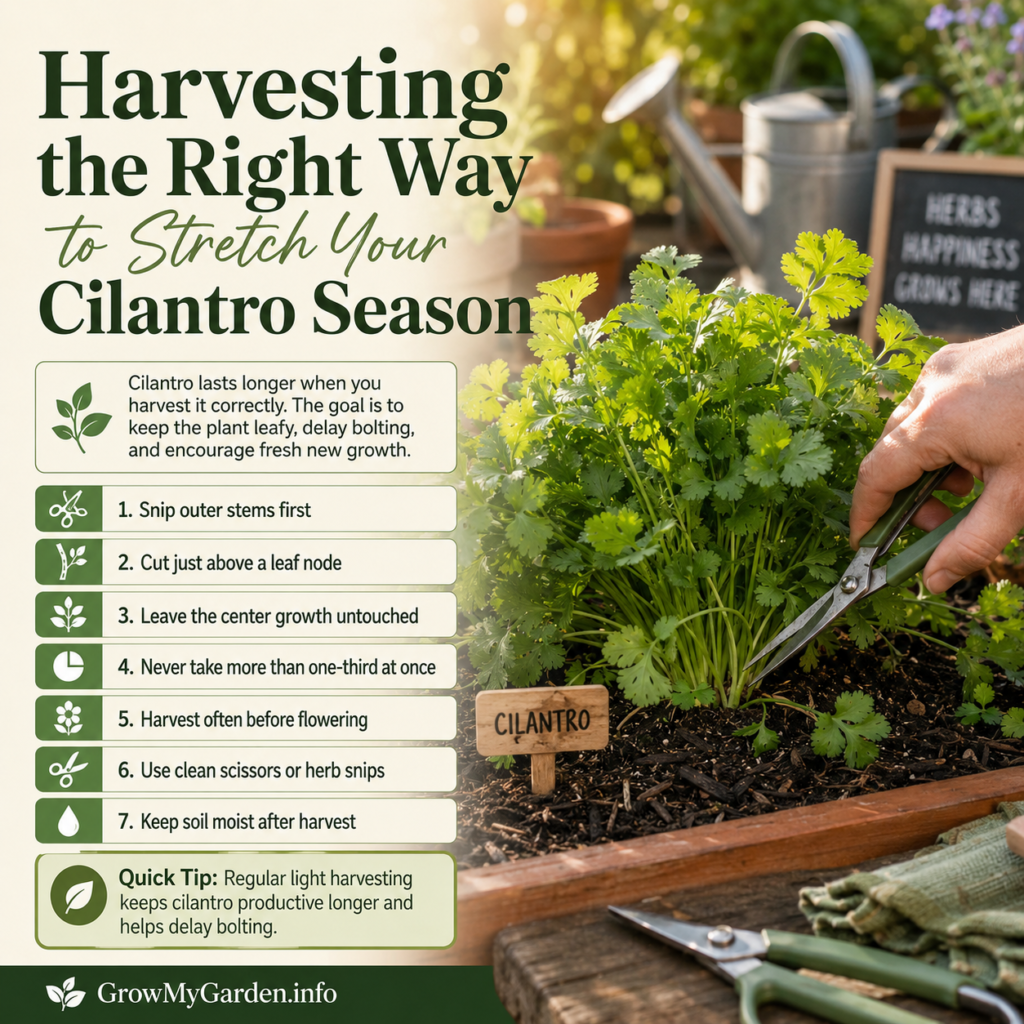
How you cut matters more than people realize. Harvest carelessly and you stress the plant straight into flowering; harvest smart and you actually encourage more leaf production. Frequent harvesting is one of your best tools against bolting, because it keeps the plant in leaf-making mode.
Here’s the method I use:
- Harvest in the morning. The leaves are crisp and full of moisture, and the flavor is at its peak before the day heats up.
- Cut stems, not leaves. Don’t pinch off individual leaflets. Snip whole stems down near the base with scissors. This is gentler on the plant and gives you that good leaf-to-stem ratio for cooking.
- Take the outer growth first. Harvest the outer leaves first and leave the young center alone, so the plant can keep pushing new growth from the middle.
- Follow the one-third rule. Never take more than about a third of the plant at once. Never strip the plant bare like a Thanksgiving turkey; leave plenty of green behind so it can bounce back.
- Keep harvesting regularly. Cut a little, often. Continuous harvest using the cut-and-come-again approach keeps the plant busy making leaves instead of seed, and stem harvesting every few days genuinely buys you time before it bolts.
Keep harvesting regularly. Cut a little, often… and stem harvesting every few days genuinely buys you time before it bolts. If you want the complete walkthrough, I go deeper in my full guide on how to harvest cilantro without killing the plant.
When it bolts anyway, don’t yank it
Even with the best care, every plant eventually goes to seed, and that’s not a failure. It’s a second harvest. Let those white umbel flowers open and they’ll draw in hoverflies, bees, and other pollinators. The edible flowers have a subtle cilantro flavor that’s lovely scattered over a dish. And if you let the seed heads dry on the plant, you can harvest coriander seeds for the spice rack as dried coriander, save seeds for replanting next season, or just let it self-seed and surprise you with volunteers come fall.
A quick word on keeping your harvest fresh once it’s inside: cilantro wilts fast, so for fresh cilantro storage I stand the stems upright in a jar of water like a little bouquet, loosely tent a bag over the top, and refrigerate. It’ll keep for a week or more that way. For the long haul, freezing cilantro in olive oil in an ice cube tray beats drying it; the leaves lose most of their character when dried, but frozen cilantro cubes drop straight into a hot pan with their flavor mostly intact.
A Few Common Questions
Why does cilantro bolt so quickly?
Because it’s a cool-season annual that’s genuinely racing against the calendar. Warmth and long daylight both tell it to reproduce, and unlike slower herbs, Coriandrum sativum is wired to flower fast once those signals hit. Heat-induced bolting is the usual culprit, but transplant shock and inconsistent watering can speed it up even further.
How long does cilantro take to bolt after germination?
It depends heavily on the weather, but a rough rule is four to eight weeks from sprouting under good cool conditions. Plant into spring heat and you might get only three or four weeks of decent leaves. Plant for fall in cooler, shortening days and a single sowing can hold for a couple of months before flowering.
Is bolted cilantro still edible or useful?
Yes, just don’t expect the same thing. The leaves turn bitter and thin once it bolts, so they’re past their prime for fresh eating. But the flowers are edible, the plant feeds pollinators, and the seed becomes coriander, a spice in its own right. Bolting closes one door and opens another.
Does cilantro regrow after bolting?
Not really, no. As an annual, once a plant commits to flowering and setting seed, that individual is done making good leaves; it won’t reset to leafy growth. This is exactly why succession planting matters so much. You’re not trying to revive an old plant, you’re making sure a younger one is always waiting in the wings.
Can you grow cilantro indoors to prevent bolting?
You can, and indoor growing gives you control over temperature, which helps. The catch is light. Cilantro wants several hours of strong light, so a sunny window often isn’t enough and you may need grow lights. Indoors you’ll dodge heat spikes, but it still bolts eventually, so the succession habit applies on the windowsill just like in the garden.
Which cilantro variety is slowest to bolt?
In my own beds, Calypso has been the most stubborn about holding off, with Slo-Bolt and Santo close behind. All three are reliable slow-bolting choices. If you’re in a hot region, though, no cilantro variety will truly resist summer, and you’re better off pairing a bolt-resistant type with afternoon shade, or switching to culantro for the hottest stretch.
A Final Thought
After enough seasons, you stop seeing bolting as cilantro betraying you and start seeing it as the plant simply finishing its job. Your part is easy once you reframe it: keep it cool, keep it watered, keep sowing a fresh pinch every couple of weeks, and cut it often and gently. Do that, and you’ll have far more cilantro than you can use, right up until the weather warms and the plants throw up their little white flowers, hand you a jar of coriander seed, and call it a season well spent.




Leave a Comment