
Raised Bed Soil Calculator
Filling a new raised bed is where a lot of first-time gardeners get an unwelcome surprise. A bed always looks like it’ll take a few bags — then swallows ten, and you’re back at the garden centre on a Sunday afternoon for another carload. Soil volume grows fast with depth, and eyeballing it almost never works.
A little maths up front saves the second trip and, usually, real money. This calculator turns your bed’s dimensions into the volume of soil you need, shown in cubic feet, cubic yards and litres, then tells you how many bags that is at whatever bag size you’re buying — so you order once and order right.
Raised Bed Soil Calculator
Find how much soil to order and how many bags to buy.
A common raised-bed blend is roughly 60% topsoil, 30% compost and 10% aeration (perlite or coarse sand). Order about 5% extra to allow for settling.
How the soil volume is calculated
Volume is length × width × depth, with the depth being the part people underestimate. The trick is keeping units consistent: a bed measured in feet needs its depth in feet too, so an inch-based fill depth gets divided by twelve before anything multiplies. The tool handles that conversion for you and gives the answer several ways at once — cubic feet for bagged products, cubic yards for bulk deliveries, and litres for metric bags.
For bagged soil it divides the total volume by your bag size and rounds up, because a part-bag still means buying a whole bag. Whether you’re filling raised beds, planters or a no-dig garden, the same calculation applies; only the depth changes with what you’re growing. It’s worth adding a few percent on top of the result, since fresh soil and compost settle once watered in.
Worked example: a 4 × 8 bed filled 10 inches deep
Take the default 8-foot by 4-foot bed filled to 10 inches. Eight times four is 32 square feet of surface; ten inches is a little over four-fifths of a foot. Multiply it out and you get about 26.7 cubic feet of soil — just under one cubic yard, or roughly 755 litres. At a common bag size of 1.5 cubic feet, that’s 18 bags.
Eighteen bags is the moment bulk soil starts to make sense. Once you’re approaching a cubic yard, a bulk delivery is usually cheaper per unit than bagged product and saves a lot of lifting — which is exactly the kind of decision the numbers are there to inform before you’ve spent anything.
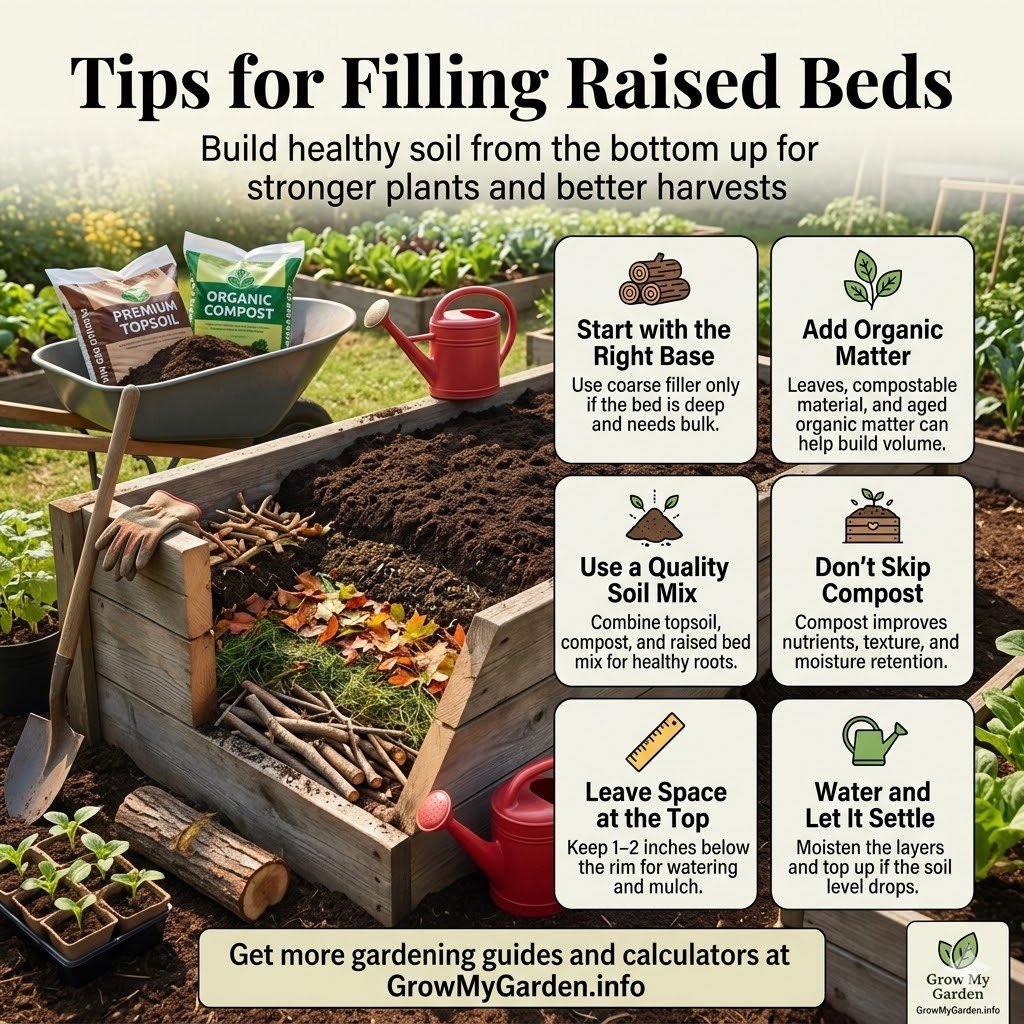
Tips for filling raised beds
- Get the mix right, not just the volume. A reliable raised-bed blend is roughly 60 percent topsoil or quality garden soil, 30 percent compost for fertility, and 10 percent something for aeration and drainage, such as perlite or coarse sand.
- Order about five percent extra. Fresh soil and compost settle noticeably after the first few waterings. A little surplus lets you top the bed back up to the rim.
- Compare bags against bulk. Below about a cubic yard, bags are convenient; above it, a bulk delivery is usually cheaper and easier on your back. The cubic-yard figure tells you which side of that line you’re on.
- Match depth to what you grow. Six to eight inches suits salad leaves and shallow-rooted crops; root vegetables and tomatoes are happier with ten to twelve inches or more.
- Don’t fill over old bed soil with the same depth. If you’re topping up an existing bed rather than filling an empty one, measure only the gap you need to fill, not the full height.
Frequently asked questions
How much soil do I need for a 4×8 raised bed? A standard 4-by-8-foot bed filled to 10 inches needs about 27 cubic feet, which is just under one cubic yard, or roughly eighteen 1.5-cubic-foot bags. Reduce the fill depth and the requirement drops proportionally, so a 6-inch fill needs noticeably less.
Should I buy bagged or bulk soil? For a single small bed, bags are easy and there’s no minimum order. Once you need close to a cubic yard or more — multiple beds, or one large deep bed — bulk delivery is usually cheaper per unit and saves hauling dozens of bags. The cubic-yard total tells you where you stand.
What’s the best soil mix for raised beds? Aim for roughly 60 percent topsoil or garden soil, 30 percent compost, and 10 percent aeration like perlite or coarse sand. That blend holds moisture and nutrients while still draining freely. Straight topsoil compacts, and straight compost holds too much water.
How deep should a raised bed be? Six to eight inches works for lettuce, herbs and other shallow-rooted crops, while root vegetables, tomatoes and perennials prefer ten to twelve inches or more. Deeper beds also dry out more slowly and give roots more room, which usually means stronger plants.