
Watering Schedule Tool
More garden plants are lost to too much water than too little. Daily light sprinkles keep the surface damp and the roots shallow and gasping, while soggy soil starves roots of air and rots them outright. “Water more” is rarely the answer; “water better” usually is.
The old rule of thumb — about an inch of water a week — is a fine starting point, but an inch over a small bed and an inch over a big one are very different watering cans. This tool turns that depth into an actual volume for your bed, adjusts it for the crop, the weather and your soil type, and splits it across however many sessions a week you water.
Watering Schedule Tool
Estimate weekly water volume and how much per session.
| Crop | Water per week |
|---|---|
| Tomato (indeterminate) | 1.5 in (38 mm) / week |
| Tomato (bush/determinate) | 1.4 in (36 mm) / week |
| Pepper | 1.2 in (30 mm) / week |
| Lettuce (leaf) | 1 in (25 mm) / week |
| Spinach | 1 in (25 mm) / week |
| Kale | 1.2 in (30 mm) / week |
| Broccoli | 1.3 in (33 mm) / week |
| Cabbage | 1.3 in (33 mm) / week |
| Carrot | 1 in (25 mm) / week |
| Beet | 1 in (25 mm) / week |
| Radish | 1 in (25 mm) / week |
| Onion | 1 in (25 mm) / week |
| Bush bean | 1 in (25 mm) / week |
| Pole bean | 1.1 in (28 mm) / week |
| Pea | 1 in (25 mm) / week |
| Cucumber (trellised) | 1.5 in (38 mm) / week |
| Zucchini / summer squash | 1.5 in (38 mm) / week |
| Pumpkin | 1.5 in (38 mm) / week |
| Sweet corn | 1.3 in (33 mm) / week |
| Potato | 1.2 in (30 mm) / week |
| Basil | 1.2 in (30 mm) / week |
| Strawberry | 1.2 in (30 mm) / week |
Deep, less frequent watering beats daily sprinkles for most beds. Skip a session after meaningful rain, and always check soil moisture before watering.
How the watering amount is calculated
It starts from a weekly water depth — that familiar inch-per-week baseline, tuned per crop, since thirsty fruiting plants like tomatoes and cucumbers want more than tougher, drought-tolerant ones. A weather factor then scales it: cool, mild spells need less, while hot, dry, windy weather drives up water loss through evapotranspiration and pushes the figure higher.
Depth becomes volume through a simple constant — an inch of water over a square foot is about 0.623 gallons — multiplied by your bed’s area. The tool reports the week’s total in both gallons and litres, then divides by your chosen number of waterings to give a per-session amount. Soil type shapes the advice rather than the total: sandy soil drains fast and prefers smaller, more frequent drinks, while clay holds water and does better with deeper, less frequent soakings. Loam sits comfortably in the middle.
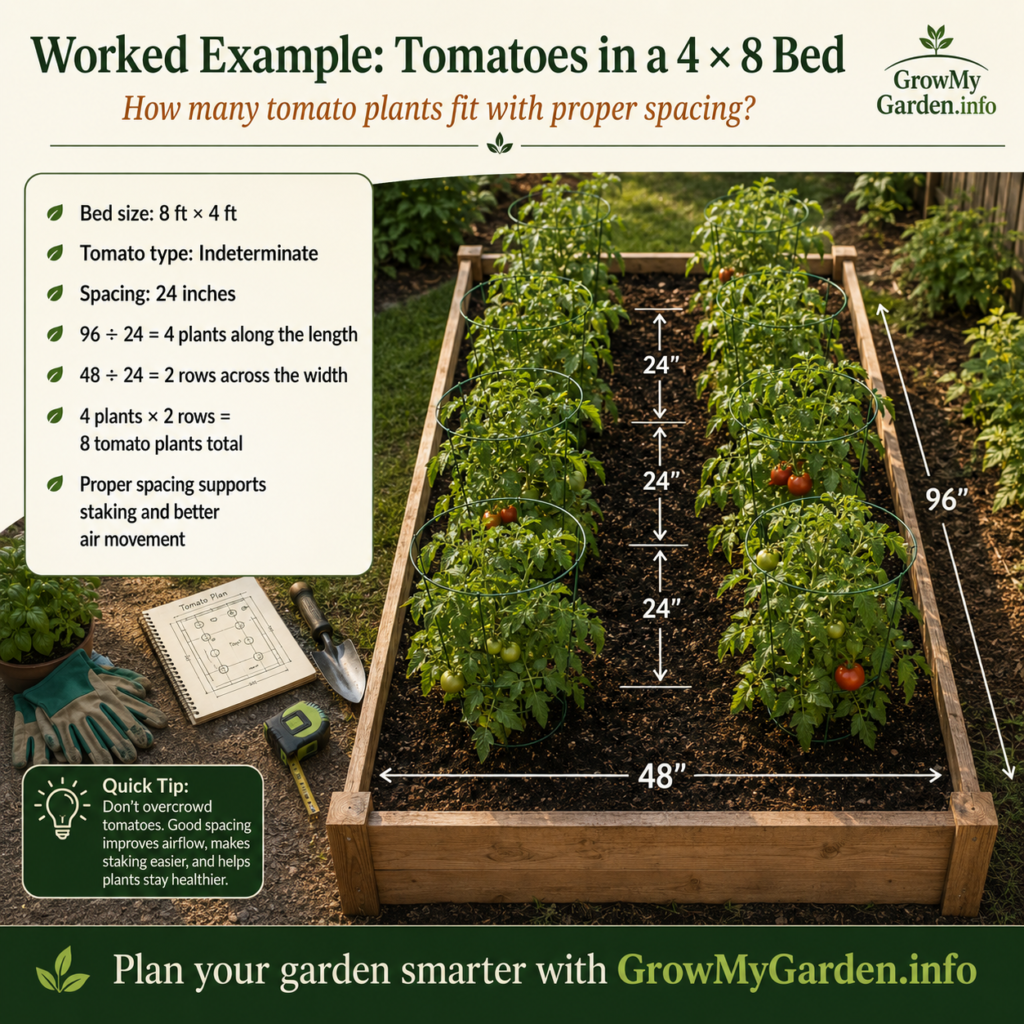
Worked example: tomatoes in a 4 × 8 bed
Using the default — an 8-by-4-foot bed of tomatoes in moderate weather, watered three times a week — the bed covers 32 square feet and tomatoes want around an inch and a half a week in those conditions. That works out to roughly 30 gallons per week, or about 113 litres, split into three sessions of about 10 gallons each.
Push the weather to hot and dry and that weekly figure climbs by nearly half as the plants transpire harder. Drop it to cool and mild and it falls. The session amount is the genuinely useful number: it tells you how long to run a soaker hose or how many cans to carry, rather than leaving you to guess when “enough” has gone on.
Tips for watering well
- Water deeply and less often. A thorough soak that wets the full root zone, two or three times a week, grows deeper, more resilient roots than a daily surface splash.
- Mulch to hold what you give. A few inches of straw, compost or bark over the soil slashes evaporation, steadies moisture and means you water less in summer.
- Go early in the day. Morning watering lets foliage dry quickly, which discourages disease, and loses less to evaporation than midday. Evening leaves leaves damp overnight.
- Use drip or a soaker hose where you can. Delivering water at soil level wastes far less than overhead sprinklers and keeps leaves dry, which most vegetables prefer.
- Adjust for rain, heat and containers. Skip a session after a good rain, add one in a heatwave, and remember pots and raised beds dry out faster than open ground — they often need more than the baseline.
Frequently asked questions
How much water does a vegetable garden need per week? The common guideline is about an inch of water a week, including rainfall, though fruiting crops in hot weather want more and cool-season crops less. Translated to volume, an inch over a square foot is roughly 0.6 gallons, so a typical bed needs tens of gallons weekly — which the calculator works out exactly.
How often should I water my garden? For most in-ground beds, two or three deep waterings a week beat daily light ones, because deep watering encourages roots to grow down and cope with dry spells. Sandy soils and containers dry faster and may need more frequent, smaller amounts; heavy clay needs less.
What are the signs of overwatering versus underwatering? Both can cause wilting, which confuses people. Overwatered plants often show yellowing leaves, soft growth and constantly soggy soil, while underwatered plants have dry soil and crisp, drooping foliage that perks up after watering. Checking soil moisture an inch or two down settles which it is.
When is the best time of day to water? Early morning is ideal: less water is lost to evaporation, and leaves dry quickly as the day warms, reducing disease risk. Evening watering works but leaves foliage damp overnight, and midday watering wastes the most to evaporation.