
Plant Spacing Calculator
A Plant Spacing Calculator is a simple yet powerful tool designed to help gardeners and farmers determine the ideal distance between plants for healthy growth and maximum yield. Proper plant spacing ensures that each plant receives adequate sunlight, nutrients, and airflow, reducing the risk of disease and overcrowding. Whether you’re planning a vegetable patch, flower bed, or large-scale farm, this calculator removes the guesswork from garden layout by factoring in plant type, mature size, and row distance. By entering basic details, users instantly receive recommended row spacing and plant density values, making garden planning quicker and more efficient for every grower. Ultimately, it helps optimize space and improve crop yield.
Good spacing is the quiet decision that shapes everything that follows. Give each plant the room its mature size actually needs and you get sturdier stems, better airflow, easier harvesting, and far less disease pressure. This calculator does the arithmetic for you: pick a crop, enter your bed size, choose a block or row layout, and it tells you how many plants the space genuinely holds.
Plant Spacing Calculator
Estimate how many plants fit your bed, in block or row layout.
| Crop | In-row spacing | Row spacing |
|---|---|---|
| Tomato (indeterminate) | 24 in (61 cm) | 36 in (91 cm) |
| Tomato (bush/determinate) | 24 in (61 cm) | 30 in (76 cm) |
| Pepper | 18 in (46 cm) | 24 in (61 cm) |
| Lettuce (leaf) | 8 in (20 cm) | 12 in (30 cm) |
| Spinach | 4 in (10 cm) | 12 in (30 cm) |
| Kale | 18 in (46 cm) | 24 in (61 cm) |
| Broccoli | 18 in (46 cm) | 24 in (61 cm) |
| Cabbage | 18 in (46 cm) | 24 in (61 cm) |
| Carrot | 3 in (8 cm) | 12 in (30 cm) |
| Beet | 4 in (10 cm) | 12 in (30 cm) |
| Radish | 2 in (5 cm) | 6 in (15 cm) |
| Onion | 5 in (13 cm) | 12 in (30 cm) |
| Bush bean | 5 in (13 cm) | 18 in (46 cm) |
| Pole bean | 6 in (15 cm) | 36 in (91 cm) |
| Pea | 3 in (8 cm) | 18 in (46 cm) |
| Cucumber (trellised) | 18 in (46 cm) | 48 in (122 cm) |
| Zucchini / summer squash | 24 in (61 cm) | 48 in (122 cm) |
| Pumpkin | 36 in (91 cm) | 60 in (152 cm) |
| Sweet corn | 8 in (20 cm) | 30 in (76 cm) |
| Potato | 12 in (30 cm) | 30 in (76 cm) |
| Basil | 10 in (25 cm) | 14 in (36 cm) |
| Strawberry | 12 in (30 cm) | 24 in (61 cm) |
Estimates for planning only. Confirm spacing on your seed packet — variety, climate and pruning style all shift the ideal numbers.
How plant spacing is calculated
Two numbers drive the result. In-row spacing is the gap between neighbouring plants in the same line. Row spacing is the wider gap between one row and the next, sized so you can reach in to weed and pick. A determinate bush tomato might want 24 inches between plants and 30 between rows; leaf lettuce is happy at 8 inches each way.
The layout you choose changes the maths. In a traditional in-ground row garden, plants only need in-row spacing along the line, but rows are pushed apart to leave walking paths, so a lot of ground sits in the aisles. In a raised bed or block layout — the approach behind square foot gardening and most intensive planting — there are no aisles inside the bed, so plants sit on a tighter grid in both directions and the same footprint holds noticeably more.
The tool divides your bed length by the in-row spacing to get plants per row, divides the width by the appropriate spacing to get the number of rows, and multiplies the two. It always rounds down, because two-thirds of a plant doesn’t grow. A partial gap at the edge is normal and useful: that little margin keeps the outer plants from flopping over the sides.
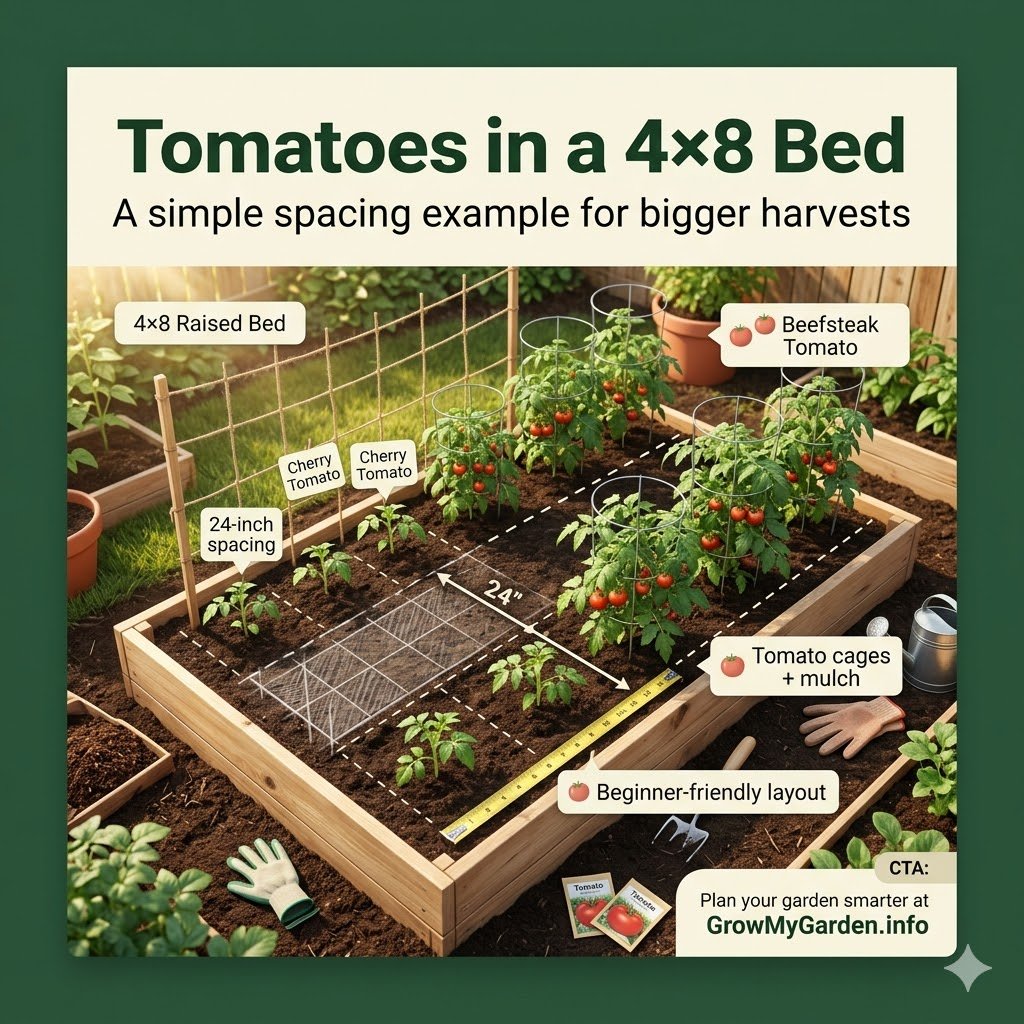
Worked example: tomatoes in a 4 × 8 bed
Take the calculator’s default — an 8-foot by 4-foot raised bed planted with indeterminate tomatoes at 24-inch spacing. Eight feet is 96 inches, so 96 ÷ 24 gives four plants along the length. Four feet is 48 inches, so 48 ÷ 24 gives two rows. Four plants per row across two rows is eight tomato plants, comfortably spaced for a staking system and plenty of air movement between them.
Switch the same bed to an in-ground row layout and the wider 36-inch row spacing means only one row fits across the 4-foot width, dropping you to four plants. That gap between the numbers is exactly why raised beds feel so productive for their size.
Tips for getting spacing right
- Plant for the mature size, not the seedling. A six-inch pepper start becomes a two-foot bush. The empty look in spring is the bed doing its job.
- Prune-trained plants can go closer. Indeterminate tomatoes kept to a single stem on a stake tolerate tighter spacing than sprawling, unpruned plants, since they take up far less width.
- Stagger for density. Offsetting alternate rows into a triangular pattern fits a few more plants into the same area while keeping the gaps even.
- Mind the edges and tall neighbours. Keep tall crops on the north side so they don’t shade shorter ones, and leave a hand’s width of margin around the rim.
- Pair it with companion planting. Quick crops like radish or lettuce can fill the gaps between slow growers and be pulled before the big plants need the room.
Frequently asked questions
Can you plant vegetables too close together? Yes, and it’s the most common spacing mistake. Overcrowded plants compete for light, water and nutrients, which stunts growth and cuts yield. The bigger problem is airflow: dense, damp foliage invites fungal diseases like powdery mildew and blight that thinner planting would have prevented.
What spacing does square foot gardening use? Square foot gardening assigns each crop a number of plants per square foot based on size — one tomato or pepper per square, four lettuces, nine bush beans, sixteen carrots or radishes. Choosing the raised-bed layout in the calculator gives you the same intensive, gridded result.
Why is raised bed spacing tighter than row spacing? Traditional rows leave wide aisles for walking and equipment, so much of the ground is path rather than planting. A raised bed is worked from the sides, so there are no internal aisles and plants sit on a closer grid in both directions, fitting more into the same footprint.
Should I thin seedlings even after spacing the bed? If you direct sow, yes. Spacing tells you the final plant positions, but seeds are usually sown thicker to insure against poor germination. Once they’re up, thin to the strongest seedling at each position so the keepers get the full room you planned for.