
Seed Quantity Calculator
Buying seeds looks simple until you’re standing at the rack doing mental maths, trying to remember how big the bed was and whether one packet covers it. Guess low and you run out halfway down a row; guess high and the seed box fills with half-used packets that lose vigour before next spring.
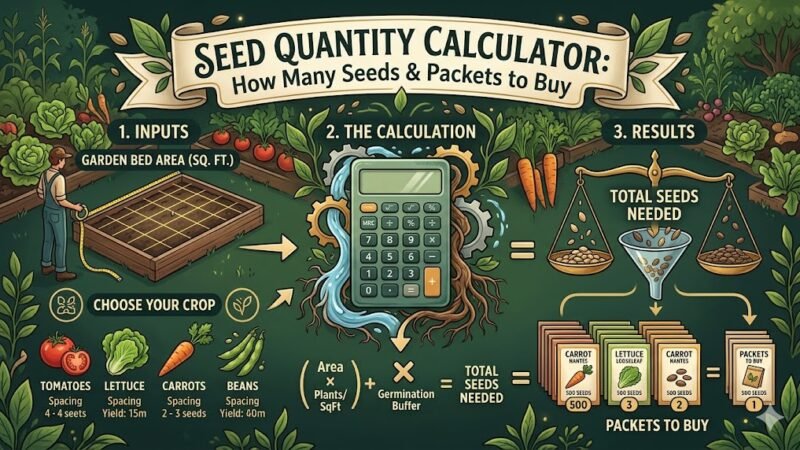
The honest answer involves more than counting plants. Not every seed comes up, so you sow a few extra at each spot and thin to the strongest. This calculator folds that in: tell it the crop, the bed size, and roughly how well the seed germinates, and it works back to the number of seeds to sow and the number of packets to buy.
Seed Quantity Calculator
Work out how many seeds and packets to buy for your bed.
| Crop | In-row spacing | Row spacing |
|---|---|---|
| Tomato (indeterminate) | 24 in (61 cm) | 36 in (91 cm) |
| Tomato (bush/determinate) | 24 in (61 cm) | 30 in (76 cm) |
| Pepper | 18 in (46 cm) | 24 in (61 cm) |
| Lettuce (leaf) | 8 in (20 cm) | 12 in (30 cm) |
| Spinach | 4 in (10 cm) | 12 in (30 cm) |
| Kale | 18 in (46 cm) | 24 in (61 cm) |
| Broccoli | 18 in (46 cm) | 24 in (61 cm) |
| Cabbage | 18 in (46 cm) | 24 in (61 cm) |
| Carrot | 3 in (8 cm) | 12 in (30 cm) |
| Beet | 4 in (10 cm) | 12 in (30 cm) |
| Radish | 2 in (5 cm) | 6 in (15 cm) |
| Onion | 5 in (13 cm) | 12 in (30 cm) |
| Bush bean | 5 in (13 cm) | 18 in (46 cm) |
| Pole bean | 6 in (15 cm) | 36 in (91 cm) |
| Pea | 3 in (8 cm) | 18 in (46 cm) |
| Cucumber (trellised) | 18 in (46 cm) | 48 in (122 cm) |
| Zucchini / summer squash | 24 in (61 cm) | 48 in (122 cm) |
| Pumpkin | 36 in (91 cm) | 60 in (152 cm) |
| Sweet corn | 8 in (20 cm) | 30 in (76 cm) |
| Potato | 12 in (30 cm) | 30 in (76 cm) |
| Basil | 10 in (25 cm) | 14 in (36 cm) |
| Strawberry | 12 in (30 cm) | 24 in (61 cm) |
Seed counts include extra for thinning and expected germination losses. Buy a little spare — old or poorly stored seed germinates lower.
How the seed quantity is calculated
It runs in three steps. First it works out how many plants your bed holds, using the same spacing logic as the spacing tool. Then it converts plants into seeds, because you don’t sow one seed per position — you sow two or three to cover the ones that won’t sprout, then thin. Finally it accounts for the germination rate: if only 80 out of 100 seeds are viable, you need to start with more to end up with a full bed.
The germination rate is the lever most people forget. Fresh seed from a good supplier might germinate at 90 percent or better; seed that’s been open in a shed for three summers can drop well below half. The calculator uses a sensible default for each crop, but if you’ve done a germination test or you know your seed is old, enter your own figure and the seed count adjusts. Packets are always rounded up to the next whole one, with a little headroom left over.
Worked example: a 4 × 8 bed of leaf lettuce
Using the default 8-foot by 4-foot bed and leaf lettuce at 8-inch spacing, the bed holds about 72 lettuce plants. Lettuce is sown a few seeds per cluster and thinned, and at an 80 percent germination rate the tool scales the count up to cover the seeds that won’t make it — landing near 270 seeds to sow. At a typical 50 seeds per packet, that’s six packets, with a few spare for succession sowings or gap-filling later in the season.
Notice how germination quietly drives the total: drop that rate to 50 percent for old seed and the number of seeds you need climbs sharply, even though the bed and the plant count never changed.
Tips for buying and sowing seed
- Always oversow, then thin. Sowing slightly thick and removing the weakest seedlings beats ending up with bare patches and an uneven stand.
- Check the packet date. Most vegetable seed stays usable for two to five years if stored well, but viability falls each year. Onions, leeks and parsnips are notably short-lived; tomatoes and brassicas keep for ages.
- Store seed cool and dry. A sealed jar with a silica packet in a cupboard beats a warm, humid shed. Heat and moisture are what age seed fastest.
- Run a quick germination test for old seed. Roll ten seeds in a damp paper towel, keep them warm, and count how many sprout in a week. Two of ten means a 20 percent rate — sow five times as thick or buy fresh.
- Buy extra for succession crops. Lettuce, radish, beans and other fast growers are best sown in small repeat batches, so one generous packet order covers several sowings.

Frequently asked questions
How many seeds should I plant per hole? For most vegetables, two to three seeds per position is the rule, then thin to the strongest seedling. Large, reliable seeds like beans, peas and squash can go one or two per spot. The calculator already builds this into its seed count.
Why do I need so many more seeds than plants? Two reasons stack up: you sow extra seeds at each position as insurance against duds, and a share of every batch simply won’t germinate. Between thinning and germination losses, the seed count is always well above the final plant count — which is normal, not waste.
Do old seeds still germinate? Often, but at a lower rate that drops each year. Seed stored cool and dry lasts longest. If you’re unsure, a paper-towel germination test tells you the real rate in about a week, and you can raise your sowing density to match.
What does germination rate mean for how much to buy? It’s the percentage of seeds expected to sprout. A 90 percent rate means you barely pad your numbers; a 50 percent rate means you need roughly twice as many seeds for the same bed. Entering an accurate rate is the difference between the right packet count and a frustrating gap mid-row.