
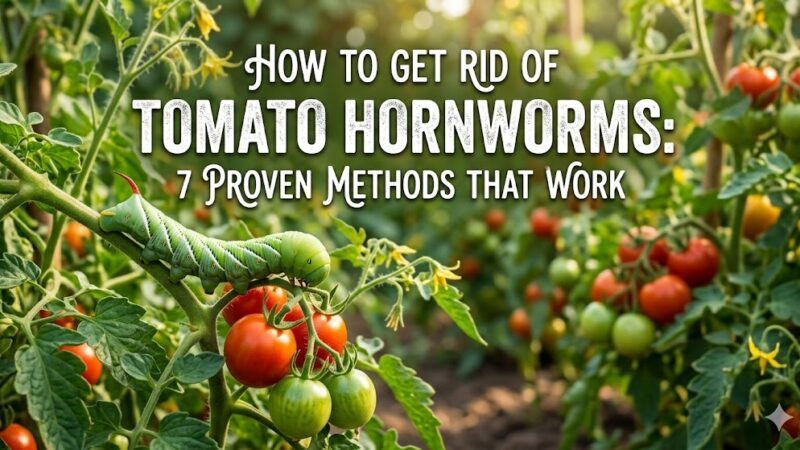
How to Get Rid of Tomato Hornworms (What Actually Works, From Someone Who Has Battled Them for Years)
The first time I spotted a tomato hornworm chewing through my Brandywines, I nearly dropped my coffee. One day my plants looked healthy, and the next morning the top leaves were gone, with strange dark pellets scattered below. That was my crash course in frass, the telltale sign of a hornworm problem.
These fat green caterpillars are masters of camouflage, blending so well with tomato foliage that you can stare right at one and miss it. After more than a decade of growing tomatoes, I have learned exactly how to find them, remove them, and stop the hawk moth from laying eggs in the first place using simple organic pest control methods.
If you have found yourself in the same spot, panicking because half your tomato plant disappeared between Tuesday and Thursday, you are in the right place. I have been growing tomatoes for over a decade in three different climates, and I have learned that hornworms are not the gardening disaster people make them out to be. You just need to know how to spot them, how to remove them, and how to stop the next generation from setting up camp. Rad our Plant Health & Pest Control guide.
Let me walk you through everything I have figured out the hard way.
What You Are Actually Dealing With
The tomato hornworm, known in plant nerd circles as Manduca quinquemaculata, is the larval stage of the five spotted hawkmoth. Its close cousin, the tobacco hornworm or Manduca sexta, looks nearly identical and shows up on the same plants. The easiest way I tell them apart is by the horn at the back. The tomato hornworm has a dark, almost black horn, while the tobacco hornworm has a red one. The stripes on their sides also differ slightly, with the tomato variety wearing white V shaped markings and the tobacco one sporting diagonal white stripes.
Honestly, for control purposes, it does not matter which one you have. They eat the same plants and respond to the same treatments.
These caterpillars are bright green, can grow up to four or five inches long, and have built in camouflage that would make a military sniper jealous. Their color blends so perfectly with tomato foliage that you can stare straight at one and not see it. I have done this. Many times.
How They Got Into Your Garden in the First Place
Here is the part that surprised me when I first looked it up. The adult moth, sometimes called a sphinx moth or hummingbird moth because it hovers like one while feeding at dusk, lays pale green oval eggs on the undersides of leaves. A single moth can lay hundreds. Those eggs hatch within about a week, and the tiny larvae start munching their way through your plants.
The pupae overwinter underground. So if you had hornworms last year and did not deal with the soil, you basically left them a comfortable hotel room to come back to. In most regions you will see two generations per season, with the worst damage usually showing up in late June through August. If you want to time your tomato planting around peak hornworm activity in your zone, our Planting Date Calculator can help you map out the right sowing and transplant windows for your climate.
They mainly target plants in the nightshade family. Tomatoes get the most attention, but I have also caught them on my peppers, eggplant, and potato plants. Once, weirdly, on a tobacco plant a friend was growing for fun.
Signs You Have a Hornworm Problem
By the time you see the actual caterpillar, the damage is usually obvious. But there are earlier signs I now look for every time I am in the garden.
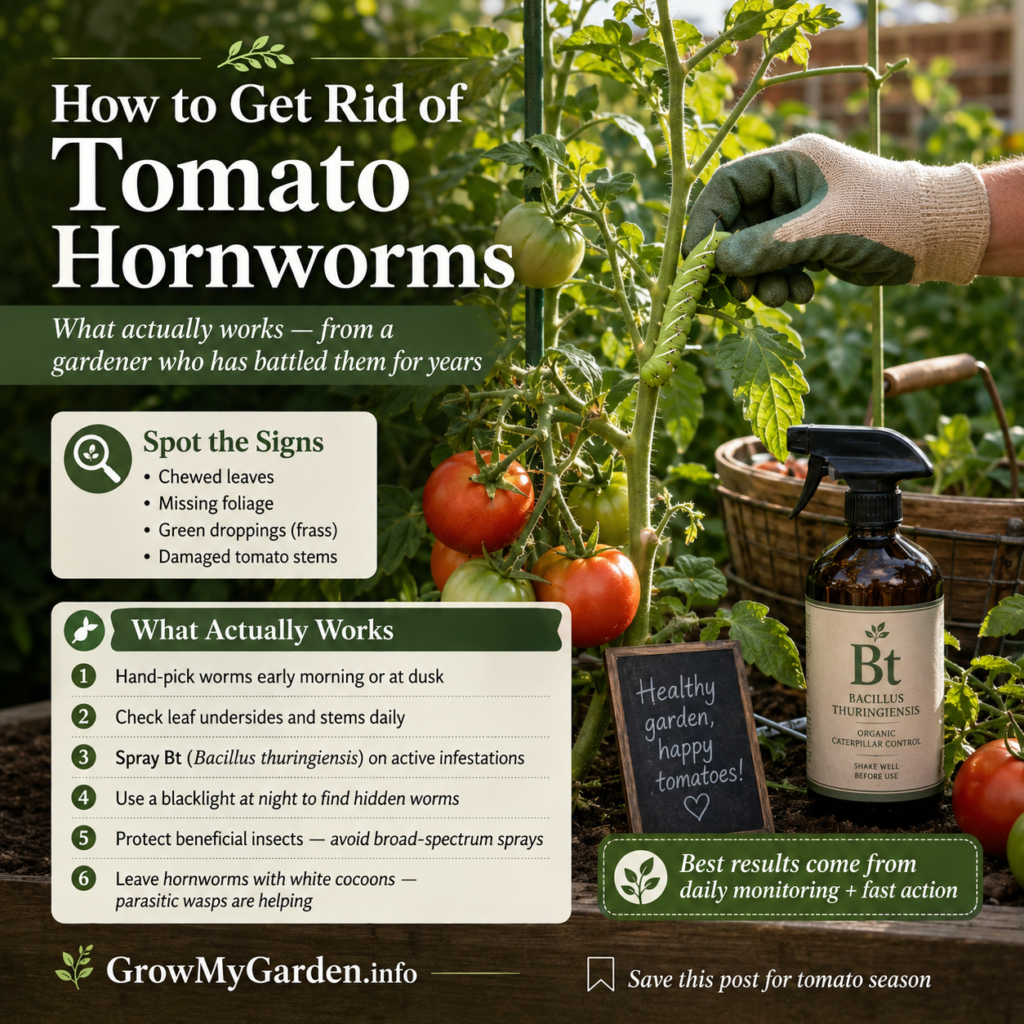
The first clue is frass. That is the polite gardening word for caterpillar poop. Hornworm frass looks like tiny dark green or black pellets, almost like small grenades, scattered on leaves or on the ground below the plant. If you spot frass, the caterpillar is somewhere directly above it. I cannot stress this enough. Look up, scan slowly, and you will find it.
Other telltale signs include bare stems near the top of the plant, chewed leaves with chunks missing, and sometimes scarred or damaged fruit. The damage spreads fast because these things are eating machines. A single large hornworm can defoliate a young plant in two or three days.
The Nighttime Trick That Changed Everything for Me
Here is a tip I picked up from an old timer at my local nursery, and it still feels like cheating. Hornworms fluoresce under ultraviolet light. They actually glow.
I bought a cheap UV flashlight on Amazon for about ten dollars, the kind people use to spot pet stains on carpet, and now I do a quick sweep of my tomato bed after sunset whenever I suspect trouble. The caterpillars light up like little green glow sticks against the dark foliage. What takes thirty minutes of squinting in daylight takes me about ninety seconds at night with that flashlight.
If you only take one thing from this article, take this. A UV flashlight is the single best tool for finding hornworms.
Step by Step: Getting Rid of Them Right Now
If you have hornworms today and you need them gone today, here is exactly what I do.
Step 1: Handpicking. Put on gloves if the idea grosses you out, though they cannot bite or sting and are completely harmless to handle. Pluck each caterpillar off the plant. They cling pretty hard, so a firm tug is fine. The plant will be okay.
Step 2: The soapy water bucket. Fill a bucket with water and a generous squirt of dish soap. Drop each hornworm in. It is quick and humane, and it stops them from crawling back. I know some folks toss them onto the driveway or feed them to chickens, both of which work too. My neighbor has guinea fowl that go absolutely feral for them.
Step 3: Inspect every plant carefully. Check the tops, the middles, and the undersides of leaves. Look for fresh frass as your guide. Hornworms tend to feed at the top of the plant first, so start there.
Step 4: Bt spray for backup. If you have a heavy infestation or you suspect more eggs are about to hatch, spray your plants with Bacillus thuringiensis, usually labeled as Bt or Btk. It is a naturally occurring soil bacterium that is harmless to humans, pets, bees, and most beneficial insects. It only affects caterpillars that eat treated leaves. Within a day or two of munching, they stop feeding and die. I use the Monterey Bt brand, but Safer Brand and Bonide both make solid versions. Mix it according to the bottle and spray in the evening, since sunlight breaks it down.
Step 5: Spinosad for stubborn cases. If Bt is not knocking them down fast enough, spinosad is the next step up. It is also derived from a soil microbe and is approved for organic gardening, though it can harm bees if sprayed during the day. I only use it at dusk and only when I really need to.

The One Time You Should Leave a Hornworm Alone
If you find a hornworm covered in what looks like tiny white grains of rice sticking out of its back, do not touch it. Walk away.
Those are the cocoons of braconid wasps, specifically Cotesia congregata. The wasp laid her eggs inside the caterpillar, the larvae fed on it from within, and now they have emerged to pupate on its skin. That hornworm is already a goner. More importantly, when those wasps emerge, they will fly off and parasitize more hornworms in your garden.
Leaving one parasitized caterpillar can mean preventing dozens of future ones. I once found three in a single afternoon and felt like I had hit the gardening lottery. Free pest control, delivered by nature.
Building a Garden That Hornworms Hate
Killing them after the fact is fine, but I would rather not deal with them at all. Over the years I have shifted most of my effort toward prevention, and my hornworm problems have dropped dramatically.
Here is what actually works in my experience.
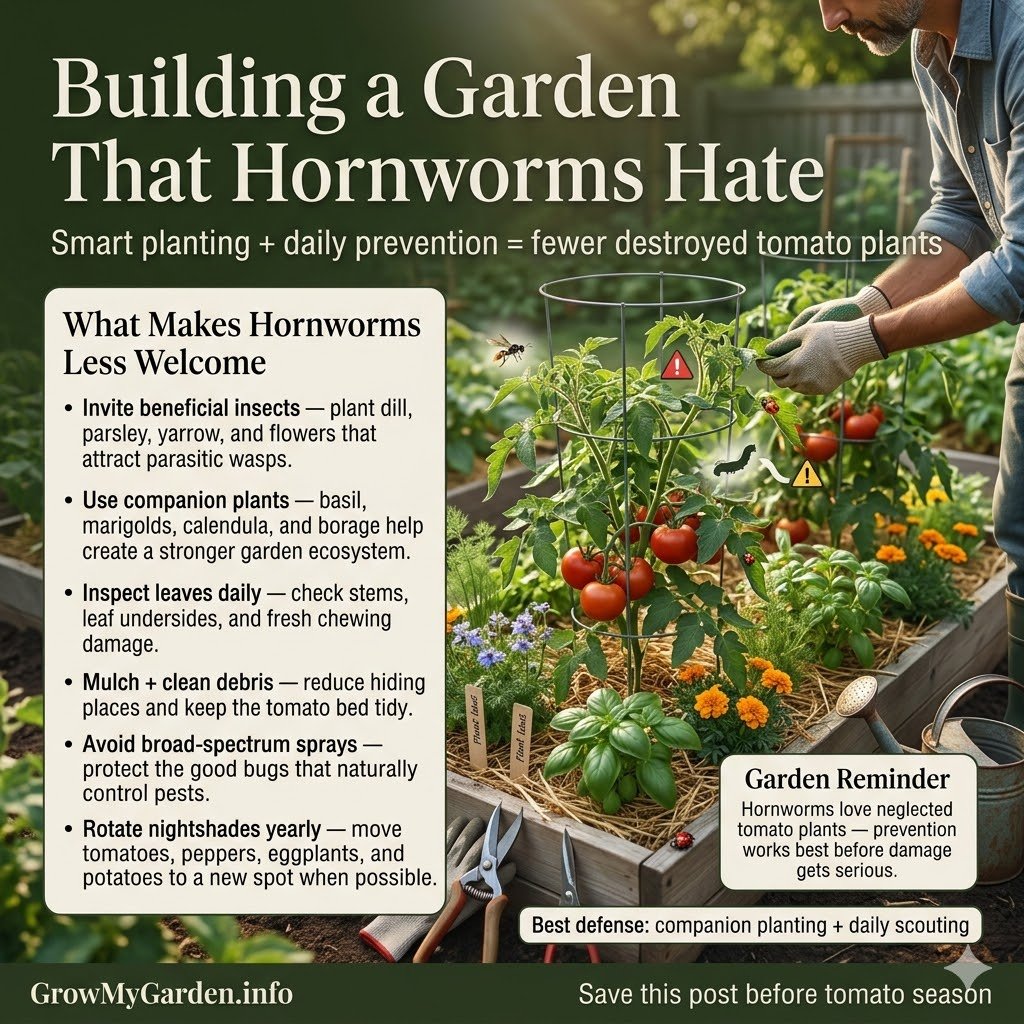
Companion planting. I tuck basil, dill, and borage in and around my tomato beds. Basil seems to confuse the moths, and dill acts as a trap crop. Hornworms will actually go for dill over tomatoes if it is nearby, which gives you a concentrated spot to inspect and clean up. Marigolds, particularly French marigolds, are another classic companion that helps repel a range of pests.
Encourage beneficial insects. Braconid wasps, green lacewings, ladybugs, and paper wasps all help keep hornworm populations in check. I plant flowers like alyssum, yarrow, and cosmos around my vegetable garden to give them habitat. No pesticides, no synthetic sprays, just letting the ecosystem do its job.
Till the soil in fall. This is the step most home gardeners skip. The pupae overwinter a few inches below the surface, and turning the soil in late autumn exposes them to cold and predators. I run a hand cultivator through my tomato beds every November and have noticed a real difference the following spring.
Rotate your crops. Try not to plant tomatoes in the same exact spot every year. Move them around your beds if you can. It will not solve the problem completely, since the moths can fly, but it makes your garden less predictable for the local hornworm population.
Use row covers early in the season. Floating row covers keep the moths from laying eggs in the first place. I use them on young transplants until the plants start flowering, then I remove them so pollinators can get in.
Monitor regularly. This is the unglamorous answer, but it works. I walk my garden every morning with my coffee, just like the day I first met a hornworm. Five minutes of looking, every day, beats hours of damage control later.
What About Homemade Sprays
I get asked about garlic sprays, hot pepper sprays, and various kitchen concoctions all the time. Honestly, I have tried most of them. They do not do much for hornworms. These caterpillars have evolved to eat plants that produce toxic alkaloids. A little cayenne on a leaf is not going to bother them.
Save your time and stick with Bt, handpicking, and prevention. Those three together will handle just about any hornworm situation a home gardener faces.
A Few Things People Worry About That They Should Not
Hornworms cannot hurt you. They do not bite, they do not sting, and that scary looking horn is purely for show. You can pick them up barehanded all day long.
They are also not poisonous to pets. If your dog or chicken eats one, they will be fine. In fact, chickens consider them a delicacy.
And no, they will not destroy your entire tomato crop overnight unless you have a serious infestation and ignore it for a week. A healthy, mature tomato plant can take some leaf damage and bounce back quickly once the pests are gone.
Frequently Asked Questions
How to keep hornworms off your tomatoes?
Plant basil, dill, and marigolds nearby, use floating row covers on young plants, till your soil in fall to kill overwintering pupae, and walk your garden daily to catch them early. A UV flashlight at night makes spotting them almost too easy.
What causes tomato hornworms?
Adult hawk moths lay tiny green eggs on the undersides of tomato leaves, and those eggs hatch into hornworms within a week. If you had them last year, leftover pupae in the soil are usually the reason they came back this season.
Will tomato plants recover from hornworms?
Yes, in most cases. A healthy, established tomato plant can lose a surprising amount of foliage and bounce right back once the caterpillars are gone. Give it a deep watering, a light feed, and a week or two, and you will see new growth fill in. If you are not sure how much water your tomatoes actually need to recover, our Watering Schedule Tool will calculate it based on your bed size and climate.
Is it okay to kill tomato hornworms?
Yes, it is perfectly fine. They are a common garden pest, not endangered, and removing them protects your harvest. The one exception is hornworms covered in tiny white cocoons. Leave those alone, since parasitic wasps are already handling the job for you.
Why put baking soda under tomato plants?
Some gardeners sprinkle a small pinch of baking soda around tomato plants believing it sweetens the fruit by lowering soil acidity slightly. Honestly, the effect is minimal and not well supported. Healthy soil, steady watering, and good sunlight matter far more than any baking soda trick.
When the Season Ends
Once your tomato plants are done for the year, pull them out and dispose of them away from your garden beds. Do not compost plants that had hornworm damage, since any remaining eggs or small larvae could survive in a cool compost pile. I bag mine up and put them out with the yard waste.
Then till the soil, plant a cover crop if you can, and start fresh next spring. Hornworms are part of gardening in most of North America, and you will probably see them again. But once you know the rhythm of finding them, removing them, and preventing the next wave, they stop feeling like a crisis and start feeling like just another part of the season.
Some of my best tomato years have come after the worst hornworm years. There is something about paying close attention to your plants, walking them every day, that just makes you a better gardener overall. Maybe those fat green caterpillars are doing me a favor after all.
Then till the soil, plant a cover crop if you can, and start fresh next spring. Hornworms are part of gardening in most of North America, and you will probably see them again. Before next season kicks off, it is worth running your tomato plans through our Harvest Yield Estimator so you know what kind of yield to expect and how much loss you can absorb if pests show up.




Leave a Comment