
Planting Date Calculator
In gardening, timing isn’t a detail — it’s the whole game. Set tomatoes out a fortnight too early and one late frost ends the season before it starts. Sow cool-season crops too late and they bolt in the first heat. The difference between a thriving bed and a row of casualties often comes down to a single date.
That date is your last spring frost. Almost every sowing and transplanting decision is measured against it: so many weeks before for starting seeds indoors, so many weeks after for setting out frost-tender plants. This calculator takes your last frost date, applies the right offset for the crop, and hands you a clear schedule — when to start seeds, when to plant out or direct sow, and roughly when to expect the first harvest.
Planting Date Calculator
Turn your last frost date into sowing, transplant and harvest dates.
| Crop | Start indoors | Transplant out | Direct sow |
|---|---|---|---|
| Tomato (indeterminate) | 6 wk before | 2 wk after | — |
| Tomato (bush/determinate) | 6 wk before | 2 wk after | — |
| Pepper | 8 wk before | 2 wk after | — |
| Lettuce (leaf) | 4 wk before | 2 wk before | 2 wk before |
| Spinach | — | — | 4 wk before |
| Kale | 6 wk before | 2 wk before | 2 wk before |
| Broccoli | 6 wk before | 2 wk before | — |
| Cabbage | 6 wk before | 2 wk before | — |
| Carrot | — | — | 2 wk before |
| Beet | — | — | 2 wk before |
| Radish | — | — | 3 wk before |
| Onion | 10 wk before | 4 wk before | — |
| Bush bean | — | — | 1 wk after |
| Pole bean | — | — | 1 wk after |
| Pea | — | — | 4 wk before |
| Cucumber (trellised) | 3 wk before | 2 wk after | 1 wk after |
| Zucchini / summer squash | 3 wk before | 2 wk after | 1 wk after |
| Pumpkin | 2 wk before | 2 wk after | 1 wk after |
| Sweet corn | — | — | 1 wk after |
| Potato | — | — | 2 wk before |
| Basil | 6 wk before | 2 wk after | 1 wk after |
| Strawberry | — | 2 wk before | — |
Find your average last frost date from a local frost-date lookup or your regional extension office, then adjust for your own microclimate.
How the planting dates are calculated
Each crop carries a set of offsets pegged to the last frost date. Warm-season crops that need a head start — tomatoes, peppers, broccoli — get an indoor sowing date several weeks before the frost, so the seedlings are stocky and ready when the weather turns. Their transplant date falls after the frost has safely passed. Frost-hardy and quick crops are handled differently: many are direct sown straight into the ground, some of them weeks before the last frost because the cold doesn’t trouble them.
From whichever date the plant actually goes into the ground, the tool adds the crop’s days to maturity to estimate the first harvest. The whole schedule pivots on one input, which is why getting an accurate last frost date for your area matters more than any other number here. It comes from local climate records, and gardeners in the same town can still differ by a week or two depending on their own microclimate.
Worked example: tomatoes with an April 15 last frost
Suppose your average last frost is April 15. As a warm-season crop started indoors, the tomato’s six-week head start puts seed sowing around March 4. With the frost gone, transplanting lands about April 29 — roughly two weeks after the frost date, giving any late cold snap time to clear. Add 75 days to maturity from transplanting and the first ripe tomatoes are due around July 13.
The pattern generalises. A direct-sown, cold-tolerant crop like peas would skip the indoor step entirely and go straight into the ground weeks before that frost date, because peas shrug off light frost. The calculator applies the right treatment automatically based on the crop you pick.
Tips for timing plantings well
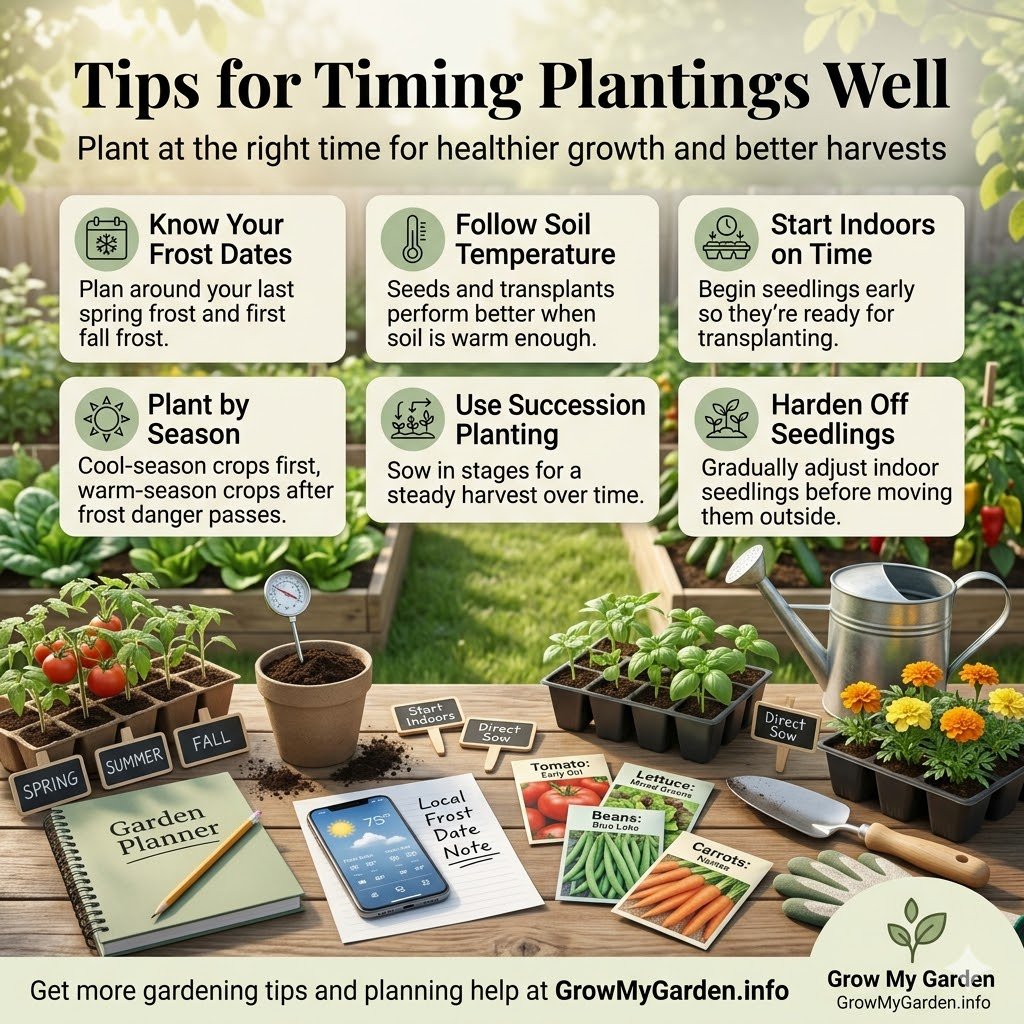
- Find your real last frost date first. A local frost-date lookup or your regional extension office gives an average for your area. Then adjust for your own plot — a low, open spot frosts later than a sheltered town garden.
- Harden off before transplanting. Move indoor-raised seedlings outside gradually over a week or so. Skipping this shocks tender plants and stalls them, even when the date is right.
- Treat the frost date as an average, not a deadline. It’s the date frost stops on average, which means it’s sometimes later. Tender crops appreciate a few days’ grace or a cloche on hand for surprises.
- Separate cool-season from warm-season crops. Lettuce, peas, spinach and brassicas tolerate cold and can go out early; tomatoes, peppers, cucumbers and squash want warm soil and no frost risk at all.
- Use the schedule for succession planting. Once you know the windows, you can stagger sowings of quick crops every couple of weeks for a continuous supply rather than one big flush.
Frequently asked questions
How do I find my last frost date? Use a frost-date lookup tool or contact your local agricultural extension office, both of which give an average last-frost date for your area based on historical records. Then fine-tune for your own garden, since elevation, shelter and proximity to buildings or water all shift the real date.
Should I start seeds indoors or direct sow? It depends on the crop. Heat-lovers with a long season — tomatoes, peppers, eggplant — benefit from an indoor head start so they’re mature enough to fruit before autumn. Root crops and many fast, cold-tolerant vegetables resent transplanting and do best sown directly where they’ll grow.
What happens if I plant too early? Frost-tender plants set out before the last frost risk being killed or badly checked by a cold night, and even survivors sulk in cold soil. Cool-season crops are more forgiving and can often go out early, which is why matching the crop to the calendar matters.
Does this account for my hardiness zone? Hardiness zones describe winter cold and help with perennials, but for sowing vegetables the key date is your last spring frost, which the calculator uses directly. Two gardens in the same zone can have different frost dates, so the frost date is the more precise input.