
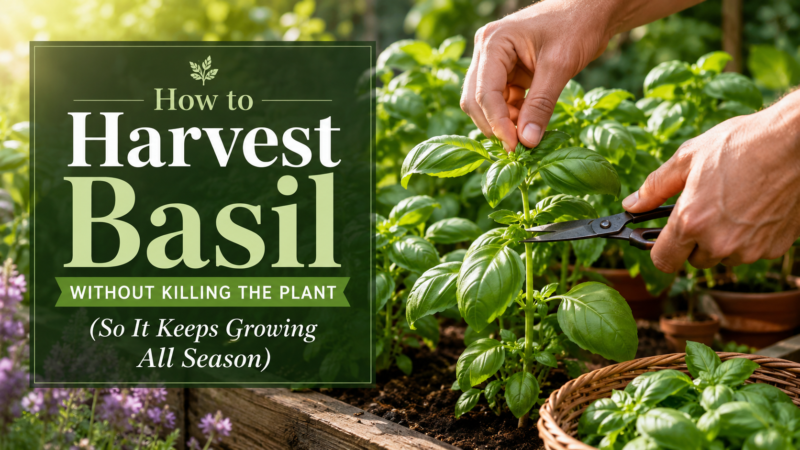
How to Harvest Basil Without Killing the Plant (So It Keeps Growing All Season)
The first summer I grew basil, I treated it like a grocery store product. Grabbed leaves whenever I needed them, from wherever was easiest to reach, and moved on. By early August the plant looked like it had been through a rough week. Spindly, pale, barely holding on. I genuinely could not figure out what I was doing wrong.
Turns out, I was the problem.
Learning how to harvest basil correctly changed everything about how I grow herbs. It sounds like a small tweak, but the difference between a thoughtless grab and a proper pinch is the difference between a plant that struggles through summer and one that gives you a continuous harvest of fresh, fragrant leaves from June straight through to the first frost.
If your basil keeps giving up on you, keep reading.
Why Most People Accidentally Kill Their Basil When Harvesting
Nobody kills their basil on purpose. The problem is that most of us were never taught how basil actually grows, so we treat it like a static plant rather than a living system that responds to every cut we make.
Basil belongs to the Lamiaceae family, the same clan as mint, oregano, and thyme. Like all herbs in this group, it is extremely sensitive to where and how you cut it. Pulling random leaves from the middle of the plant does not encourage the plant to fill in. It just removes leaves. The plant gets thinner without getting any bushier.
The second mistake is letting those flower buds develop without stepping in. Basil, or Ocimum basilicum to give it its proper name, is hardwired to want to flower and set seed. The moment those buds start forming at the tops of the stems, the plant starts redirecting its energy away from leaf production. The essential oils in the leaves that give basil its bold, peppery flavor begin declining. What you end up with are bitter, less aromatic leaves and a plant that is racing toward the end of its life on its own terms, not yours.
Both problems have straightforward solutions. You just need to know what you are dealing with. Read our complete Herb Gardening guide.
How to Harvest Basil Without Killing the Plant: Step by Step
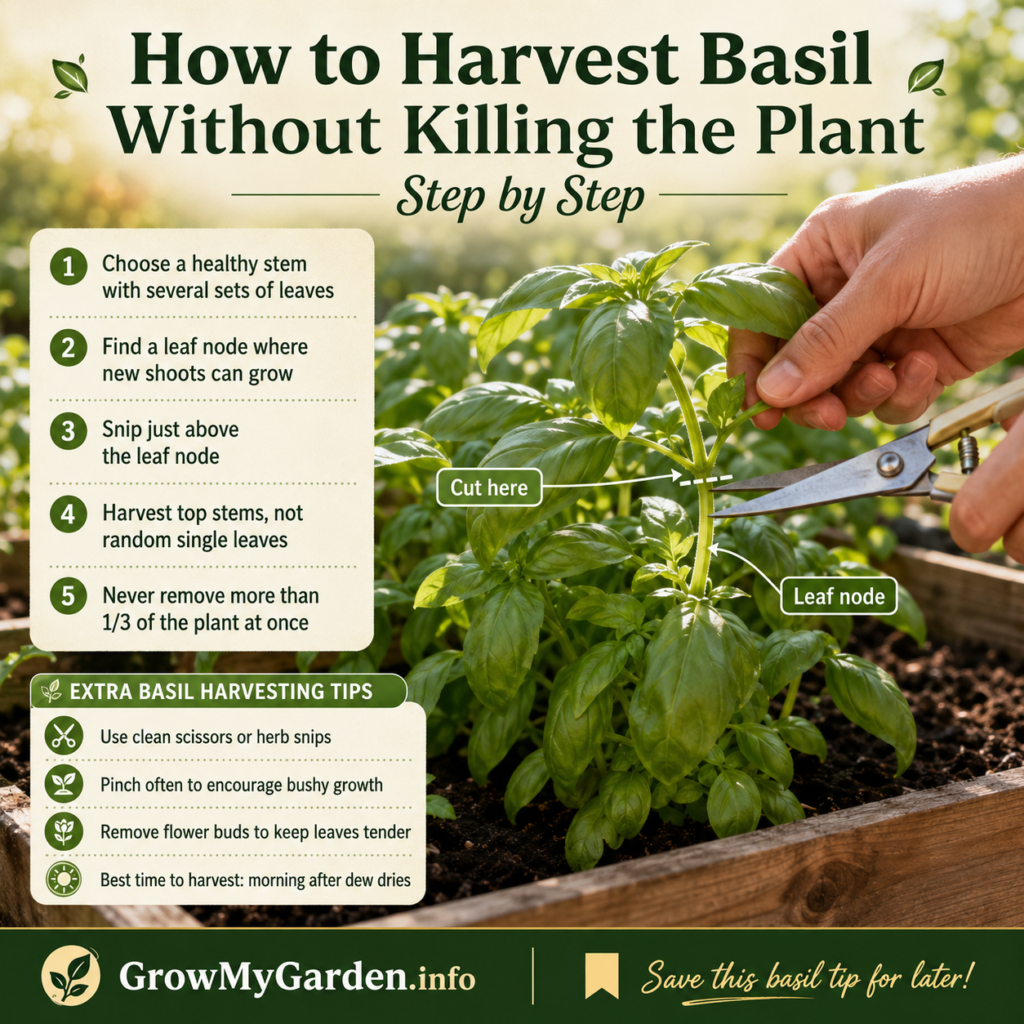
Everything comes back to one core idea: always cut above a leaf node.
A leaf node is the place on the stem where two leaves grow out from opposite sides. Look closely at any healthy basil stem and you will see these pairs repeating every inch or so up the length of the plant. Each one of these nodes holds axillary buds, small dormant growth points tucked right where the leaf meets the stem.
When you cut the stem just above one of these nodes, you remove the terminal bud at the tip, which was essentially telling the whole stem to keep growing taller. Without that bud, the axillary buds wake up and push out into two new side shoots. One stem becomes two. Do this regularly across the whole plant and you end up with something gloriously full and productive.
Here is how to put that into practice.
Step 1: Wait until the plant has something to give
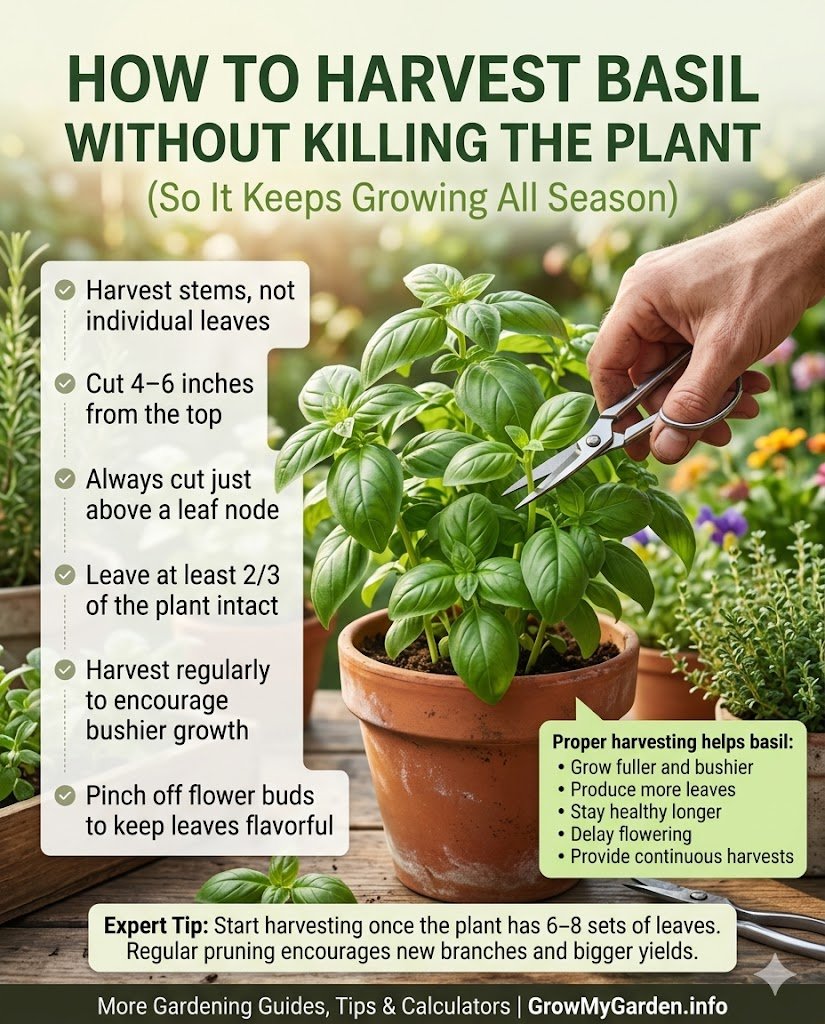
Hold off on harvesting until your basil is at least six inches tall and has developed four or five sets of leaf pairs. Young plants need time to grow a solid root system before they can handle regular trimming. This is the most common reason grocery store basil plants die within a week of coming home. Those little pots are actually packed with multiple seedlings grown fast and cheap for short-term sale. They look ready, but they are not. Repot them separately into fresh potting mix, give them a week to settle, and start harvesting only once they have visibly put on new growth.
Step 2: Pick the right tool and keep it clean
Sharp garden scissors or herb scissors are ideal for most home harvests. Pruning shears work well for thicker stems. A sharp knife does the job too. The key word in all of that is sharp. Blunt blades crush stem tissue rather than cutting through it cleanly. A crushed stem heals slowly and leaves an opening for fungal problems, especially in humid summer conditions.
Before you start, wipe the blades with a cloth soaked in rubbing alcohol. Sanitized tools take about ten seconds of effort and save you real headaches down the road. If you do not have scissors nearby, the pinching technique with your fingers works fine too. Grip the stem firmly just above a leaf node and snap it off with a quick pinch. It is not as precise as scissors, but it gets the job done.
Step 3: Locate your cut point
Find a healthy, well-developed set of leaf pairs somewhere in the upper third of the stem. Count down from the tip and aim for the second or third node from the top. Cut the stem roughly a quarter inch above that node. This short stub of stem above the leaves acts as a buffer, protecting the node while the cut heals over.
There is no need for a 45-degree angled cut here. That technique matters for roses and woody shrubs. For basil, a clean straight cut is perfectly fine.
Step 4: Always harvest from the top, not the bottom
Trim basil from the growing tips downward, never from the lower leaves up. The top of each stem is where the new growth originates and where the most active development is happening. Taking leaves from the lower central stem does nothing useful for the plant. It just creates gaps and leaves the upper structure untouched.
Step 5: Make it a regular habit
Once a week during the main growing season is a solid harvest frequency. Even if you do not need the basil at that moment, a light trim every seven to ten days keeps the plant locked in vegetative growth mode. Left to its own devices too long, it will always try to flower. Regular harvesting interrupts that instinct before it gains momentum.
The One-Third Rule: How Much Basil to Harvest at Once
Picture your basil plant as a small business. Steady, modest withdrawals keep it functioning well. One enormous withdrawal strips the reserves and the whole operation grinds to a halt.
The one-third rule is the most important guideline in basil pruning: never remove more than one third of the plant in a single session. Leaves are where photosynthesis happens. Take too many at once and you rob the plant of its ability to generate energy, which leads directly to plant shock, wilting, and sometimes permanent setback.
For a medium potted basil plant, one third might be two or three stems harvested in a week. For a large outdoor plant with many thick stems in a raised garden bed, you can take considerably more and still stay within safe limits. Use your judgment. If the plant looks stressed or the leaves start yellowing in the days after a harvest, you took too much. Scale back next time.
Want a clearer picture of what your plant should produce over the season? The Harvest Yield Estimator gives you estimated harvest weight and days to maturity so you can plan ahead.
How to Make Your Basil Plant Bushy Rather Than Leggy
A leggy basil plant, all height and no substance, tells a story of two missed opportunities: not enough light, and not enough regular pruning.
When a plant does not get sufficient sunlight, it stretches upward trying to find more. When its growing tips are never pinched back, it keeps all its energy focused in one vertical direction. The result is a tall, thin plant with sparse leaves that flops over by midday.
Fixing this comes down to understanding apical dominance. That is the biological mechanism by which a plant suppresses its side branches in favor of vertical growth from the central stem. Every time you pinch off a growing tip, you override that mechanism. The energy that was going up gets redirected into lateral branches. Over a season of consistent harvesting, a basil plant can easily triple the number of stems it started with.
If your plant is already looking leggy, do not write it off. Cut each main stem back by about a third, targeting a healthy leaf node each time. Within a week or so, new side shoots will start appearing at every cut site. Give it some time and the regrowth will surprise you.
For indoor basil on a windowsill or kitchen herb garden shelf, make sure the plant is getting a minimum of six hours of direct sunlight. A south-facing window works best in northern latitudes. If you are working with limited natural light, a basic LED grow light on a timer for a few extra hours each morning makes a visible difference without costing much to run.
When to Harvest Basil for Peak Flavor
Early morning is the sweet spot for picking basil. Overnight, the plant recovers from the stress of the previous day’s heat, and by morning the concentration of aromatic compounds in the leaves is at its highest. Harvest in the afternoon heat and you are working with a more fatigued plant that has already lost some of its moisture to evaporation.
If you want to get your timing right from the very beginning, the Planting Date Calculator maps out sowing, transplanting, and harvest windows based on your climate zone.
For the most intense flavor, harvest before any flower buds appear. This is the single biggest factor in basil quality that most home growers overlook. The moment you see even a hint of a bud cluster forming at the tip of a stem, pinch it off immediately. Deadheading basil this way does not hurt the plant. It signals to the plant that flowering has not succeeded yet and it should keep producing leaves instead.
Once basil has bolted fully, meaning the flowers have opened and pollen is flying, the leaves take on a noticeably more bitter taste. The bolting affects flavor in a real, detectable way. Some people do not mind and use the leaves anyway for cooked dishes, but for fresh applications like salads, Caprese, or fresh pesto, pre-bolt basil is in a completely different league.
How to Prevent Basil from Bolting
Bolting is basil’s polite way of announcing retirement. Heat, long days, and stress all accelerate the process, but you have more influence over it than most gardening guides admit.
The most effective prevention tool is the same one you use for harvesting: regular pinching. A basil plant that gets its growing tips removed consistently every one to two weeks never gets the chance to build up toward flowering. Each pinch sends it back to the beginning of the vegetative cycle. Keep doing it and the plant stays productive through the summer harvest season without getting a chance to quit on you.
Beyond that, a steady watering schedule matters more than people realize. Drought stress is one of the fastest triggers for bolting. The plant senses that its environment is hostile and responds by trying to reproduce before conditions get worse. During hot weather, potted basil and container basil can need water every single day. Push your finger about an inch into the soil. If it feels dry at that depth, water thoroughly until water runs out of the drainage holes.
Not sure how much that works out to for your bed or pot size? The Watering Schedule Calculator figures it out in seconds based on your garden setup.
Soil drainage itself is worth paying attention to. Basil sitting in waterlogged soil is under constant stress, which makes it more likely to bolt, develop yellowing leaves, and suffer root health problems. A well-draining potting mix with some perlite mixed in keeps things in the right balance. Feed with a liquid fertilizer balanced in nitrogen, phosphorus, and potassium every three weeks during the growing season, and you will notice the plant keeps pushing out new growth with noticeably more energy.
If you are unsure how much product to use for your bed size, the Fertilizer Calculator takes the guesswork out of it.
How to Store Fresh Basil After Harvesting
Fresh basil has one great irony: it is fussy about storage despite growing so freely in summer.
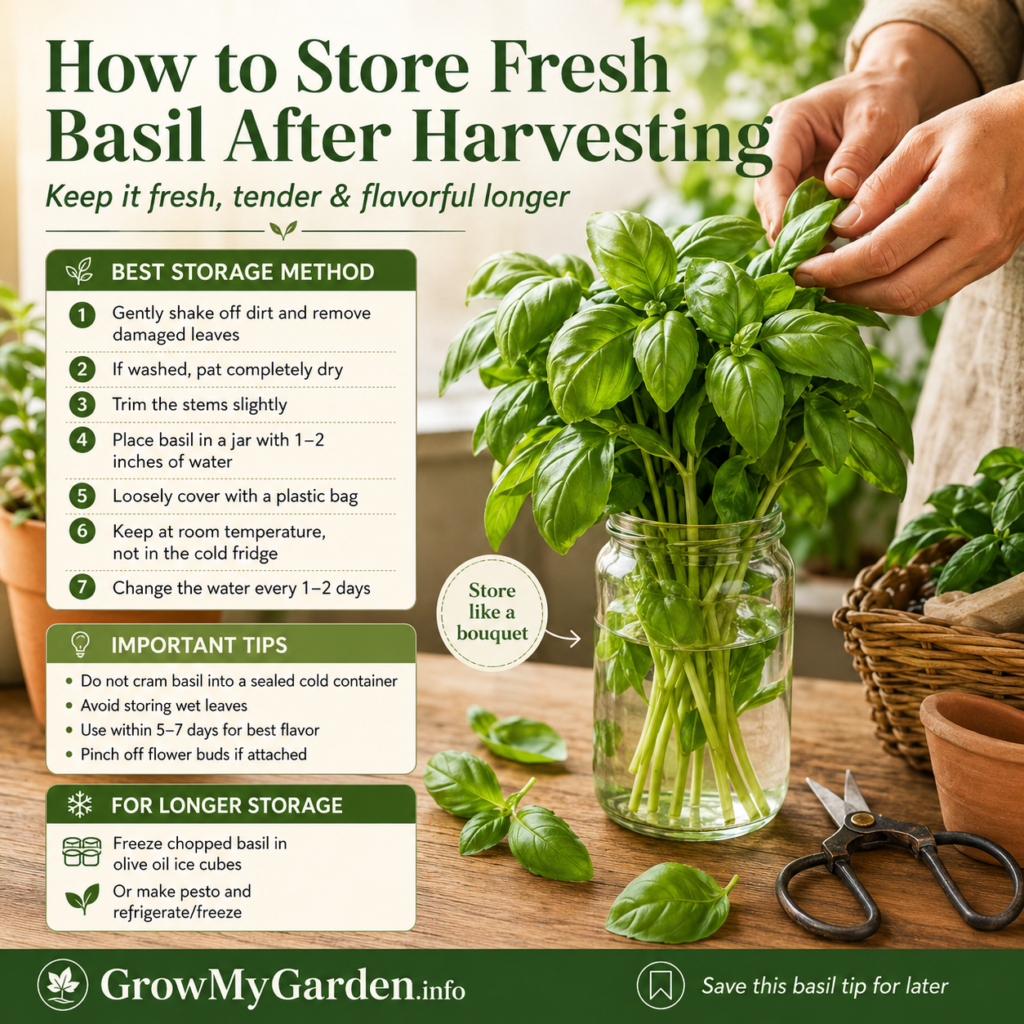
The method that works best in my kitchen is treating it like cut flowers. Trim the stem ends and stand them upright in a glass with about an inch of water. Cover loosely with a plastic bag and leave it on the counter at room temperature, away from direct sun. Basil stored this way stays bright and fragrant for up to two weeks. Under no circumstances should fresh basil go in the refrigerator. Cold temperatures turn the leaves black within twenty-four hours and the flavor disappears entirely.
For longer storage, freezing is the best path. Blanch the leaves in boiling water for about five seconds, then transfer immediately into ice water to stop cooking. Pat them dry, spread on a baking tray, freeze until solid, then move to a sealed bag. Frozen basil loses its fresh texture but holds its flavor well for cooked dishes, soups, and sauces.
Basil pesto freezes brilliantly too. Blend fresh basil with olive oil and leave out the cheese and garlic if you want maximum flexibility in how you use it later. Pour into an ice cube tray and freeze until solid, then bag the cubes. Dropping one into a winter pasta in January feels like a small act of time travel.
Dehydrating basil in a food dehydrator is an option, though the flavor dulls considerably compared to frozen. Dried basil works well enough as a background note in long-cooked dishes, but it will never replace the real thing for anything where basil is the star.
FAQ: Common Basil Harvesting Questions
Can you cut basil all the way to the ground?
Technically yes, but you should avoid it. Cutting down to the main stem removes every leaf node the plant needs to regrow. Without any nodes left above the soil, there is nothing for the plant to push growth from. Always leave at least two sets of healthy leaves on each stem when you harvest, and the plant will regenerate reliably.
Why does basil die after cutting?
Usually it comes down to one of a few things: plant shock from removing too much at once, a dull blade that damaged the stem instead of cutting cleanly, or the plant being too young and underdeveloped to handle harvesting yet. Dehydration after a heavy cut is also common. If the plant droops after trimming, water it well, give it a spot with gentle morning light rather than harsh afternoon sun, and wait a few days before deciding it is a lost cause.
Does picking basil actually help it grow?
Yes, provided you are picking from the top and cutting above a leaf node every time. The plant produces more lateral growth specifically because you are harvesting it correctly. It is one of those rare gardening situations where taking something away makes the plant give you more.
Why are my basil leaves turning yellow?
Yellowing leaves point to a handful of common causes. Overwatering and poor soil drainage are the most frequent culprits. Root health suffers when the soil stays wet too long and the leaves show it first. If moisture levels seem fine, a nutrient deficiency could be at play. Try a balanced liquid feed and watch whether new growth comes in healthy. Yellowing of the lowest, oldest leaves on an otherwise vigorous plant can also just be natural shedding, which is nothing to worry about.
How do I know when to harvest basil for the first time?
Once the plant has six or more inches of height and at least four or five sets of leaf pairs, it is ready. Start small. Take one or two stems and watch how the plant responds over the following week. If it bounces back with new growth at the cut sites, it is healthy and ready for a regular harvesting schedule.
Final Thought
Basil rewards the gardener who pays attention. The mechanics are not complicated once you understand them: cut above the node, take no more than a third at a time, pinch those flower buds before they open, and show up every week with clean scissors. Do those things through summer and the plant turns into something genuinely impressive, full of lateral branches and new side shoots, smelling incredible every time you brush past it.
And when you make a Caprese salad with leaves you grew yourself and harvested that morning, it tastes noticeably better. That part is not just imagination.

Leave a Comment