

How to Grow Blueberries in Pots (and Actually Get Fruit from Them)
Most people think growing blueberries requires a big garden, specialized equipment, and a lot of patience before seeing any real results. None of that is true. Blueberry bushes in pots are one of the most rewarding plants you can grow on a patio, deck, or small balcony — they’re genuinely well-suited to blueberry container gardening in limited spaces.
What they do need, however, is the right setup. Blueberries are acid-loving plants that only thrive in acidic soil with a pH of 4.5 to 5.5, a container with solid drainage, and enough direct sun. Get those things right, and potted blueberry plants will reliably produce fresh berries every single summer for decades. Read our Fruit Gardening guide.
I’ve been growing blueberries at home — on a small apartment patio in Ohio — for six years now. I don’t have a garden bed. I have a handful of pots, a decent understanding of soil chemistry, and more fresh blueberries every July than two adults can reasonably eat. These are genuinely one of the great superfoods you can grow yourself, and the gap between “this plant is struggling” and “this plant is thriving” is usually just a few key decisions made correctly early on.
Here’s what I’d tell my past self before that first plant died.
Do Blueberries Actually Grow Well in Pots?
Better than most people expect. That’s the honest answer.
Blueberry bushes in pots have a real advantage over ground growing in many American backyards: you’re in complete control of the soil. In-ground blueberry growers often spend years fighting naturally alkaline or heavy clay soil. With blueberry container gardening, you build the root environment from scratch. The pH, the drainage, the moisture level — all of it is in your hands.
There’s also the space factor. Not everyone has room for a dedicated garden bed. A couple of 15-gallon containers on a sunny deck or balcony is genuinely enough to harvest meaningful fruit every summer. Urban gardening and small space gardening have made this more mainstream over the past decade, and blueberries are one of the best fruit-bearing plants you can grow in a limited footprint.
A single well-maintained potted blueberry plant can produce one to three pints per season once it’s established, and these are perennial shrubs — keep them happy and they’ll fruit for 20 or 30 years.
The Botany You Don’t Have to Memorize (But It Helps)
Blueberries belong to the Ericaceae family — the same family as rhododendrons, azaleas, and heathers. The botanical name for northern highbush blueberry is Vaccinium corymbosum, though the cultivated berries most of us grow are hybrids within that genus. What matters practically is this: every plant in the Ericaceae family evolved in acidic, woodland conditions. They’re acid-loving plants by nature, not by quirk. Asking them to grow in neutral potting mix is like asking a cactus to thrive in a swamp.
Understanding this one thing explains almost every decision you’ll make about soil, fertilizer, and water.
Choosing the Right Variety for Container Growing
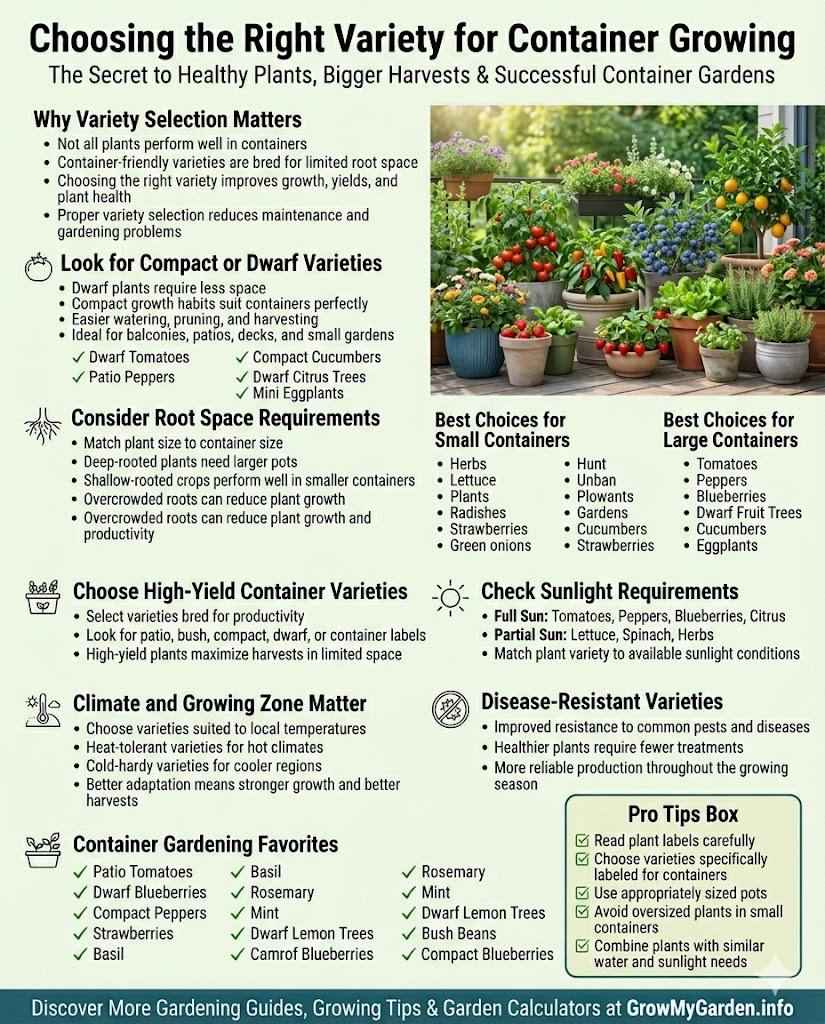
Not every blueberry is suited to life in a pot. Standard northern highbush types can reach five or six feet tall with a matching spread — doable in a half whiskey barrel, awkward in a 12-inch nursery pot.
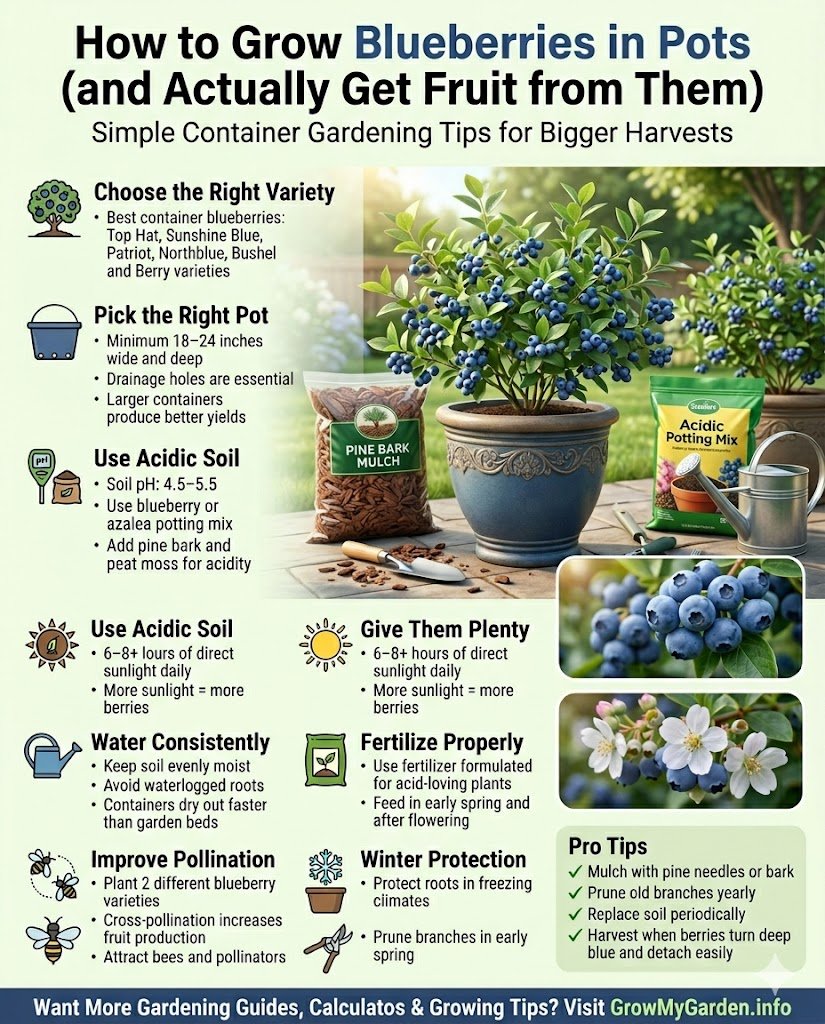
For most home growers, compact blueberry varieties and dwarf blueberry plants are the smarter starting point. Here are the ones I’d recommend most:
Top Hat blueberry — probably the most widely grown true dwarf for containers. Stays 18–24 inches tall, has decent cold hardiness, and produces well for its size. You’ll find it at most garden centers in the Midwest and Northeast.
Sunshine Blue — a southern highbush type that tolerates slightly higher soil pH than most and is comfortable in zones 5–10. Good pick if you’re somewhere warm and don’t want to fight pH as aggressively.
Peach Sorbet — stunning ornamental foliage (orange-red in fall), compact habit, and excellent flavor. This one looks good enough that people buy it just for the patio aesthetics and then are pleasantly surprised by the berries.
Jelly Bean blueberry — extremely compact, sweet berries, great for families with kids. Looks intentional in a decorative pot rather than like a shrub someone crammed in a container.
Northblue — a half-high blueberry bred specifically for harsh winters, rated down to zone 3. If you’re in Minnesota, Wisconsin, or upstate New York, this one was practically made for you.
Patriot blueberry — a reliable highbush variety with solid disease resistance. I’ve grown this one for three years and it’s the closest thing I’ve found to a “set it and forget it” container blueberry. Pairs well with Bluecrop for cross-pollination.
Polaris — early-ripening half-high type with excellent flavor and cold hardiness. If you’re impatient for berries (who isn’t?), this one ripens two to three weeks before many others.
Pink Lemonade blueberry — technically a novelty variety with pink berries, but genuinely productive and real. Great conversation starter at garden parties.
Blueberry Burst — another compact, trailing variety good for hanging baskets or the edges of wide pots.
For the deep South — Florida, Gulf Coast, central Texas — look at southern highbush types like Sunshine Blue or O’Neal. They’re bred for heat tolerance and low chilling hour requirements.
Picking the Best Container
This is where beginners go wrong most often: starting too small, planting too shallow, or ignoring drainage.
Size and depth
A young plant from the nursery can spend its first year in a 5-gallon pot, but plan to step it up within two seasons. A mature blueberry bush wants at least a 15-gallon container — something with both good container depth (18 inches minimum) and enough width for lateral root spread.
For large highbush varieties, a half whiskey barrel is genuinely one of the best options: deep, wide, and made of wood, which breathes well and doesn’t heat up in summer like black plastic does.
One plant per pot is the standard approach. Crowding two bushes into one container leads to root competition, uneven watering, and both plants underperforming.
Pot material
Fabric grow bags — my personal first choice. Air-pruning roots encourages a healthier root system, drainage is excellent, and they’re cheap (a 15-gallon bag runs about $10–12). Only downside is they dry out fast in summer heat.
Terracotta pots — beautiful, breathable, but they dry out even faster than fabric. If you go this route, mulch the top heavily and check moisture daily in peak summer.
Self-watering pots — a solid option for people who travel or have a habit of forgetting to water. Just make sure the reservoir doesn’t keep roots sitting in standing water during wet weeks.
Plastic pots — practical and fine, just make sure you’re not choosing a dark-colored one in a hot climate. Dark plastic absorbs heat and can cook the roots on a south-facing patio in July.
Drainage holes: genuinely non-negotiable
Every blueberry container needs solid drainage. Root rot is almost always a drainage issue first. If a pot comes with one small hole at the bottom, drill more — I use a 1-inch spade bit and add four or five extra holes. It takes two minutes and could save the plant.
Getting the Soil Right (The Part That Actually Matters Most)
If there’s one section of this article worth reading twice, it’s this one.
Blueberries need soil pH between 4.5 and 5.5. Not “slightly acidic.” Significantly acidic — more acidic than what most vegetables, flowers, or shrubs want. A pH above 6.0 and you’ll start seeing iron deficiency and poor growth. Above 6.5 and the plant will slowly decline no matter how well you water and fertilize it.
Most commercial potting mixes run pH 6.0–7.0. That’s the problem right there.
The mix I use
Rather than relying on any single commercial product, I build my own acidic soil blend:
- 50% ericaceous potting mix — sold specifically for acid-loving plants, usually under names like “Azalea, Camellia & Rhododendron Potting Mix” (Miracle-Gro and Espoma both make good versions). This is essentially ericaceous compost formulated for container use.
- 25% peat moss — naturally acidic, excellent for moisture retention, and a classic soil amendment in blueberry growing. Note that peat is a finite natural resource; if you’d prefer an alternative, coconut coir works in a pinch, though it’s pH-neutral and you’ll need to compensate elsewhere.
- 25% perlite — keeps things from compacting and ensures the well-draining soil conditions blueberries need
Not sure how much mix to prepare? Use the Raised Bed Soil Calculator to estimate quantities by container size.
Some growers also mix in pine bark fines or composted bark, which mimics the organic matter content of the forest floor conditions that wild blueberries evolved in. Bark-based organic matter also supports mycorrhizal fungi — root-associated organisms that help the plant access phosphorus and moisture more efficiently. It’s not magic, but it does make a measurable difference in long-term plant health.
Testing pH before you plant
Don’t skip this step. Pick up a digital pH meter — the Apera PH20 runs about $35 on Amazon and is accurate enough for home use. Basic chemical soil pH test kits from garden centers work too, though I find the meters faster and more consistent.
If your mix tests above 5.5, you have a couple of options. Powdered elemental sulfur is the traditional soil acidifier — it works, but slowly (weeks to months). Mixing it into the soil before planting gives it time to work. A faster route is using aluminum sulfate, which acts within days.
The tap water problem
Here’s something most articles skip over: many American city water supplies run pH 7.5 or higher. Every time you water with alkaline tap water, you’re slowly pushing the soil pH up. Over months, this undoes your acidic soil setup.
The fix? Collect rainwater. I have a 50-gallon barrel next to my patio that I fill specifically for the blueberry pots from March through September. It’s naturally slightly acidic and free. Distilled water is the other option — safe for the plants but impractical at scale. If you’re stuck on tap, a once-monthly pH check keeps you ahead of creep, and regular use of ammonium sulfate fertilizer provides some correction.
Sunlight and Where to Actually Put Your Containers
Blueberries want full sun — at least 6 to 8 hours of direct sunlight daily. This isn’t flexible. A plant getting four hours will survive but produce a fraction of the fruit a well-sited plant would.
In hotter climates (Texas, Arizona, inland California), afternoon partial shade is actually beneficial. The plants are more heat-sensitive than their reputation suggests, and prolonged temperatures above 85–90°F can hurt fruit set. An east-facing balcony that gets morning sun and shade by 2 p.m. can actually outperform a fully south-facing one in a hot summer.
When positioning containers, think about the microclimate. South-facing walls reflect extra heat and extend the growing season — great in Michigan, potentially stressful in Georgia. In small space gardening situations with buildings nearby, light patterns shift dramatically by season.
If you’re unsure exactly how your patio or balcony gets light, an app called Sun Surveyor (free on iOS and Android) shows you the sun’s path at any location and time of year. It’s genuinely useful for container placement decisions.
Step-by-Step: Planting Blueberries in Containers
Best time to plant: Early spring (March–April in most of the US) when plants are still dormant or just breaking dormancy. Fall planting (September–October) works fine in zones 6 and warmer. Spring is more forgiving for beginners.Timing varies by climate zone. Use the Planting Date Calculator to find your ideal planting window before starting.
Here’s how to do it:
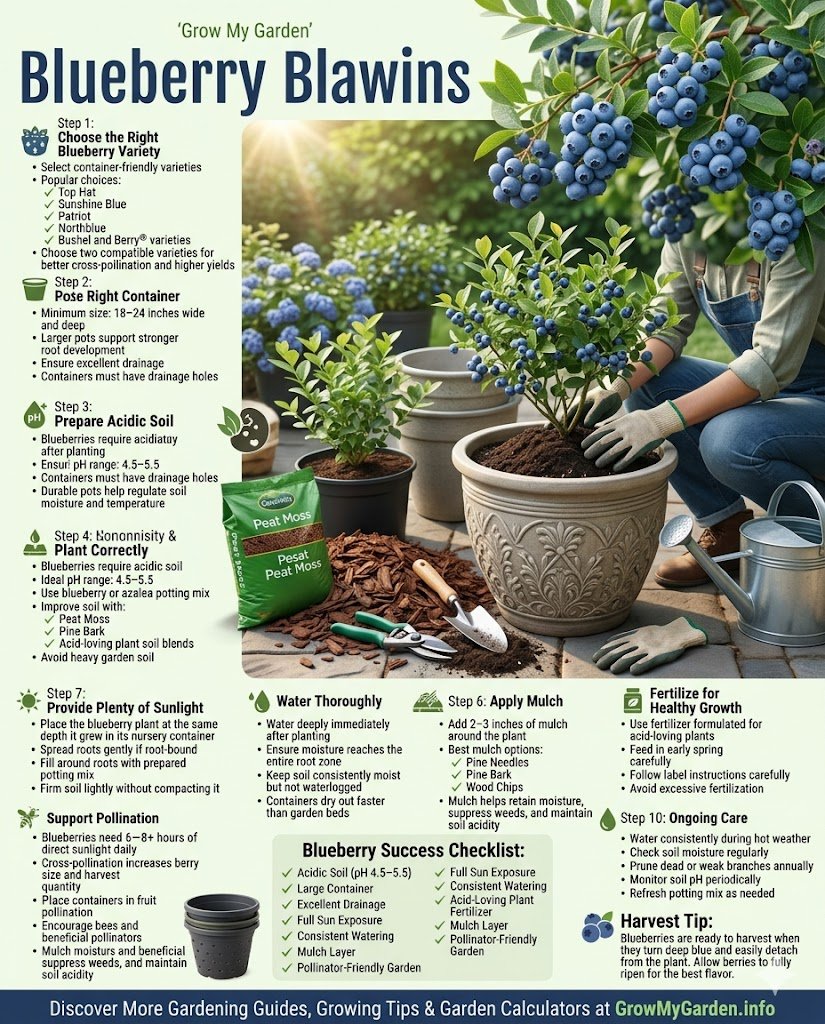
- Fill the container about one-third full with your prepared acidic potting mix.
- Work in a tablespoon or two of slow-release acid fertilizer (Espoma Holly-tone is the go-to) at this stage. Mix it in rather than putting it right against the roots.
- Remove the blueberry plant from its nursery pot. If the roots are circling or densely matted, gently loosen them with your fingers before planting.
- Set the plant in the container so the top of the root ball sits about an inch below the pot rim — not too deep.
- Fill in around the roots with more of your mix, firming it gently. Don’t compact it.
- Water slowly and thoroughly until it runs freely from the drainage holes. This settles the soil and removes air pockets.
- Add a 2-inch layer of mulch on top — pine bark nuggets work well here. This conserves moisture and adds a touch of acidity as it breaks down.
- Place the pot in your chosen sunny location and don’t move it around unnecessarily while the plant establishes.
Watering Potted Blueberry Plants
Containers dry out faster than garden beds — especially in summer, especially in fabric pots or terracotta. Consistent moisture is critical because blueberry roots are shallow and fine; they don’t have the depth to draw from a reservoir the way some other plants do.
In my experience, peak summer means checking every single day. If the top inch of soil is dry, water it. A $15 soil moisture meter makes this less of a guessing game if you’re new to container growing.
Want a structured routine? The Watering Schedule Tool calculates how much water your containers need each week based on your conditions.
For practical automation, a drip irrigation timer with a few emitters is worth considering. A basic Rainbird timer with drip lines costs around $25–30 and covers your plants during vacation weeks without drama.
Signs of overwatering: Yellowing leaves that look soft and limp, stems that feel mushy near the soil line, soil that smells slightly off. This is one of the more common beginner mistakes — the instinct to keep watering a struggling plant, when the struggling is caused by too much water.
Signs of underwatering/drought stress: Wilting in the morning (not just the afternoon heat wilt, which is normal), leaves curling inward, soil pulling away from the pot edges.
Fertilizing: Feeding the Right Way
Regular all-purpose fertilizers won’t serve blueberries well. You need an acid fertilizer formulated specifically for plants in the Ericaceae family. Two options I’ve actually used:
Espoma Holly-tone — an organic fertilizer with an NPK ratio (4-3-4) suited for acid-loving plants. It releases slowly, is gentle enough that it’s hard to burn your plants, and slightly acidifies as it breaks down. This is my standard blueberry fertilizer and has been for years.
Ammonium sulfate (21-0-0) — a more concentrated nitrogen fertilizer that also acidifies soil as it works. Dilute carefully (about 1 tablespoon per gallon of water) and apply monthly during the growing season. Don’t use it dry on container plants — the concentration risk is higher than with in-ground use.
Feeding schedule:
- Early spring (when you see the first new growth): First application of slow-release fertilizer
- Late spring (when flower clusters appear): Second feeding
- Post-harvest (early fall): Light feeding to help the plant build energy reserves for winter
- Hard stop by mid-August: Late-season fertilizing pushes tender new growth that frost will kill
For precise amounts based on your container size, the Fertilizer Calculator takes the guesswork out of feeding.
Watch for chlorosis — that classic pattern of yellowing between leaf veins while the veins themselves stay green. It’s the signature look of iron deficiency, almost always triggered by pH drifting too high. Chelated iron (like Bonide Liquid Iron) corrects it quickly while you work on getting the pH back down.
Cross-Pollination: Do You Need Two Plants?
Yes, and here’s why most people don’t realize it matters.
Most blueberry varieties are technically self-pollinating — they’ll produce some fruit without a companion. But “some” and “a lot” are wildly different experiences. Growing two compatible varieties within 10–15 feet of each other can double or triple your berry yield through effective cross-pollination. It’s not a suggestion; it’s the difference between a handful of berries and an actual harvest.
Bee pollination does most of the work. If you’re on a high-rise balcony where pollinators are scarce, hand pollination with a small artist’s paintbrush — just brush from flower to flower across both plants — takes five minutes and makes a genuine difference in fruit set.
When pairing varieties, match the bloom time window. Good pairings include:
- Patriot + Bluecrop — two highbush types with overlapping bloom periods
- Northblue + Polaris — both half-high, both early-to-mid season
- Top Hat + Sunshine Blue — compact enough to sit side by side on a balcony
Planning how to fit two varieties on your patio? The Plant Spacing Calculator helps you map out the spacing.
Avoid pairing an early-ripening variety with a very late one — they’ll bloom past each other and the cross-pollination benefit disappears.
Pruning: What to Cut and When
Year one rule: be hands-off. Let the plant establish its root system. If it blooms in the first spring, pinch those blooms off — as counterintuitive as it sounds, sacrificing that first-year fruit redirects the plant’s energy into building the structure that pays dividends for decades.
From year two onward:
The main pruning session happens in late winter or early spring — February in mild climates, March in colder zones. The plant is fully dormant, which makes it easy to see the structure clearly.
Focus on:
- Removing dead branches first — anything grey, brittle, and budless goes
- Thinning crossing branches and anything growing back toward the center of the plant (good air circulation is your friend against fungal diseases)
- Cane pruning on mature plants: once a bush is five or more years old, cut one or two of the oldest, thickest canes to the ground each year. New, productive canes replace them. This rejuvenation pruning keeps the plant from getting too woody and unproductive.
Winter pruning while fully dormant is genuinely easier than pruning during the growing season — you can see exactly what you’re cutting without the leaves getting in the way.
Pests, Diseases, and the Things Worth Actually Worrying About
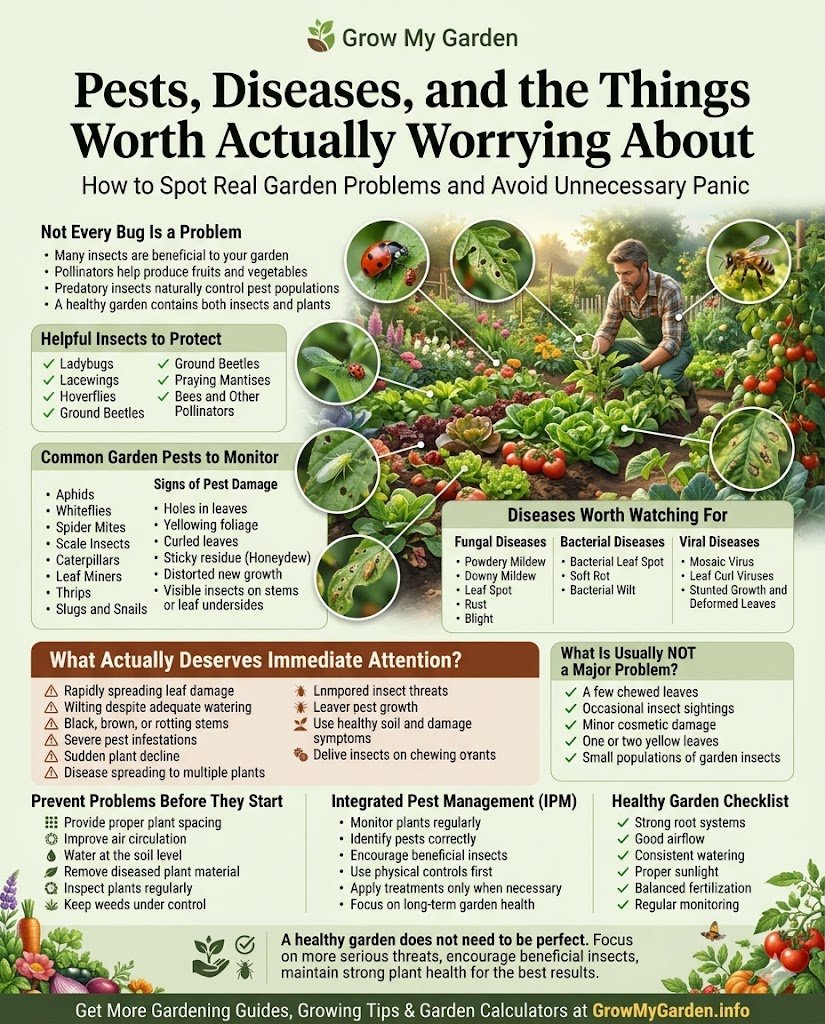
Container-grown blueberry plants tend to have fewer pest problems than in-ground ones, partly because you can monitor them more closely. That said, a few culprits are worth knowing.
Blueberry pests:
Aphids — clusters of tiny insects on new growth. A strong jet of water from a hose knocks most of them off. Neem oil handles what water doesn’t.
Spider mites — more likely in hot, dry conditions. Look for fine webbing and a speckled, faded look to the leaves. Insecticidal soap is effective.
Blueberry maggot — a fly larva that infests fruit from the inside, making berries drop or taste off. Yellow sticky traps hung near the plants early in the season intercept the adult flies before egg-laying. This is one pest worth preventing rather than treating.
Birds — the most persistent “pest” once berries turn blue. Bird netting is the only reliable solution. Tie it securely — birds are determined and clever.
Diseases:
Mummy berry — a fungal disease that causes berries to shrivel into dry, mummified husks rather than ripening properly. Clean up fallen fruit promptly; the fungal spores overwinter in debris. Keep mulch fresh.
Powdery mildew — white, dusty coating on leaves, especially in humid conditions with poor air circulation. Space your plants so air moves between them. A diluted solution of baking soda and water (1 teaspoon per quart) sprayed on affected leaves treats mild cases.
Leaf spot — shows up as small brown spots on leaves, usually in wet seasons. Mostly cosmetic but worth removing affected leaves.
Root rot — almost always a consequence of poor drainage or overwatering. If a plant wilts despite moist soil, check the roots; they should be white and firm, not brown and mushy. Better to prevent it with proper drainage than to treat it after the fact.
For organic pest control across most of these issues, neem oil is the most versatile option. It’s safe to apply up to harvest day.
Overwintering Blueberries in Containers
Blueberries are deciduous shrubs — they drop their leaves, go dormant, and genuinely need that cold period. Don’t panic when the leaves turn red and fall in October. That’s not a problem; that’s the plant doing exactly what it should.
The real concern with overwintering containers is that pot-bound roots are more exposed to freezing temperatures than in-ground ones. The soil in a container can freeze solid in a bad winter, which can kill roots even on cold-hardy varieties.
By zone:
Zones 7–8: Pots can stay outdoors through winter in most years. Push them against a wall for wind protection and add a generous layer of winter mulching on top of the soil — straw, shredded leaves, or pine bark work.
Zones 5–6: Move containers into an unheated garage or shed once temperatures consistently drop below freezing. The plant still needs cold (blueberries require 800–1,200 chilling hours depending on variety), so don’t bring it into a warm space. Just get it out of the worst freezes.
Zones 3–4: Only very cold-hardy varieties like Northblue or Polaris are realistic candidates. Overwinter in an insulated but cold structure, and insulate the pot itself with foam or burlap wrapping.
Don’t fertilize in fall hoping to “strengthen” the plant for winter — that’s backward logic. New growth pushed in late fall won’t harden off before frost and will die back anyway.
When and How to Harvest
Wondering if the yield is worth the effort? The Harvest Yield Estimator gives you a realistic picture before you commit. A blueberry turning deep blue does not mean it’s ready. Full color arrives a few days before peak flavor, and impatient picking is one of the most common ways to end up disappointed.
The real test: a gentle pinch between two fingers. A ripe blueberry releases with almost zero resistance. An unripe one holds on like it owes you money.
Blueberry ripening doesn’t happen all at once — it staggers over three to four weeks during harvest season (generally June through August, depending on variety and location). Plan to visit the same plant every few days and pick what’s ready rather than harvesting all at once.
On timing expectations:
First year harvest is minimal — and purposely so if you’ve pinched the first-year blooms as recommended. By year two, you’ll see real fruit. Year three is typically when potted blueberry plants hit their stride and produce enough to matter. After that, a well-maintained plant keeps producing. The berry yield from a properly managed 15-gallon container in full sun can easily fill a quart container per plant per season, and that compounds as the plant matures.
Troubleshooting the Most Common Problems
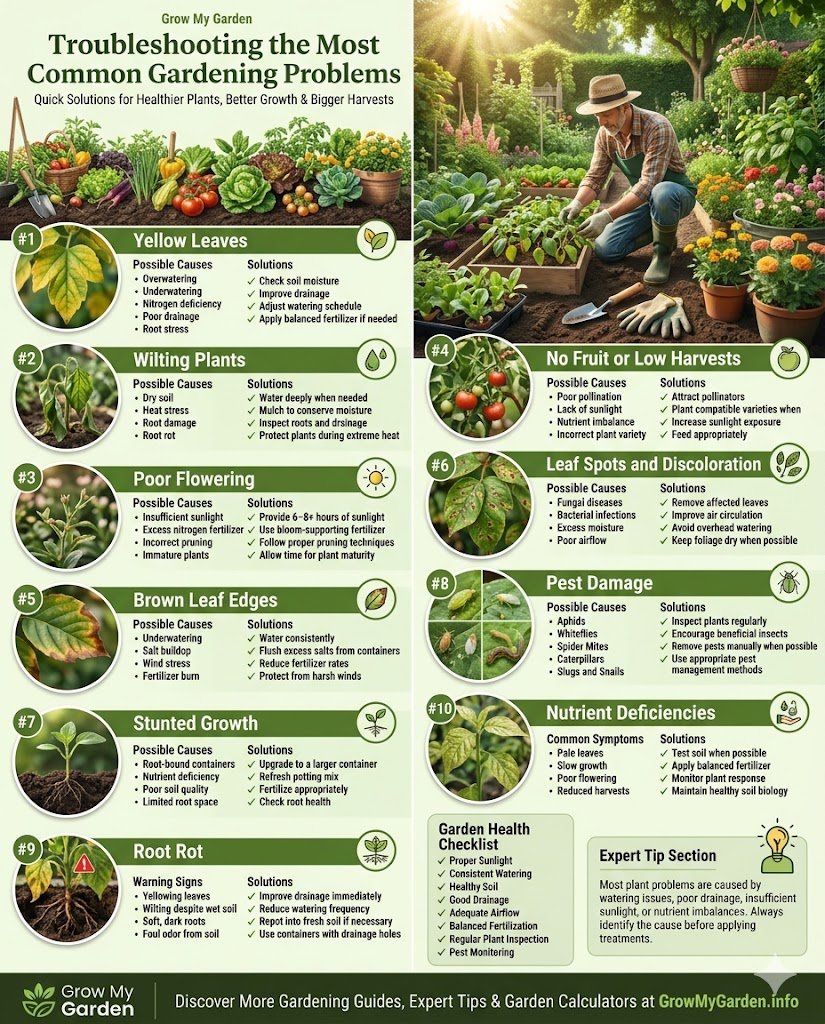
Blueberry leaves turning yellow (all over): Almost certainly a pH problem. Test the soil immediately. If it’s above 5.5, acidify — elemental sulfur for a slow fix, aluminum sulfate for faster results. Meanwhile, apply chelated iron to address the iron deficiency symptom.
Yellow between veins but green veins (chlorosis): Classic iron deficiency from elevated pH. Same fix as above: lower the pH and apply chelated iron.
Leaves turning brown at the edges: Often drought stress or, ironically, salt buildup from over-fertilizing. Flush the pot with several gallons of rainwater or distilled water to leach accumulated salts.
No fruit on the blueberry plant: Check these in order: (1) Is there a second variety nearby for cross-pollination? (2) Did the plant get enough chilling hours last winter? A mild winter in a borderline zone can cause poor fruit set. (3) Is the plant getting enough light?
Dropping leaves mid-season: If it’s fall, this is normal deciduous behavior. Mid-summer leaf drop paired with wilting suggests root rot or severe underwatering. Check drainage and soil moisture.
Slow growth or leggy blueberry plant: Usually insufficient sunlight. Move the pot. Also check whether the plant has become root-bound — if roots are circling densely around the pot walls when you tip it out, it’s time to move up to a larger container. Repotting blueberries into fresh acidic mix often triggers a visible growth surge within weeks.
Overwatered blueberry: Stop watering, improve drainage, and let the soil dry down before watering again. If root rot has set in (soft brown roots, foul smell), trim affected roots and repot into fresh dry mix. The plant may or may not recover depending on severity.
Can Blueberries Grow Indoors?
Technically yes, but practically — it’s a stretch. Blueberries need full outdoor sunlight levels that grow lights struggle to replicate economically, and they need a proper cold dormancy period each winter. If you bring a potted blueberry inside to a warm bright window, you’re likely to get a confused, leggy plant that doesn’t fruit properly.
The better approach for apartments: keep pots on the sunniest outdoor balcony available from spring through fall, then overwinter in an unheated space (cold stairwell, garage, storage room) rather than a heated apartment.
Frequently Asked Questions
Do blueberries grow well in pots?
Yes — and in some situations, better than in the ground. The biggest advantage of growing blueberries in containers is that you control the soil completely. In-ground gardeners often spend years fighting naturally alkaline or clay-heavy soil. With a pot, you build the perfect acidic environment from scratch and maintain it. A well-chosen compact variety in a 15-gallon container with proper drainage, the right soil pH, and consistent watering will reward you with fresh berries every summer for 20 years or more. The setup takes some attention upfront, but once the plant is established, it pretty much runs itself season after season.
If you’re building out a full patio fruit garden, these fruit trees for small gardens pair well with container blueberries.
What cannot be planted next to blueberries?
The main plants to keep away from blueberries are anything that prefers alkaline or neutral soil — because what’s good for them is the opposite of what blueberries need. Avoid planting them near boxwood, lilacs, lavender, or bougainvillea, all of which prefer higher pH soil and will compete in a way that leaves both plants struggling. Fennel is another one to keep far away — it releases compounds from its roots that suppress the growth of nearly everything nearby, and blueberries are no exception.
Nightshades like tomatoes and peppers also make poor neighbors because they share some of the same fungal disease risks and have different soil needs. What does work well near blueberries? Plants from the same Ericaceae family — rhododendrons, azaleas, and lingonberries all thrive in the same acidic conditions. Strawberries are also a surprisingly good companion; they like slightly acidic soil and don’t compete aggressively for resources.
Strawberries make surprisingly good companions — and if you want to grow them alongside your blueberries, here’s how to grow strawberries in pots.
What does Epsom salt do for blueberries?
Epsom salt is magnesium sulfate, and it does two useful things for blueberries: it supplies magnesium, which is essential for chlorophyll production, and sulfur, which gently lowers soil pH over time. If your blueberry plant is showing yellowing between the leaf veins while the veins themselves stay green, that’s often a sign of magnesium deficiency — and a diluted Epsom salt drench can turn that around within a few weeks.
To use it, dissolve one tablespoon in a gallon of water and apply it around the base of the plant once a month during the growing season. That said, Epsom salt is not a fertilizer and it’s not a pH corrector on its own. If your soil pH is way off, no amount of Epsom salt will fix it. Think of it as a supplemental boost, not a substitute for proper soil management. Overusing it can also cause a calcium-magnesium imbalance, so stick to the monthly routine and don’t go heavier thinking more is better.
What do coffee grounds do for blueberry plants?
Used coffee grounds are mildly acidic (usually pH 6.0–6.5), add a small amount of nitrogen to the soil, and improve the overall texture of your growing medium as they break down. For blueberries — which need pH 4.5 to 5.5 — coffee grounds aren’t acidic enough to single-handedly fix a pH problem, but they do contribute to the overall acidifying routine when used consistently. Sprinkle a thin layer (no more than half an inch) on top of the potting mix and work it in lightly, or mix them into your compost before adding it to the pot.
The mistake most people make is piling on too much at once. A thick layer of grounds can compact, repel water, and even develop a surface mold layer that does more harm than good. A little, regularly, is the right approach. Fresh grounds are more acidic than used ones, but either works. If you’re a daily coffee drinker, your blueberry pots are an easy and satisfying place to put those grounds to work instead of sending them to the trash.
What is the best homemade fertilizer for blueberries?
The most effective homemade option is a pine needle mulch applied generously on top of the soil. Pine needles are naturally acidic, break down slowly, keep moisture in, and feed the soil gradually — everything a blueberry plant wants from a surface treatment. They’re free if you have a pine tree nearby or cheap to buy in bales at garden centers. Beyond that, a mix of used coffee grounds and composted leaves worked into the top inch of soil gives a gentle nitrogen boost along with organic matter that improves the overall soil structure over time.
For a liquid feed, some growers use a diluted apple cider vinegar solution (one to two tablespoons per gallon of water) every few weeks to help maintain soil acidity during the growing season — though this should supplement, not replace, a proper fertilizer routine. The honest truth is that no homemade fertilizer quite matches a purpose-made acid fertilizer like Espoma Holly-tone for consistency and results. But if you want to stretch between commercial feedings or give your soil a natural boost, pine needle mulch plus a coffee ground top-dressing is the combination that comes closest to replicating what these plants would naturally get from a forest floor environment.
Putting It All Together
Blueberry container gardening isn’t complicated — but it’s also not forgiving of the one big mistake, which is always getting the soil and pH wrong. Nail that part and you’ve already solved 80% of the challenge. The rest — choosing a compact variety, picking a container with proper drainage, watering with pH-neutral water, fertilizing with an acid formulation — follows naturally once you understand what these plants actually are and where they came from.
If you’re just starting out, go with two plants: a Sunshine Blue and a Polaris, or a Top Hat and a Peach Sorbet. Plant them in proper ericaceous potting mix in fabric grow bags. Put them in your sunniest spot. Test the pH before planting and every month afterward. Water with collected rainwater when you can.
Do those things and you’ll be picking your own homegrown blueberries by summer two. By summer three, you’ll have more than you know what to do with — and you’ll have learned the kind of thing that comes from actually doing it, rather than just reading about it.
That’s a better return than most investments you’ll make this spring.




Leave a Comment