Flower Gardening: A Practical Guide to Growing a Garden That Feels Alive
Flower gardening has a way of pulling people in quietly. It usually starts small. One pot of marigolds by the front step. A packet of zinnia seeds because the picture looked cheerful. A rose bush you were sure you could handle, until it reminded you that beauty can also be a bit dramatic. Then before you know it, you are standing in the garden center comparing bloom times, sniffing soil bags, and wondering whether one more container will really hurt.
That is the charm of it.
I have learned over the years that flower gardening is part creativity, part observation, and part patience. Some flowers are easygoing and bloom like they are trying to win a prize. Others behave like moody artists and need the right light, the right soil, and the right amount of attention before they perform.
I have planted things in the wrong place, watered too much, trusted a “low maintenance” label that was telling half the story, and still come back every season wanting more. Because when it works, it really works. A good flower garden changes how a space feels. It softens a yard, brightens a balcony, brings in bees and butterflies, and gives you that small daily reward of seeing something new open up.
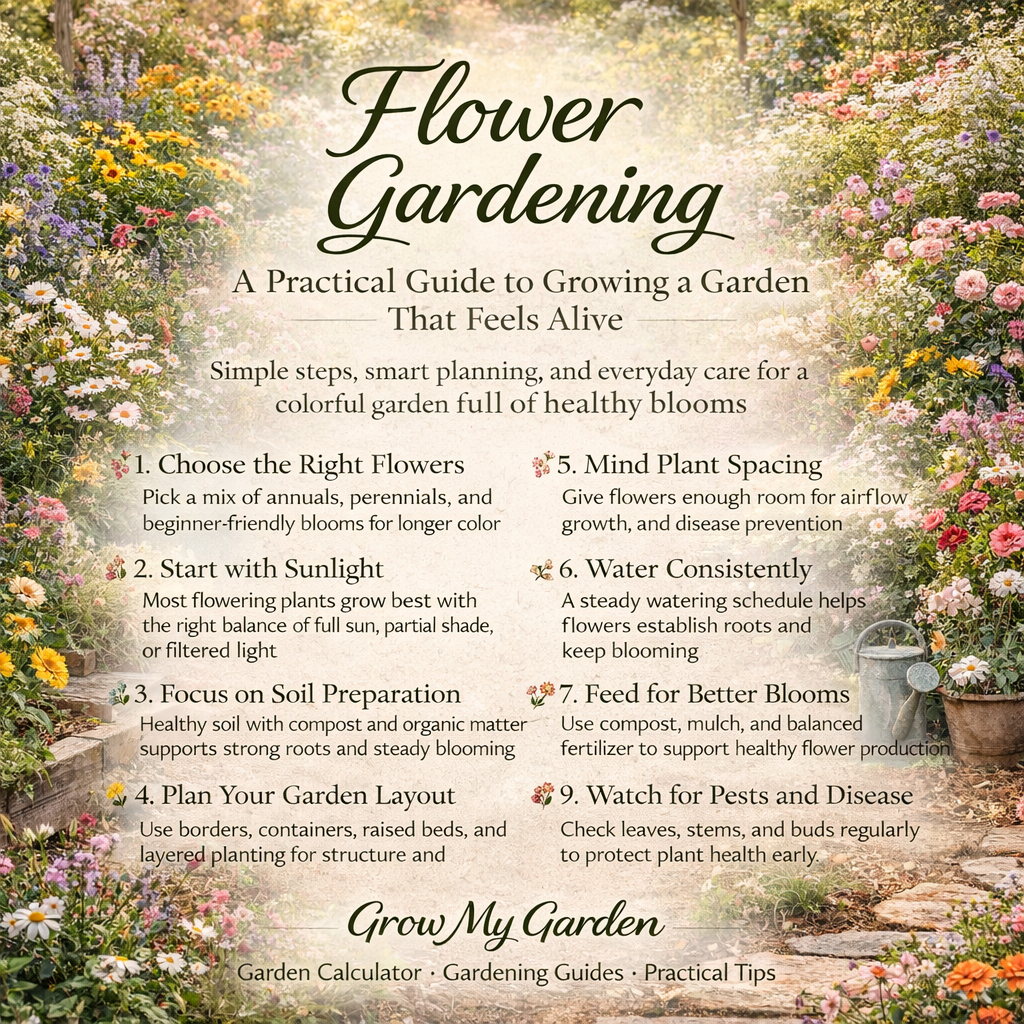
This pillar page is here to help beginners build a flower garden that looks good, grows well, and stays manageable. Whether you want a few color-filled containers, a border along the walkway, or a full backyard cutting garden, the basics are the same. Start with the right flowers, match them to your space, and make choices you can realistically maintain.
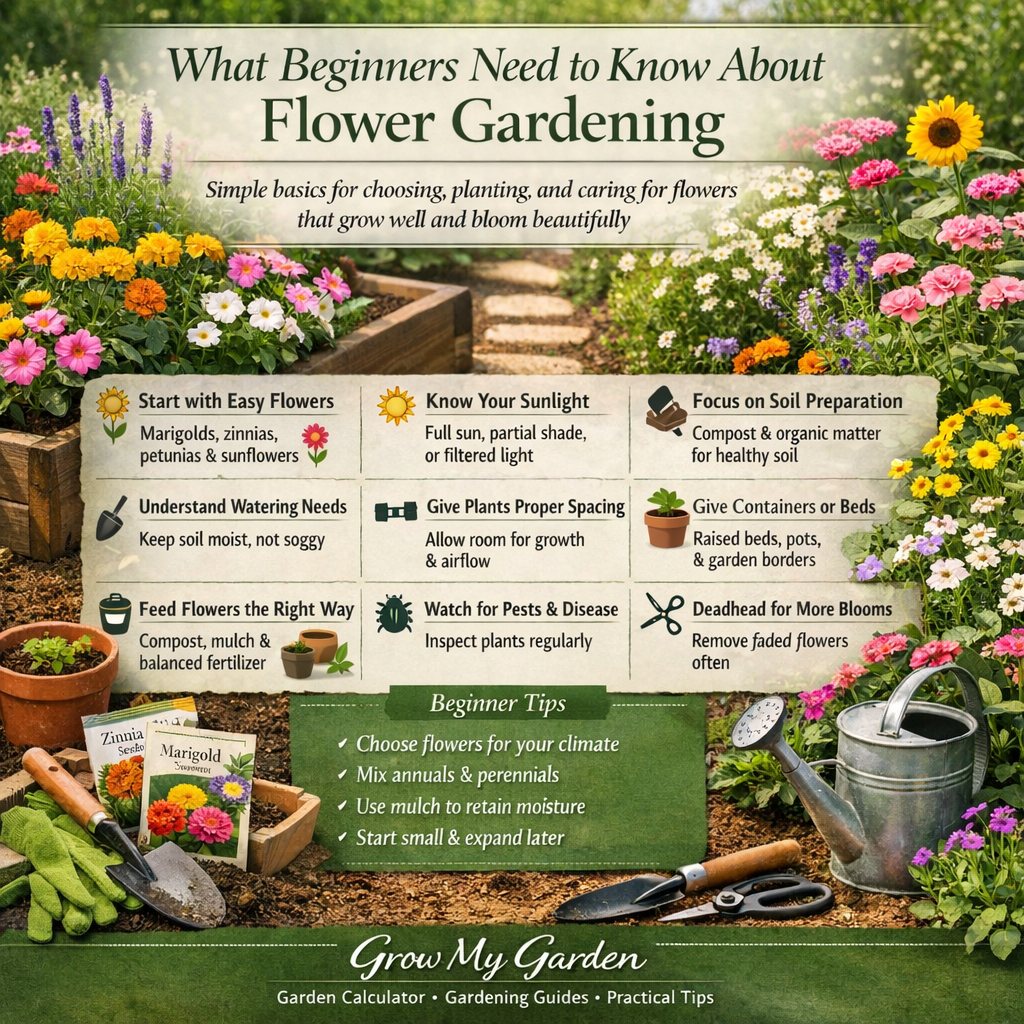
What beginners need to know
The first thing beginners should know is that flower gardening is not about stuffing every pretty plant into one bed and hoping for a magazine cover. That usually turns into a floral traffic jam.
A better approach is to think in layers and seasons.
Some flowers bloom early, some peak in summer, and some keep going into fall. Some stay short and tidy, while others stretch, trail, climb, or spread wider than expected. If you learn how height, sunlight, bloom time, and water needs work together, your garden starts to feel intentional instead of accidental.
Beginners also need to understand the difference between annuals and perennials.
- Annuals grow, flower, and finish their life cycle in one season. These are often the nonstop bloomers like petunias, zinnias, marigolds, cosmos, and impatiens.
- Perennials come back year after year if they are suited to your climate. Think coneflowers, lavender, salvia, black-eyed Susans, and many daisies.
Neither is better. They just play different roles. Annuals are the fast talkers of the flower garden. They give color quickly and often bloom for months. Perennials are more like the reliable neighbors. They may take time to settle in, but they can reward you for years.
Another important lesson: flowers are not just decoration. They solve problems too.
A border of flowers can soften a harsh fence line. Pollinator-friendly blooms can bring more bees into a vegetable garden. Tall flowers can hide an awkward wall. Fragrant flowers near an entrance can make a small space feel more welcoming. A cutting garden can save money if you enjoy fresh bouquets indoors.
One more truth I wish more beginners heard early on: not every struggling plant needs a rescue mission. Sometimes the issue is simply poor placement. I have babied flowers with extra feed, special watering, and gentle pep talks, only to realize they were planted in the wrong light all along. A sun-loving flower in shade will never become its best self, no matter how encouraging you are.
Quick tips before you plant
- Start with a small area you can actually maintain
- Choose flowers based on sunlight first, color second
- Mix annuals and perennials for better results
- Group plants with similar water needs together
- Leave room for mature plant size, not seedling size
- Use mulch to keep moisture in and weeds down
- Deadhead faded blooms to encourage more flowers
- Check plant tags, but do not trust them blindly on spacing
- Take photos every couple of weeks to track growth
- Use a simple app or notes app to remember what you planted
A phone camera becomes surprisingly useful in flower gardening. I often snap photos from the same angle every two weeks. It helps me spot which plants are thriving, which spaces need filling, and which combinations looked better in my imagination than in real life.
Apps like PictureThis can help identify unknown plants, while a basic notes app can keep track of bloom times, fertilizer dates, and what you want to move next season.
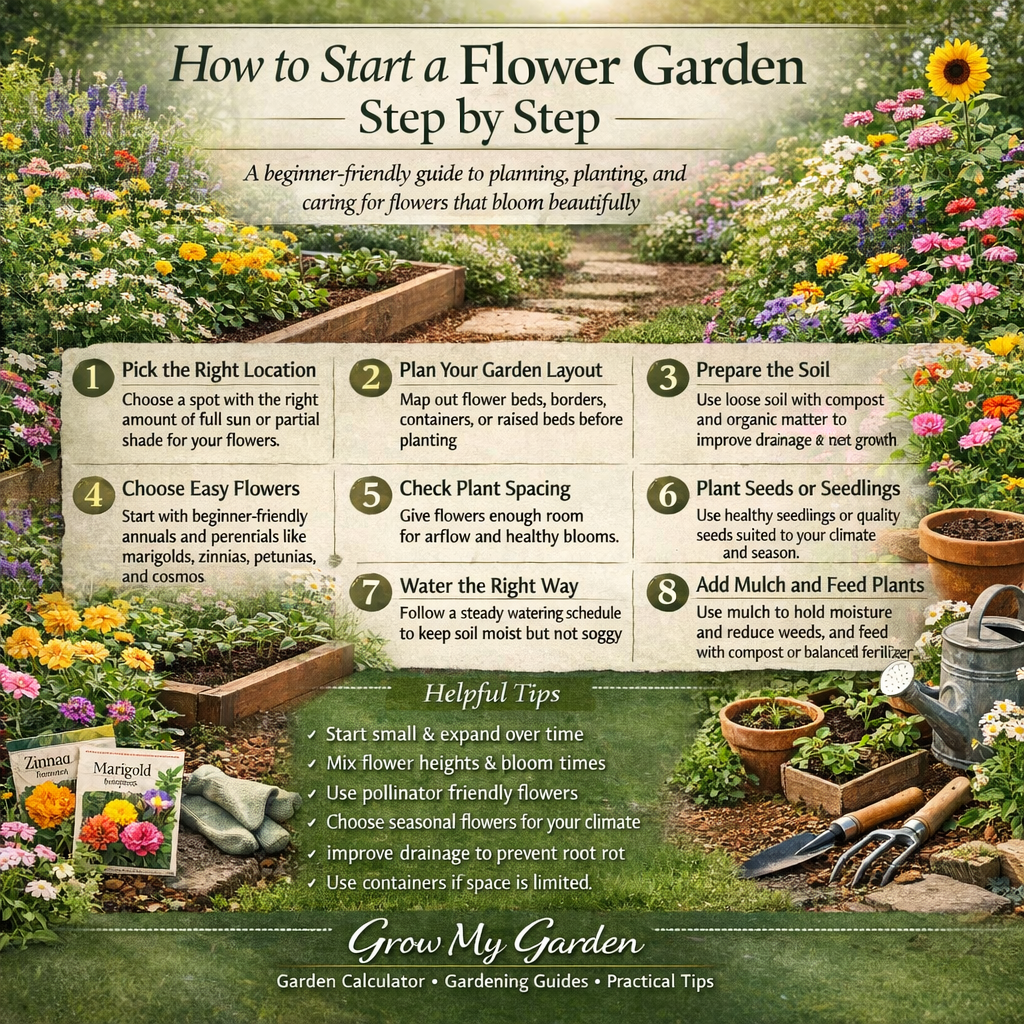
How to start a flower garden step by step
Step 1: Look at your space before buying anything
This step saves money, time, and several regret purchases.
Walk around your garden, yard, patio, or balcony and ask a few simple questions:
- How many hours of direct sun does this spot get?
- Is the area windy?
- Does water sit after rain?
- Is the soil heavy and sticky, loose and sandy, or somewhere in between?
- Do you want flowers for looks, fragrance, pollinators, cut flowers, or all of the above?
Most flower gardening problems begin with buying first and planning later. Garden centers are beautiful places full of temptation. I have absolutely gone in for compost and come out with three flowering plants and no real plan. It happens. But flowers perform much better when chosen for the conditions they will actually live in.
Step 2: Decide what kind of flower garden you want
Flower gardens can do different jobs. Be honest about what you want from yours.
A few common options:
- Front yard border: for curb appeal and long-season color
- Cutting garden: for homegrown bouquets
- Pollinator garden: to attract bees, butterflies, and helpful insects
- Container flower garden: ideal for patios, balconies, and small spaces
- Mixed flower bed: for a blend of structure, color, and seasonal interest
If you love bringing flowers indoors, a cutting garden is a smart choice. Zinnias, cosmos, snapdragons, sunflowers, and celosia are especially rewarding for this. If you want a low-fuss bed, lean more on sturdy perennials with a few annual fillers.
Step 3: Prepare the soil properly
Flowers are more forgiving than some vegetables, but they still notice bad soil.
Most flowering plants prefer loose, well-draining soil with organic matter mixed in. If your soil is hard like a brick in summer and sticky like cake batter in rain, add compost before planting. Compost helps with drainage, structure, and moisture balance.
For containers, use a quality potting mix, not garden soil dug from the yard. Yard soil in pots tends to compact and drain poorly.
A simple improvement plan for beds:
- Clear weeds and debris
- Loosen the top 6 to 10 inches of soil
- Mix in compost
- Level the surface
- Water lightly before planting if the soil is very dry
This is not glamorous work, but it pays off. Healthy soil is like a good mattress. Everything resting on it does better.
Step 4: Pick beginner-friendly flowers
New gardeners often go straight for high-maintenance flowers because they are striking. I understand the temptation. But it is much more encouraging to start with flowers that actually want to cooperate.
Good flower choices for beginners include:
- Marigolds
- Zinnias
- Petunias
- Cosmos
- Sunflowers
- Nasturtiums
- Salvia
- Coneflowers
- Black-eyed Susans
- Geraniums
- Impatiens for shade
- Alyssum for edging and containers
Zinnias are one of my favorite recommendations. They grow fast, bloom generously, make excellent cut flowers, and do not act precious about it. Marigolds are another solid choice. They handle heat well and bring reliable color even when the weather is trying to cook the whole garden.
Step 5: Plan the layout before planting
This is where many beginners either make a smart move or accidentally create chaos.
Think about:
- Height: tall flowers go toward the back of beds or center of island beds
- Width: allow enough space for mature spread
- Color: mix complementary shades rather than every color fighting for attention
- Bloom time: combine early, mid, and late-season flowers
A useful beginner trick is to repeat a few plants rather than using one of everything. Repetition makes a garden feel more polished. Three groups of the same salvia or marigold variety often look better than twelve unrelated plants placed randomly.
You can sketch the layout on paper or use a simple planner app. Even a rough drawing helps you avoid planting tall flowers in front of shorter ones and then spending the season wondering why half the bed disappeared behind the giants.
Step 6: Plant carefully
When it is finally planting day, slow down a little. Plants notice rough handling.
Basic planting method:
- Water plants in their nursery pots before planting
- Dig a hole about as deep as the root ball and slightly wider
- Gently loosen packed roots if they are circling tightly
- Place the plant so the top of the root ball sits level with the soil
- Backfill with soil and press lightly
- Water thoroughly after planting
For seeds, follow packet instructions on depth and spacing. Tiny flower seeds are often planted too deep. A surprising number need only a light covering of soil.
One mistake I made early on was planting everything too close because I wanted the bed to look full right away. It looked wonderful for about three weeks. Then airflow dropped, mildew showed up, and pruning became a daily argument. Give flowers the room they ask for.
Step 7: Water properly after planting
Newly planted flowers need regular watering while they establish. After that, watering depends on the plant type, weather, soil, and whether they are in containers or ground beds.
A few rules that help:
- Water early in the day
- Water the soil, not just the leaves
- Check the soil before watering again
- Remember that pots dry faster than beds
- Mulch to reduce moisture loss
Containers in summer can dry out fast, especially terracotta pots and hanging baskets. Some may need watering daily during hot spells. Beds usually hold moisture longer, especially if mulched.
A watering wand or hose nozzle with a gentle shower setting is helpful. It is easier on tender plants than blasting them with a full-force spray like you are pressure-washing the garden.
Step 8: Feed flowers without overdoing it
Not every flower needs heavy feeding, but many annuals benefit from regular nutrients to keep blooming.
You can use:
- Compost worked into the soil
- A balanced slow-release fertilizer
- A liquid flower fertilizer every couple of weeks for containers
Do not assume more fertilizer means more flowers. Sometimes it just means more leaves. I have had petunias grow into lush green mounds with fewer blooms because I got too generous with feed. Flowers need support, not a buffet every three days.
Step 9: Keep the garden tidy as it grows
This part matters more than people expect.
A few small jobs done regularly can make a huge difference:
- Remove faded blooms
- Trim damaged leaves
- Pull weeds before they take hold
- Stake tall flowers before they flop
- Check for pests under leaves and around buds
Deadheading, which means removing spent flowers, encourages many annuals to keep blooming. It also keeps beds looking fresh instead of tired.
For taller flowers like cosmos, dahlias, or some salvias, a simple bamboo stake or plant support ring can save them after wind or rain. It is much easier to support a plant early than to lift a collapsed one later and hope it forgives you.
How to choose the right flowers for your space
Not every flower belongs in every garden. A sunny border, a shady porch, and a windy balcony all need different picks.
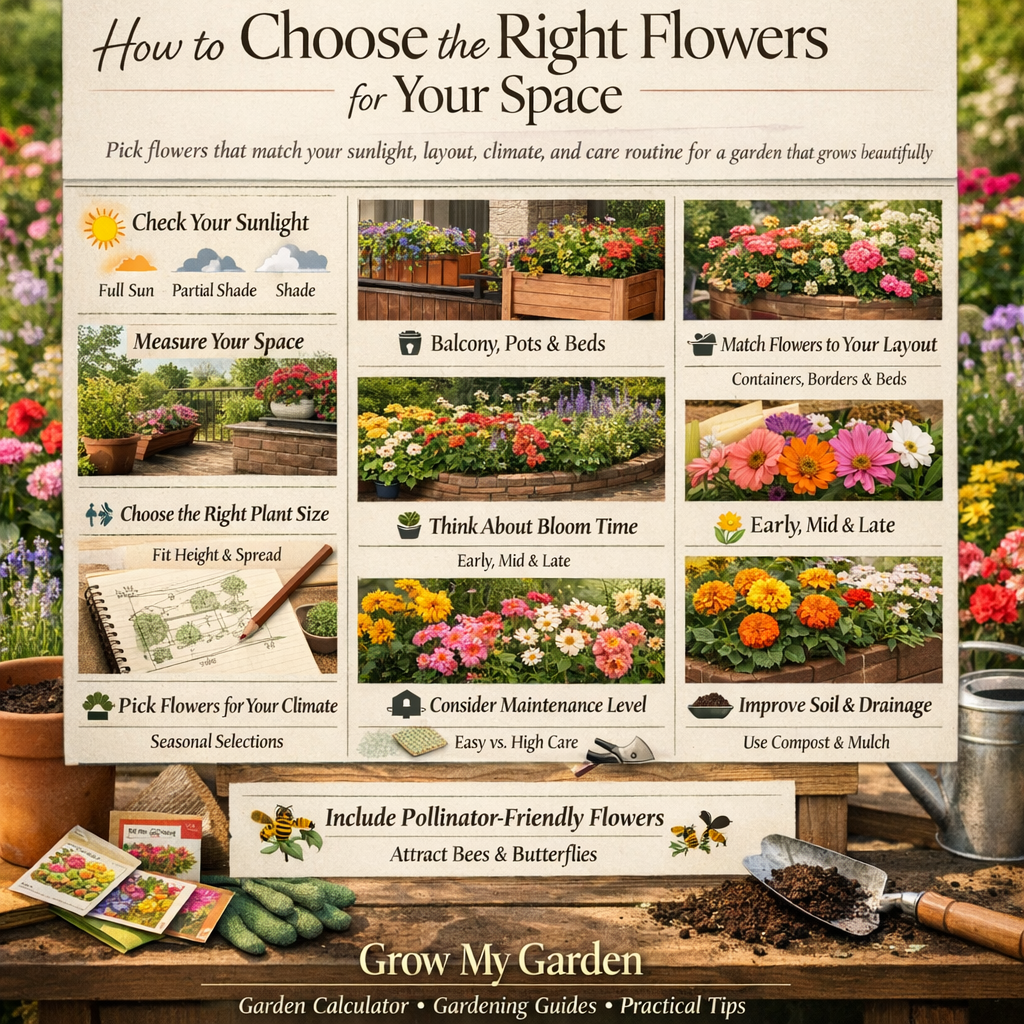
For full sun
Choose flowers that enjoy direct light and can handle heat:
- Zinnias
- Marigolds
- Petunias
- Lavender
- Salvia
- Coneflowers
- Sunflowers
- Verbena
For part shade
These work well with morning sun or filtered light:
- Begonias
- Torenia
- Coleus
- Fuchsias
- Some impatiens
- Browallia
For shade
Not deep gloom, but true low-light garden areas:
- Impatiens
- Astilbe
- Hostas with flower spikes
- Lobelia in cooler conditions
- Caladium for foliage interest with blooms nearby
For containers
Pick flowers that bloom well and stay manageable:
- Petunias
- Geraniums
- Alyssum
- Calibrachoa
- Begonias
- Nasturtiums
- Dwarf zinnias
For cut flowers
These are excellent if you want bouquets from your garden:
- Zinnias
- Cosmos
- Snapdragons
- Sunflowers
- Celosia
- Dahlias
- Sweet peas in cool weather
For pollinators
Helpful for bees, butterflies, and beneficial insects:
- Coneflowers
- Salvia
- Bee balm
- Cosmos
- Black-eyed Susans
- Lavender
- Asters
A garden feels more alive when it attracts pollinators. Even a small patch of the right flowers can turn into a steady landing strip for bees and butterflies.
Common flower gardening mistakes
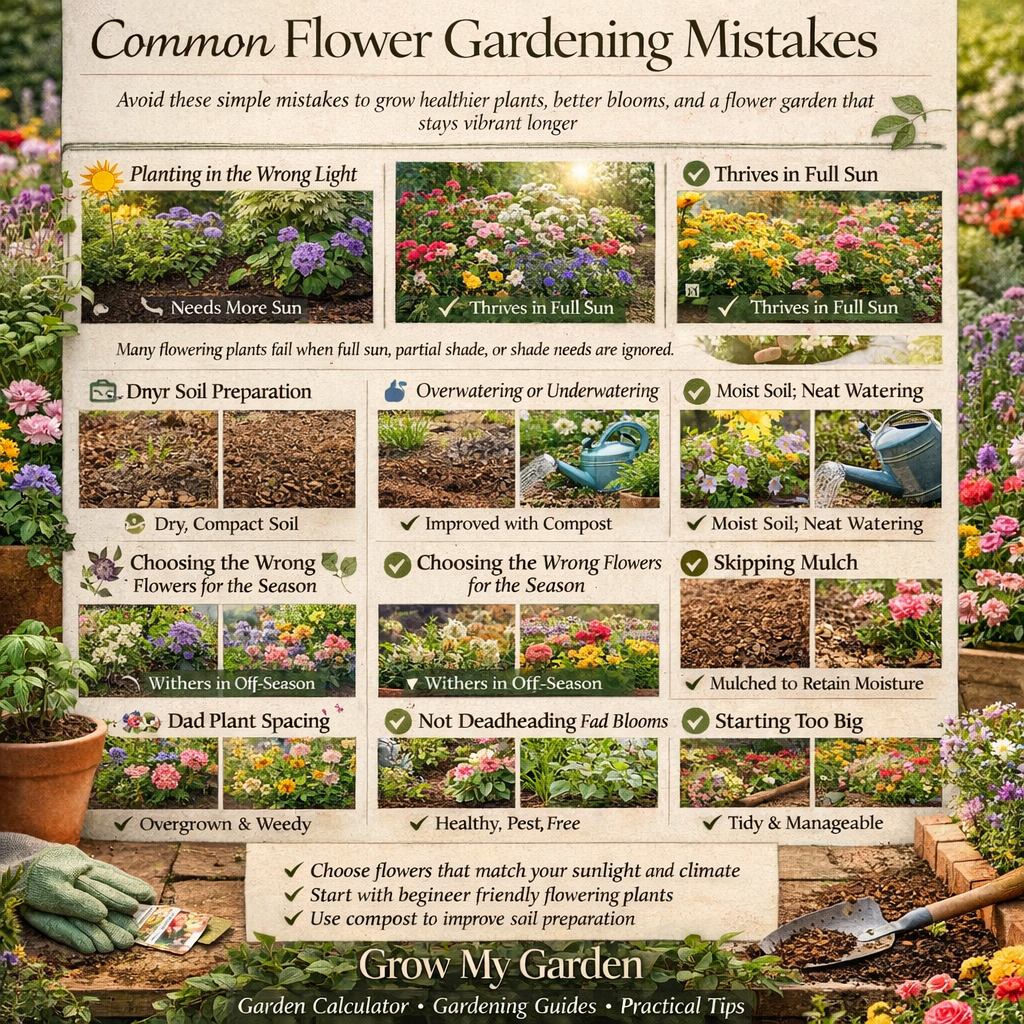
Buying with your eyes only
Pretty flowers are easy to fall for. But if the light, soil, or climate is wrong, beauty alone does not carry the plant very far.
Overcrowding the bed
Small plants grow. Fast. That cute tight arrangement in spring can become a packed, messy tangle by midsummer.
Ignoring bloom season
If every plant blooms at once, the garden can look great for a month and dull for the next three. Mix bloom times.
Watering too often but too lightly
Shallow watering leads to weak roots and stressed plants. Deep, consistent watering works better.
Skipping maintenance
Flower gardens are not usually high drama, but they do like regular attention. Ten minutes here and there often prevents bigger problems later.
Planting all annuals or all perennials
A mix tends to give the best balance. Annuals provide long color. Perennials build the backbone.
Forgetting fragrance and texture
Color gets most of the attention, but scent and leaf shape matter too. Soft foliage, airy blooms, and fragrant flowers make a garden feel layered and memorable.
Supporting guides for flower gardening
Use these supporting articles to explore more about this and helps you to go deeper:
- Best Flowers for Beginners
A practical guide to easy flowers that give new gardeners quick wins. - How to Plan a Flower Bed Layout
Learn how to arrange flowers by height, color, and bloom season. - Annual vs Perennial Flowers
Understand the difference and how to use both in one garden. - Best Flowers for Pots and Containers
Find reliable flowers for patios, balconies, and small spaces. - How Often to Water Flower Gardens
Get a simple watering approach for beds, hanging baskets, and containers. - Flowers That Attract Bees and Butterflies
Choose blooms that support pollinators and make the garden more lively.
Related gardening topics
Flower gardening naturally connects with other parts of my site. These pillar pages can help you to explore related areas:
- Vegetable Gardening
Useful for gardeners who want flowers near food crops for pollinators and beauty. - Herb Gardening
Many herbs flower beautifully and mix well in edible landscapes. - Fruit Gardening
Flowering plants can support pollination around fruit trees and berry plants. - Indoor Gardening
Helpful for readers interested in flowering houseplants and indoor containers. - Pest Control & Plant Health
Important for diagnosing leaf damage, mildew, and common flower garden issues.
FAQ
What are the easiest flowers to grow for beginners?
Marigolds, zinnias, petunias, cosmos, and impatiens are some of the easiest. They are widely available, fairly forgiving, and give plenty of color without demanding too much.
How do I start a flower garden for the first time?
Start with a small sunny or partly shaded area, improve the soil with compost, choose beginner-friendly flowers, and plant them with proper spacing. Water consistently while they establish and keep up with simple maintenance.
What is the best month to plant flowers?
That depends on your climate and whether you are planting seeds or nursery plants. Many warm-season annuals go in during spring after cold weather passes, while some cool-season flowers can be planted earlier.
Do flowers grow better in pots or in the ground?
Both can work well. Pots are easier to control and move, but they dry out faster. In-ground gardens usually hold moisture better and give roots more room.
How often should I water flowering plants?
New plants need regular watering at first. After that, most flowers do best with deep watering when the soil starts to dry. Containers often need water more frequently than garden beds.
Which flowers bloom the longest?
Many annuals such as petunias, marigolds, zinnias, and calibrachoa can bloom for a long stretch with regular deadheading and proper feeding.
Can I mix flowers and vegetables in one garden?
Yes, and it often works beautifully. Flowers can attract pollinators, fill gaps, and soften the look of a vegetable garden. Calendula, nasturtiums, marigolds, and zinnias are popular choices.
Why are my flowers growing leaves but not blooming?
Too much nitrogen, not enough sunlight, poor timing, overcrowding, or simple plant stress can all reduce blooming. Check the plant’s light needs and feeding routine first.
Conclusion
Flower gardening is one of those hobbies that teaches you to notice things. Morning light. Fresh buds. The first bee of the day. The way one tired corner of a yard can come back to life with the right plants in the right place. You do not need a grand estate or a perfect plan to grow flowers that make people stop and smile. Start with a few dependable plants, pay attention to what your space is telling you, and let the garden teach you the rest. Half the joy is in the learning, and the other half is standing there with dirt on your hands, wondering how something so simple ended up feeling so rewarding.