Vegetable Gardening: A Practical Guide for Beginners Who Want Real Results
Vegetable gardening is one of the most rewarding ways to grow fresh food at home, whether you have a large backyard or a few containers on a sunny balcony. It gives you better control over what you eat, helps you save money over time, and brings real satisfaction as tiny seeds turn into healthy harvests. For beginners, the key is to start simple, choose easy crops, and learn how soil preparation, plant spacing, sunlight, watering schedule, and companion planting affect success. With a little planning and steady care, a vegetable garden can provide flavorful produce, useful hands-on experience, and a relaxing routine that makes everyday life feel more connected to nature.
Vegetable gardening looks simple from a distance. A few seeds, some soil, water now and then, and suddenly you are walking outside with a basket full of tomatoes like you are starring in your own cooking show. Real life is a little messier than that. Leaves get chewed. Seedlings flop over. You forget to water for two hot days, then overcorrect and drown everything like a guilty parent.
I say that with love, because that is how many of us learn.
When I started growing vegetables seriously, I made nearly every beginner mistake possible. I planted tomatoes too close together, tucked mint where it could run wild, and assumed “full sun” meant any bright corner of the yard. It did not. Some crops struggled, some surprised me, and a few became the kind of repeat growers I now recommend to every beginner. Over time, I learned that vegetable gardening does not reward perfection. It rewards attention. A little planning, regular checking, and the willingness to adjust go much farther than expensive gear or grand plans.
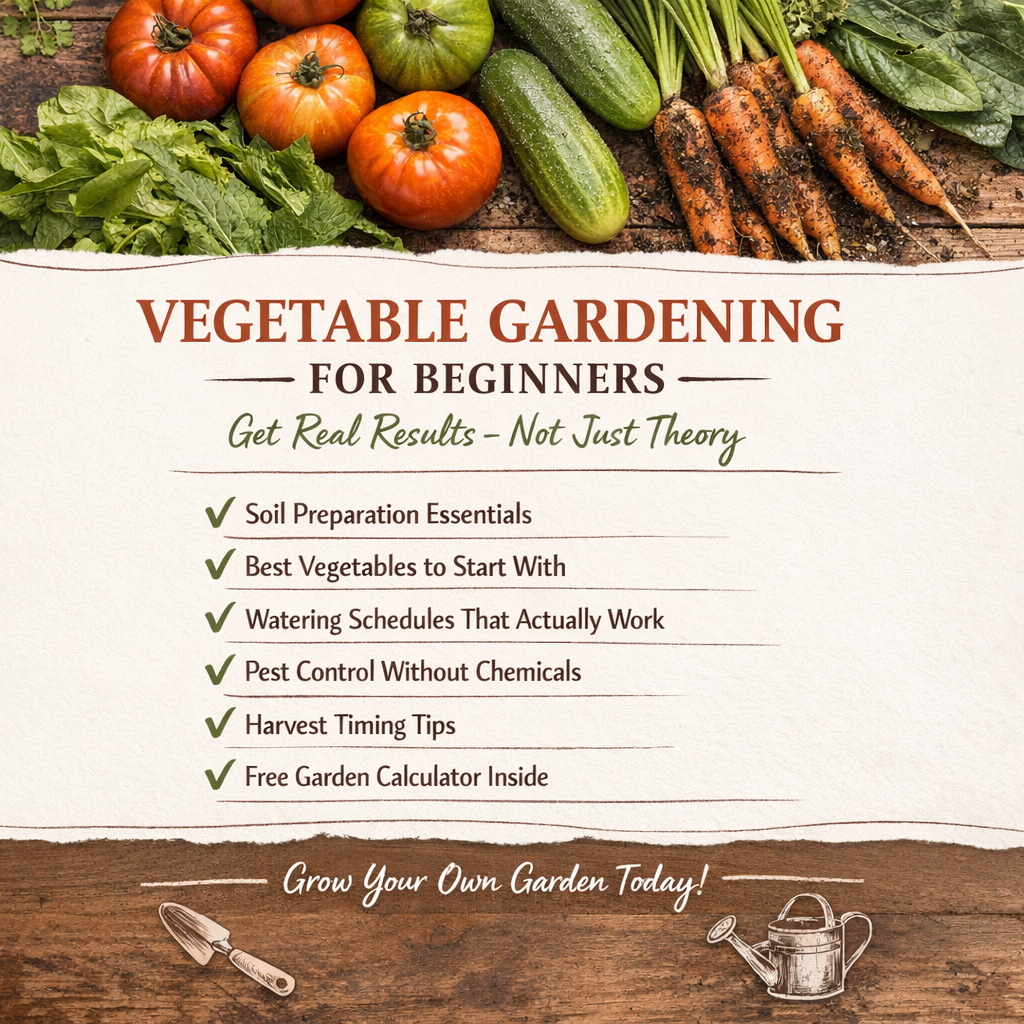
This guide is built to help beginners skip the most frustrating mistakes and build a productive garden with confidence. Whether you have a backyard, a few raised beds, or a sunny patio with containers, vegetable gardening can fit your space and your routine.
What beginners need to know
The biggest beginner lesson is this: do not try to grow everything at once.
A small garden that is cared for properly will outperform a large garden that gets ignored after the excitement wears off. I have seen new gardeners build huge beds in spring, plant ten kinds of vegetables, and by midsummer the whole area looks like a jungle with commitment issues. Meanwhile, the person with two tomato plants, a row of lettuce, and a pot of basil is harvesting dinner every week.
Vegetables need a few basics:
- Enough sunlight, usually 6 to 8 hours for fruiting crops
- Soil that drains well and holds nutrients
- Consistent watering
- Good spacing
- Seasonal timing
That last one matters more than people think. You cannot bully a cool-season crop through blazing heat and expect it to smile about it. Lettuce, spinach, peas, and radishes prefer mild weather. Tomatoes, peppers, cucumbers, and beans like warmth. Planting at the right time can feel like unlocking a cheat code.
Beginners also need to know that not every plant belongs in every space. Carrots can work in deep containers. Zucchini can take over a small bed like an uninvited relative who says they will only stay for the weekend. Choose crops that match your space, climate, and cooking habits.
And one more thing: grow what you actually eat. This sounds obvious, but many gardeners plant based on pretty seed packets and end up with a bumper crop of eggplant despite not liking eggplant. If your household eats tomatoes, green chilies, lettuce, cucumbers, herbs, and beans, start there.
Quick tips before you plant
- Start small and expand next season
- Pick a sunny spot before buying seeds
- Improve the soil before planting day
- Grow 4 to 6 reliable vegetables first
- Check seed packets for spacing and days to harvest
- Water deeply, not constantly
- Mulch early to keep soil from drying out
- Use a phone app or notes app to track planting dates
- Look at your plants every day, even for two minutes
- Do not panic over every yellow leaf
A simple tracking system helps more than people expect. Even a basic note in Google Keep, Apple Notes, or a gardening app like From Seed to Spoon can remind you what you planted and when. That saves a lot of guessing later.
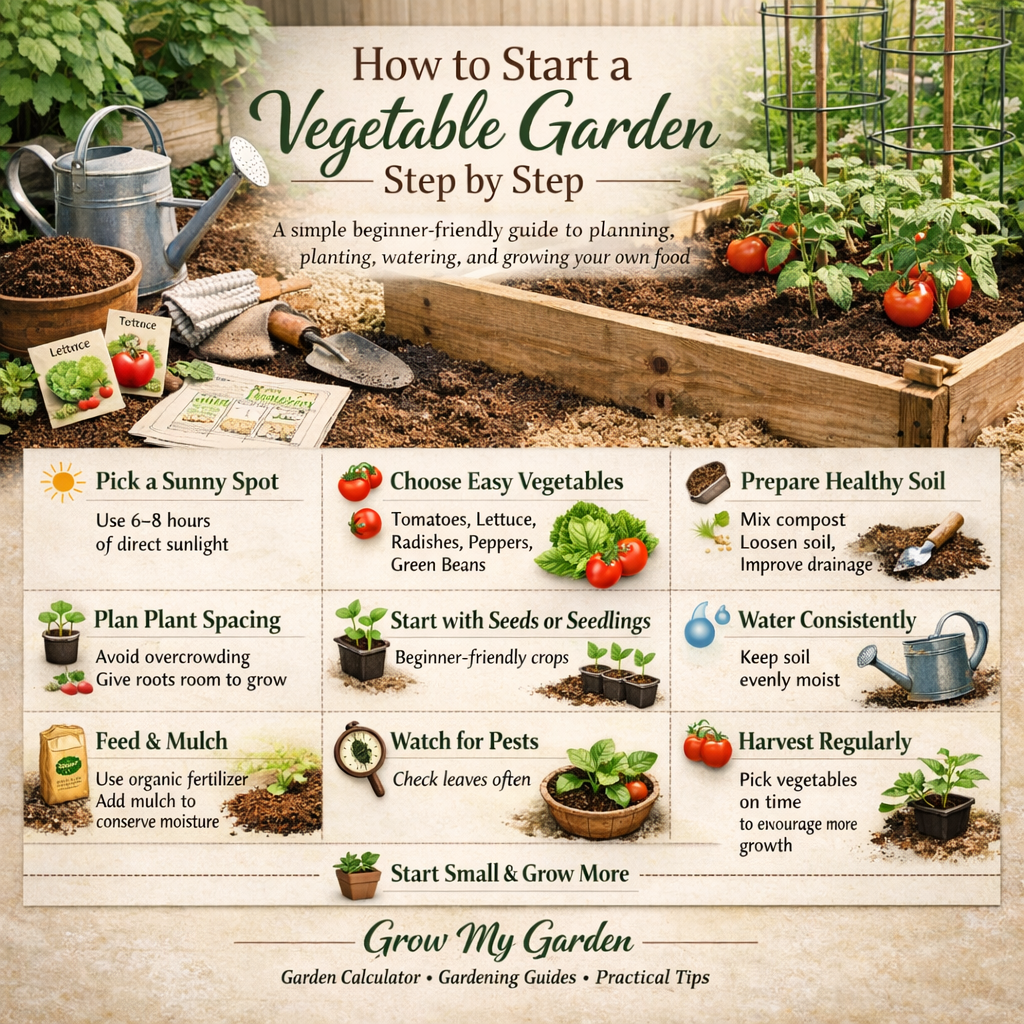
How to start a vegetable garden step by step
Step 1: Choose the right location
Vegetables are sun-hungry. The best spot usually gets at least 6 hours of direct sun, with 8 hours being even better for crops like tomatoes, peppers, and cucumbers.
Watch your yard or balcony for a full day if you can. Morning sun and afternoon shade can still work for leafy greens, but fruiting vegetables tend to want the brighter real estate.
A common beginner mistake is choosing the most convenient spot instead of the best growing spot. It is tempting to plant near a fence or wall because it looks tidy, but if that area only gets a few hours of light, your plants may survive without ever really thriving.
Step 2: Decide on beds, containers, or rows
There is no single right method. The best setup is the one you can maintain.
Raised beds are great for beginners because they drain well, stay organized, and are easier to manage.
In-ground gardens work well if your soil is already decent and you have more space.
Containers are perfect for patios, balconies, and small spaces.
I often recommend containers to total beginners because they teach you fast. You notice how quickly soil dries, how roots fill a pot, and how sunlight hits different corners. A 5-gallon grow bag can grow a tomato plant beautifully if you water and feed it consistently.
Step 3: Fix the soil first
Good soil is half the battle.
Vegetables prefer loose, rich soil with compost mixed in. If your garden soil is hard, sandy, or full of clay, improve it before planting. Compost is the quiet hero here. It improves structure, helps retain moisture, and feeds the soil over time.
For containers or raised beds, do not use plain yard soil. Use a quality vegetable garden mix or raised bed mix. Cheap soil often causes expensive disappointment.
A simple formula for beginners:
- 60% quality garden soil or raised bed mix
- 30% compost
- 10% materials for aeration if needed, such as coco coir or perlite
Step 4: Choose easy vegetables
Some vegetables are far more forgiving than others. Start with crops that give you a decent shot at success.
Good beginner picks:
- Tomatoes
- Lettuce
- Radishes
- Bush beans
- Cucumbers
- Spinach
- Peppers
- Green onions
- Zucchini if you have space
- Basil and parsley alongside vegetables
My personal beginner favorite is lettuce. It grows quickly, gives visible progress, and lets you harvest leaves little by little. That kind of early win keeps people motivated.
Step 5: Time your planting
This is where many gardens go sideways.
Planting by calendar date alone can be tricky because seasons shift. Your local climate matters more than a generic online chart. Learn the difference between cool-season and warm-season vegetables.
Cool-season crops: lettuce, spinach, peas, radishes, carrots, cabbage
Warm-season crops: tomatoes, peppers, cucumbers, beans, squash
If you plant tomatoes into cold soil, they usually sit there sulking. If you plant spinach just before intense heat, it bolts fast and tastes bitter. The plant is not being difficult. It is just following its nature.
Step 6: Plant with proper spacing
Crowding is one of the most common beginner mistakes.
Tiny seedlings look harmless, so people tuck them in close together. A month later, air cannot move, leaves stay damp, disease creeps in, and harvesting becomes a wrestling match.
Seed packets and plant tags are worth reading. They may be small, but they are packed with useful details. If a tomato says 18 to 24 inches apart, believe it. Plants grow like teenagers at a buffet when conditions are right.
Step 7: Water the smart way
Vegetables need consistent moisture, especially when getting established. Deep watering is better than frequent light splashing.
A shallow sprinkle teaches roots to stay near the surface, where soil dries out faster. Deep watering encourages stronger roots.
A few practical rules:
- Water early in the morning when possible
- Water the base of the plant, not the leaves
- Check soil before watering again
- Use mulch to reduce evaporation
Stick your finger into the soil. It is low-tech, but it works. If the top inch or two is dry, it is probably time to water. Containers dry faster than beds, especially in hot or windy weather.
Step 8: Feed plants as they grow
Vegetables are hungry. Leafy crops need nutrients for fresh growth. Fruiting crops need energy for flowers and harvest.
If you started with rich soil and compost, you already gave your plants a good base. After that, a balanced vegetable fertilizer or liquid feed every couple of weeks can help, especially in containers where nutrients wash out faster.
Do not overdo it. Too much fertilizer can lead to beautiful leaves and disappointing harvests. I once had pepper plants that looked fantastic from a distance and produced almost nothing because I fed for leaf growth instead of fruiting. Lesson learned.
Step 9: Keep an eye out for problems early
The best pest control habit is daily observation.
You do not need to stare dramatically at your plants like a detective in a crime show. Just look closely while watering. Check under leaves. Notice holes, discoloration, wilting, or chewed edges.
Early action is easier than late rescue.
Common issues include:
- Aphids on tender growth
- Slugs on leafy greens
- Powdery mildew in crowded, damp conditions
- Blossom end rot on tomatoes from uneven watering
- Yellow leaves from stress, overwatering, or nutrient imbalance
Most garden problems are easier to manage when caught early. A small pest issue can often be handled by hand-picking, pruning affected leaves, improving airflow, or using a gentle organic treatment.
Step 10: Harvest often
Vegetables do not always improve by waiting forever. In fact, many produce better when harvested regularly.
Pick beans while they are tender. Harvest cucumbers before they get oversized and seedy. Snip lettuce leaves often. Keep herbs trimmed. Regular harvesting tells many plants to keep producing.
This is one of the best feelings in gardening. The first real harvest, even if it is small, changes the whole experience. Suddenly the garden is not just a project. It is part of dinner.
Best vegetables for beginners
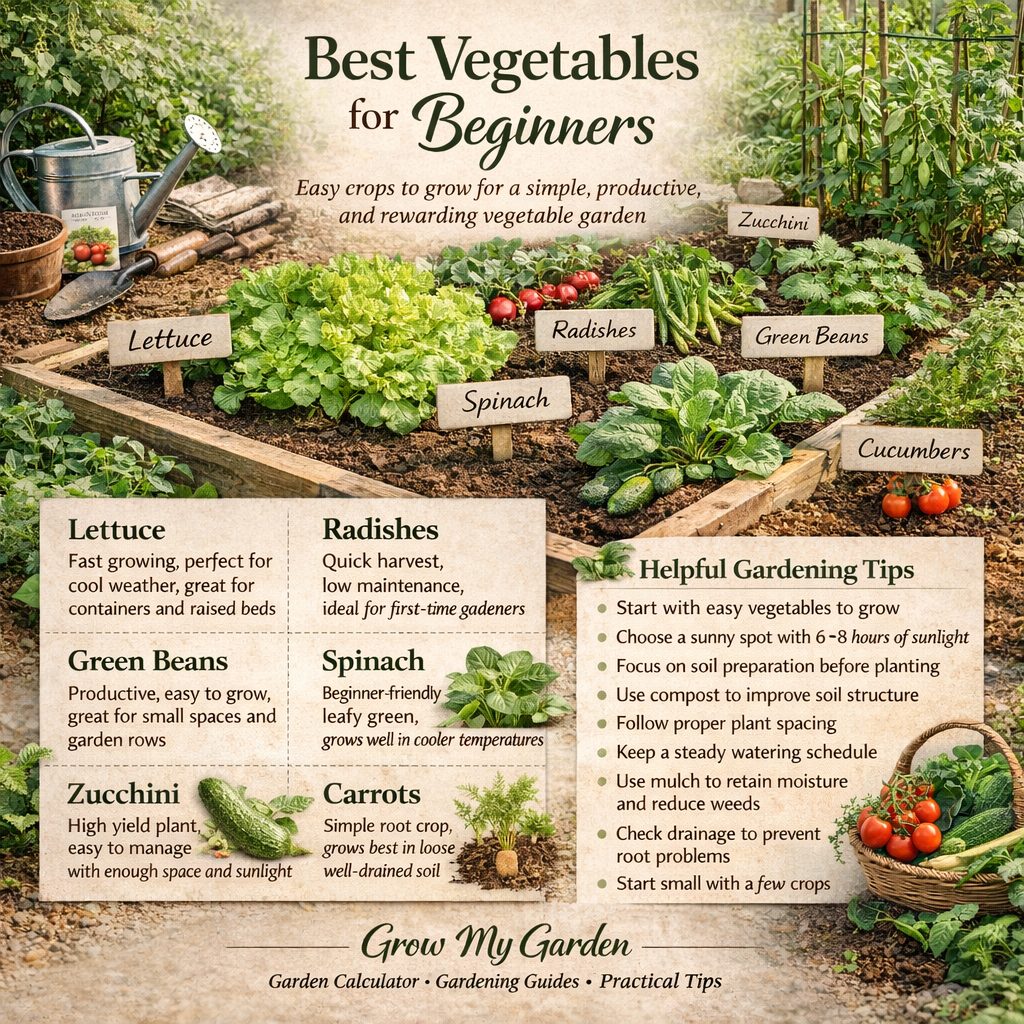
Here are a few beginner-friendly crops and why they work well:
Tomatoes
Popular, productive, and satisfying. They do need sun, support, and steady watering, but nothing beats the taste of a homegrown tomato that did not spend its life traveling in a truck.
Lettuce
Fast-growing and forgiving. Great for containers and small beds. You can harvest outer leaves and let the plant continue growing.
Radishes
Almost comically quick. They are perfect for impatient beginners and useful for learning timing and spacing.
Bush beans
Reliable and productive without needing a trellis. Good for small spaces and straightforward to grow.
Cucumbers
Very rewarding if they get sun and water. A trellis saves space and keeps fruit cleaner.
Peppers
A little slower to start, but worth it. They do especially well in warm weather and containers.
Spinach
Excellent in cool weather. It can struggle in heat, so timing matters.
Zucchini
Productive to the point of comedy. One healthy plant can give plenty. Two can make you start leaving vegetables on neighbors’ porches.
Common mistakes that slow gardeners down
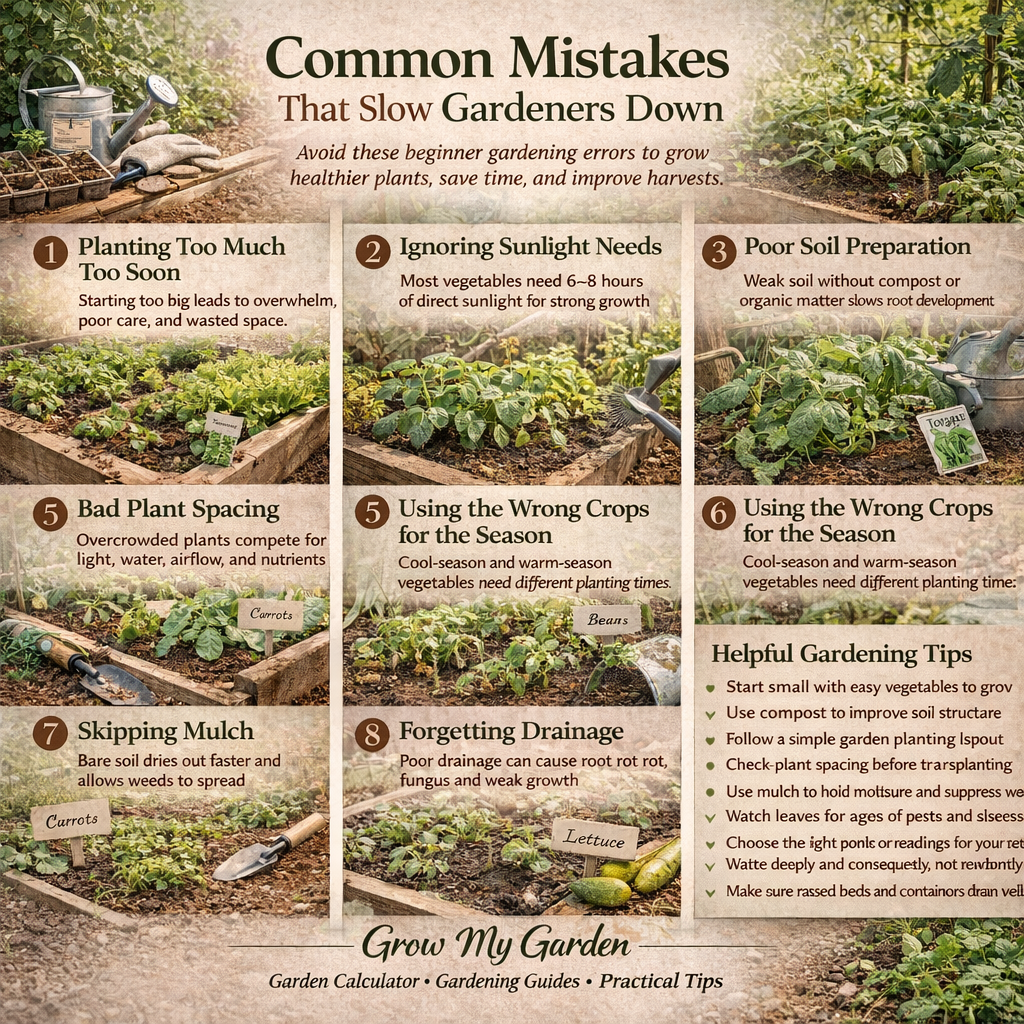
Every gardener collects mistakes like seed packets. Here are the most common ones I see again and again.
Planting too much
A large garden sounds exciting, but it creates more watering, weeding, feeding, and harvesting than many beginners expect.
Ignoring sunlight
Bright shade is not full sun. This one causes more disappointment than almost anything else.
Overwatering
Beginners often kill with kindness. Soggy roots can stunt plants just as badly as drought.
Underestimating spacing
Good spacing improves airflow, reduces disease, and makes maintenance easier.
Planting the wrong crop at the wrong time
Cool-season and warm-season vegetables are not interchangeable. Timing is not a small detail. It is the skeleton of the whole plan.
Skipping mulch
Mulch helps conserve moisture, reduce weeds, and protect soil. It is one of the simplest upgrades with the biggest payoff.
Giving up too early
A rough week in the garden does not mean failure. One wilted cucumber or bug-chewed leaf is not the end of the story. Gardening teaches patience whether you ask for it or not.
Supporting guides for vegetable gardening
Use these supporting articles to build out your vegetable garden with more detail and practical help:
- Beginner’s Guide to Garden Planning
Plan your layout, choose crops, and avoid common setup mistakes. - Plant Spacing Chart for Vegetables
See how much room common vegetables actually need. - Companion Planting Basics
Learn simple plant pairings that can help with space and pest balance. - How Much Soil Does a Raised Bed Need?
Figure out soil volume before you build or fill a bed. - Watering Schedule for Vegetable Gardens
Get a practical approach to watering by season and plant type. - Best Vegetables for Raised Beds
Find crops that perform especially well in raised bed setups.
Related gardening topics
Vegetable gardening connects naturally with other areas of your site. These related pillar pages help readers branch out without getting lost:
- Flower Gardening
Helpful for pollinator-friendly planting and garden beauty. - Herb Gardening
A great companion topic since herbs grow well alongside vegetables. - Fruit Gardening
Useful for gardeners who want to expand beyond annual crops. - Indoor Gardening
Ideal for seed starting, herbs, and year-round growing. - Pest Control & Plant Health
Important for diagnosing problems and keeping plants productive.
FAQ
What is the easiest vegetable to grow for beginners?
Lettuce, radishes, and bush beans are among the easiest. They grow quickly, do not need complicated care, and give beginners fast feedback.
How much sun does a vegetable garden need?
Most vegetables grow best with 6 to 8 hours of direct sun daily. Leafy greens can tolerate a bit less, but tomatoes, peppers, and cucumbers usually need more light to produce well.
Is raised bed gardening better than in-ground gardening?
Not always better, but often easier for beginners. Raised beds improve drainage, make soil management simpler, and keep the garden more organized.
How often should I water vegetables?
It depends on weather, soil, and plant type. In general, water deeply when the soil begins to dry rather than giving light daily sprinkles. Containers usually need water more often than garden beds.
What vegetables grow well in containers?
Tomatoes, peppers, lettuce, spinach, green onions, carrots, and herbs all do well in containers if the pot is large enough and drains properly.
When should I start planting vegetables?
Planting time depends on your climate and the crop. Cool-season vegetables go in during mild weather, while warm-season vegetables should wait until temperatures are consistently warm.
Why are my tomato leaves turning yellow?
Yellow leaves can come from uneven watering, nutrient issues, crowding, disease, or normal aging on lower leaves. Look at the full plant and growing conditions before assuming the worst.
Can I grow vegetables without a backyard?
Yes. Many vegetables grow well in containers on patios, balconies, rooftops, or even sunny doorsteps. Space matters less than sunlight, water, and proper container size.
Conclusion
Vegetable gardening has a funny way of humbling people and encouraging them at the same time. One week you are celebrating your first crisp cucumber. The next week you are searching a leaf for clues like a garden detective. That is part of the charm. You do not need a perfect plan or a picture-perfect yard to grow food. You just need a workable space, a few sensible choices, and the habit of paying attention. Start small, keep learning, and let each season teach you something new. The garden usually does.