Fruit Gardening
Fruit gardening has a way of pulling you in. You plant one strawberry runner or a single lemon tree, and before long you are out in the yard checking leaves, watching tiny flowers open, and feeling oddly proud of every new fruit that appears. It is practical, satisfying, and a little addictive in the best way. A good fruit garden gives you more than food. It gives you a reason to step outside, notice the seasons, and enjoy the slow reward that only growing something yourself can bring.
Why This Topic Matters
Fruit gardening matters because it turns a patch of soil, a raised bed, or even a few containers into something useful and personal. It is one thing to buy fruit from a market. It is another thing entirely to pick warm strawberries in the morning, clip fresh figs in summer, or pull a pot of mint aside to reach the hidden berries underneath.
For beginners, fruit gardening can also be a smart starting point. Many people assume fruit is harder to grow than vegetables. Sometimes it is. But not always. Strawberries, blueberries, raspberries, dwarf citrus, and even some compact apple varieties can do very well when you choose the right plant for your space.
I learned this the hard way. Years ago, I planted a fruit tree because I liked the photo on the tag, not because it matched my climate or available space. That tree struggled from day one. The leaves looked tired, the growth was weak, and the harvest was more fantasy than reality. Meanwhile, a simple container strawberry planter sitting nearby produced more joy and better results with a fraction of the effort. That season taught me a lesson I still follow: in fruit gardening, the right plant in the right place beats big ambitions every time.
Fruit gardening also helps families eat more seasonally, save money over time, and get real value from small outdoor areas. Even a balcony can hold pots of strawberries, dwarf citrus, or a compact blueberry bush. You do not need an orchard to grow fruit. You just need a sensible plan.
Beginner Basics
If you are new to fruit gardening, start with the foundation. Fancy varieties and dream harvests can wait. The basics decide whether your garden thrives or turns into an expensive life lesson.
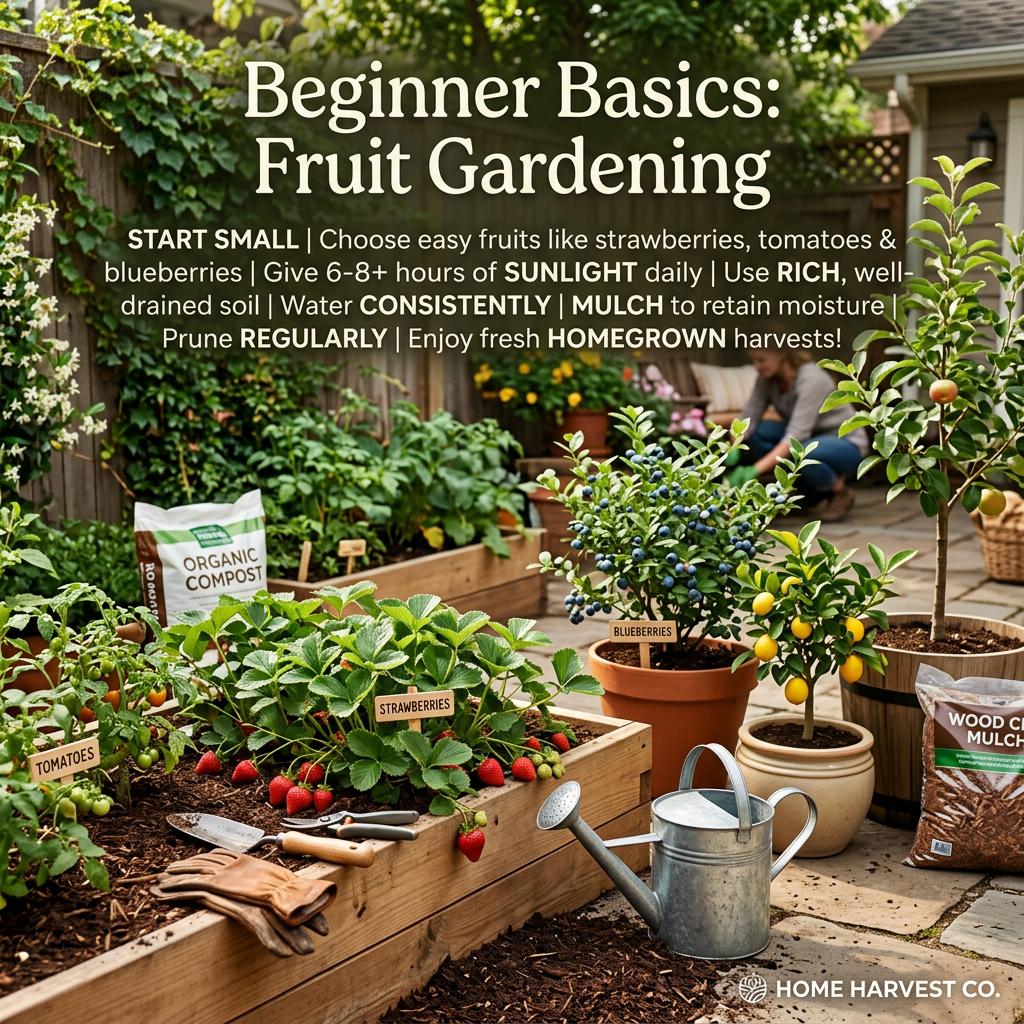
1. Choose fruit that matches your climate
This is the first gate you have to walk through. A plant may look healthy in the garden center and still be completely wrong for your area.
Before planting anything, check:
- Your climate or growing zone
- Summer heat levels
- Winter chill hours for certain fruit trees
- Rainfall and humidity
- First and last frost dates
Fruit trees like apples, peaches, and cherries often need a certain number of winter chill hours. Blueberries may need acidic soil. Citrus usually wants warmth and protection from frost. Grapes like sun and airflow. Strawberries are much more forgiving, but even they perform better when planted in the right season.
A simple weather app, a gardening journal, and your local forecast can help, but I also like using planting calendar tools to avoid guesswork. They save you from planting too early just because one sunny afternoon made you feel optimistic.
2. Start smaller than you think
This is advice many beginners ignore. I certainly did.
It is tempting to plant five fruit trees, a berry patch, grapes along the fence, and a row of melons all in one go. Then the weeds arrive, watering gets patchy, pests show up, and suddenly the dream garden feels like a second job.
Start with one or two easy wins:
- Strawberries in containers or raised beds
- Blueberries in large pots if your soil is not ideal
- Raspberries in a controlled area
- Dwarf citrus in containers
- One well-chosen fruit tree instead of several
A smaller setup is easier to water, feed, protect, and observe. That last part matters. Beginners learn fastest by noticing what plants do week by week.
3. Give fruit plants full sun
Most fruiting plants are sun lovers. If vegetables can sometimes tolerate partial shade, fruit is usually less forgiving. Weak sunlight often means fewer flowers, slower ripening, and smaller harvests.
Aim for at least 6 to 8 hours of direct sunlight a day. More is often better for fruit crops. If your yard is shady, do not fight it with unsuitable plants. Work with what you have. Grow shade-tolerant herbs elsewhere and save the brightest spots for fruit.
4. Fix the soil before planting
Fruit plants are not magical. They cannot perform in tired, compacted soil just because the label promised “heavy yields.”
Good soil should be:
- Loose enough for roots to spread
- Rich in organic matter
- Well-draining
- Not constantly soggy
- Matched to the crop where possible
Before planting, mix in compost or well-rotted organic matter. If you are using containers, use a quality potting mix instead of scooping random soil from the yard. That shortcut usually ends badly.
I once planted blueberries into regular garden soil without adjusting anything. They survived, but “survived” is doing a lot of heavy lifting in that sentence. The leaves yellowed, the growth crawled along, and the berries were pitiful. Blueberries need the right conditions, and they do not politely overlook bad planning.
5. Understand watering early
Young fruit plants need consistent watering while roots establish. Not daily flooding. Not once-a-week panic watering. Consistent moisture.
Here is the usual rhythm:
- Water deeply after planting
- Check moisture regularly
- Keep soil evenly moist, not waterlogged
- Mulch around plants to reduce evaporation
- Increase attention during flowering and fruiting
Drip irrigation, soaker hoses, or even a simple watering schedule reminder on your phone can help. Fruit plants are a bit like children on a road trip. They do best when you do not let things swing wildly from one extreme to another.
6. Feed plants, but do not overdo it
Too much fertilizer can give you lush leaves and very little fruit. It is like feeding a plant a bodybuilder diet when what you really want is a basket of berries.
Use balanced feeding based on the crop:
- Compost for long-term soil health
- Slow-release fertilizers when needed
- Berry-specific or citrus-specific feed for some plants
- Extra potassium support during flowering and fruiting for certain crops
Always read the label. More is not better. It is just more.
7. Learn basic pruning and spacing
Fruit gardening gets messy fast when plants are crowded. Poor airflow encourages pests and disease, and harvesting becomes a treasure hunt inside a leafy jungle.
Give plants the room they need. Prune damaged, dead, or crossing branches. Train vines and canes properly. Thin fruit when necessary on some trees.
This is one of those jobs people avoid because they are afraid of doing it wrong. Fair enough. But skipping it completely usually causes bigger problems later.
Step-by-Step: How to Start a Fruit Garden
If you are building your first fruit garden, this simple method keeps things practical.
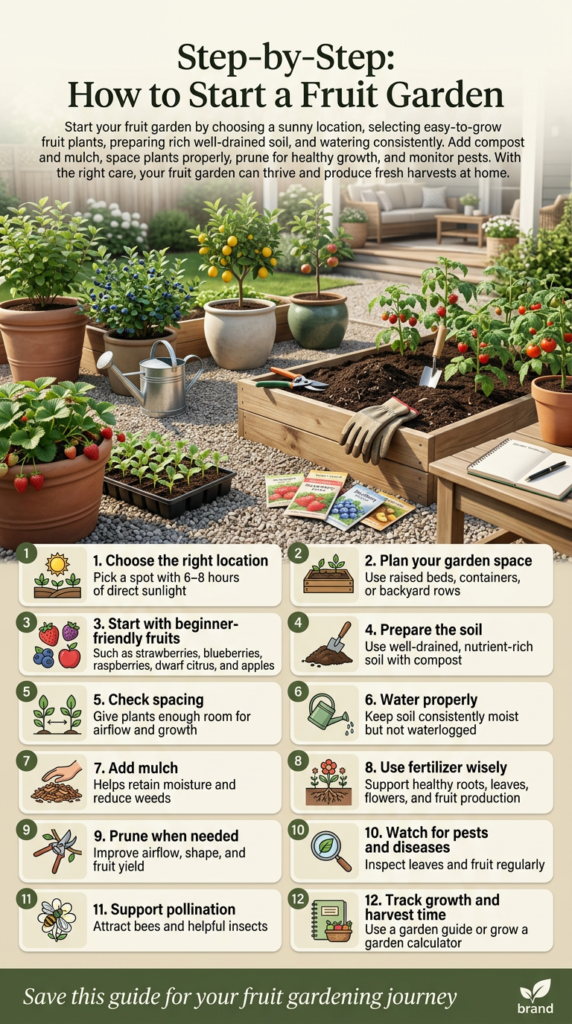
Step 1: Assess your space
Walk your yard, balcony, patio, or rooftop and notice:
- Sunlight hours
- Wind exposure
- Drainage
- Available ground space
- Space for containers or raised beds
Take photos at different times of day if needed. It helps more than memory.
Step 2: Pick 2 to 4 beginner-friendly fruit plants
A balanced beginner setup might look like this:
- Strawberries for quick rewards
- Blueberries in containers
- One dwarf citrus or guava in a pot
- One trellised vine or compact fruit tree if you have room
That gives you variety without turning the garden into chaos.
Step 3: Prepare soil or containers
Use large enough pots with drainage holes. Fill them with good mix. In the ground, loosen the soil and add compost. Raised beds work beautifully for strawberries and some compact fruit crops.
Step 4: Plant at the right time
Do not plant just because you are excited. Plant when the season suits the crop. Spring is common for many fruits, but climate matters. Local timing always wins over general advice.
Step 5: Mulch and water well
Mulch keeps roots cooler, suppresses weeds, and helps retain moisture. Straw, bark, leaf mold, or compost can all work depending on the plant.
Step 6: Support and protect
Add cages, stakes, or trellises where needed. Use netting if birds are likely to get to berries before you do. It is amazing how fast wildlife discovers “your” fruit is apparently “community fruit.”
Step 7: Observe before reacting
Do not treat every yellow leaf like a five-alarm fire. Watch patterns. Check soil moisture. Look under leaves. Notice whether pests are increasing or if a plant is simply adjusting after transplanting.
Fruit gardening rewards steady observation more than dramatic rescue attempts.
Featured Guides Under That Topic
A fruit gardening pillar page works best when it helps readers branch into specific guides. These are the kinds of supporting articles that make the topic genuinely useful:
Best Fruits for Beginners
A practical guide for readers who want easy starting options. This should cover forgiving crops like strawberries, raspberries, blueberries, dwarf citrus, mulberries, and figs, with notes on space, sun, and care level.
How to Start a Strawberry Garden
A detailed walk-through for planting strawberries in beds, containers, hanging baskets, or vertical planters. This is one of the best beginner guides because strawberries give quick encouragement.
Growing Blueberries in Pots
Perfect for gardeners with poor native soil or limited space. This guide should cover acidic soil needs, pot size, watering habits, and feeding.
Dwarf Fruit Trees for Small Gardens
A strong topic for people with patios, compact yards, or urban homes. Include apples, peaches, lemons, oranges, and other manageable options depending on climate.
Common Fruit Gardening Mistakes
This is the guide readers often need most. Cover overwatering, poor spacing, wrong plant choice, weak pruning habits, planting in too much shade, and expecting fruit too quickly.
Fruit Tree Watering Guide
Many beginners either drown trees with kindness or forget them during heatwaves. A focused watering guide helps prevent both mistakes.
Organic Pest Control for Fruit Plants
Readers need realistic pest advice that does not sound like magic. Include aphids, birds, caterpillars, fungal issues, and safe ways to reduce damage.
When to Harvest Common Garden Fruits
This guide helps beginners avoid picking too early or waiting too long. Ripeness is not always obvious, and timing affects flavor more than people think.
Related Posts
Fruit gardening does not stand alone. These are some further roots of gardening.
- Vegetable Gardening for seasonal planning, raised bed setup, and watering basics
- Flower Gardening for pollinator-friendly planting that helps improve fruit set
- Herb Gardening for companion herbs that support pest control and make better use of small spaces
- Indoor Gardening for growing dwarf citrus, indoor pollination tips, and container care
- Pest Control & Plant Health for diagnosing leaf problems, managing common pests, and improving plant resilience
FAQ
Is fruit gardening good for beginners?
Yes, if you start with the right crops. Strawberries, raspberries, blueberries in pots, and dwarf citrus are often more beginner-friendly than people expect. The trick is to match the plant to your space and climate instead of picking only by appearance.
What is the easiest fruit to grow at home?
Strawberries are often the easiest for beginners. They grow in containers, raised beds, and hanging planters, and they reward you fairly quickly. In warm climates, some citrus varieties are also great choices.
How much sunlight do fruit plants need?
Most fruit plants need at least 6 to 8 hours of direct sun each day. Less sun usually means lower production and slower ripening.
Can I grow fruit in containers?
Absolutely. Many fruits do well in containers, including strawberries, blueberries, dwarf citrus, figs, and some compact tree varieties. The key is using large enough pots, quality mix, and regular watering.
Why are my fruit plants growing leaves but no fruit?
This usually happens because of too much nitrogen, not enough sunlight, poor pollination, immature plants, or incorrect pruning. Sometimes the plant is healthy but simply not old enough to produce well yet.
How often should I water fruit plants?
That depends on the plant, soil, weather, and whether it is in a pot or the ground. Containers dry out much faster than garden beds. In general, water deeply and consistently, then check the soil before watering again.
Do I need to prune fruit plants?
In most cases, yes. Pruning improves airflow, shape, plant health, and fruit production. The method depends on whether you are growing a tree, shrub, vine, or cane fruit.
How long does it take to get fruit?
Strawberries can produce quickly, sometimes in the first season. Berry bushes may take a little longer. Fruit trees often require patience, especially if they are young. Gardening teaches many good things, and patience is one of the big ones.
Final Call to Action
Fruit gardening does not need to begin with a grand plan or a picture-perfect orchard. Start with one bed, one pot, one healthy plant, and one season of paying attention. That is enough. Once you taste fruit you grew yourself, the whole thing starts to make sense. You stop seeing gardening as a chore and start seeing it as part pantry, part therapy, and part quiet victory.
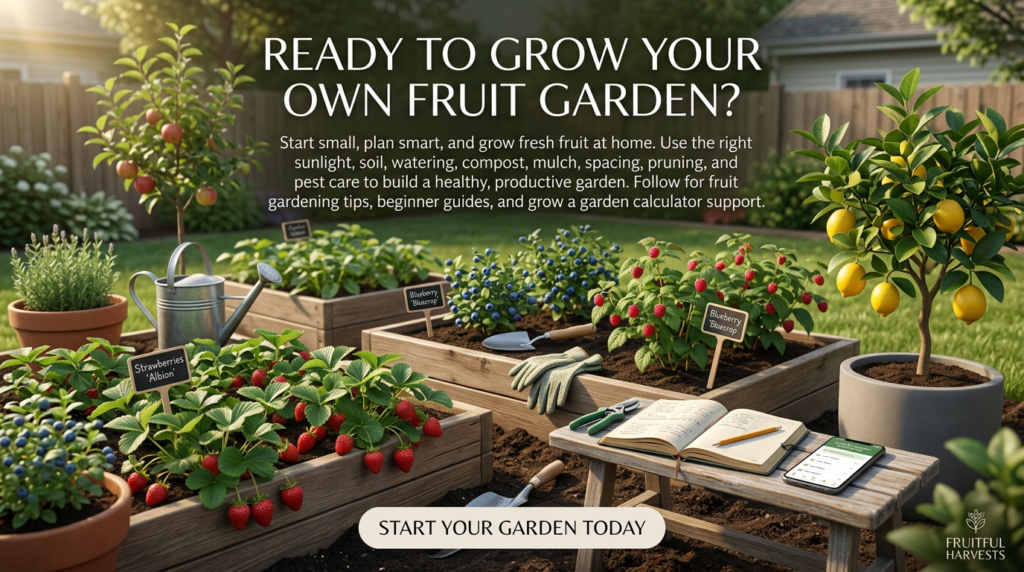
If you are building your fruit garden for the first time, begin with the easiest win you can manage. Plant strawberries. Try a blueberry in a pot. Add one dwarf fruit tree if you have the sun and space. Keep notes, learn from the mistakes, and do not be discouraged by a rough patch. Every experienced gardener has had one. Usually more than one.
Then move through the related guides on your site, build out the next step, and let your garden grow with you. That is how the best fruit gardens begin. Not all at once, but one smart choice at a time.